
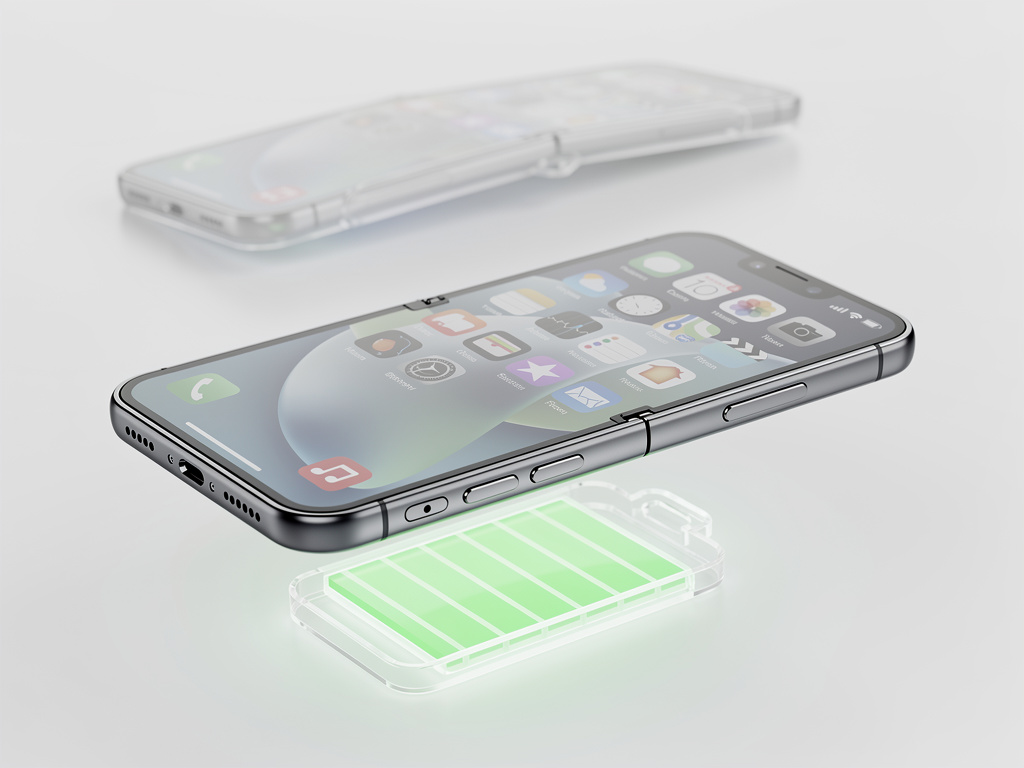
Apple’s long-rumored foldable iPhone is emerging from the shadows of speculation with details suggesting the company is preparing to make its most dramatic hardware pivot since the original iPhone’s 2007 debut. According to recent intelligence from supply chain sources and industry analysts, the tech giant is engineering a device that could redefine expectations for both foldable smartphones and battery technology, while simultaneously reimagining fundamental design elements that have remained largely unchanged for over a decade.
The centerpiece of Apple’s foldable strategy appears to be an unprecedented battery system that would dwarf anything currently available in the smartphone market. According to CNET, the device is expected to house the largest battery ever integrated into an iPhone, addressing what has historically been the Achilles’ heel of foldable devices: power consumption. This engineering feat becomes even more remarkable when considering the spatial constraints imposed by a folding mechanism, which typically consumes valuable internal volume that would otherwise be allocated to battery cells.
Industry insiders familiar with Apple’s development process suggest the company has been working on proprietary battery technology that maximizes energy density while maintaining the safety standards for which Apple has become known. The foldable form factor presents unique challenges, as the battery must be designed to withstand the mechanical stresses of repeated folding without compromising structural integrity or risking thermal issues. Apple’s solution reportedly involves a dual-battery configuration, with cells positioned on either side of the fold, connected through a flexible circuit board that can endure hundreds of thousands of fold cycles.
Reimagining Physical Controls in a Foldable Era
Beyond the battery innovations, Apple is reportedly undertaking a comprehensive redesign of the iPhone’s button architecture, according to the CNET report. This represents a significant departure from the company’s recent trajectory, which has seen incremental refinements to the volume rocker, power button, and action button introduced with the iPhone 15 Pro series. The foldable device’s unique form factor necessitates a rethinking of where and how users interact with physical controls, particularly when the device is in its folded configuration.
Sources suggest Apple is exploring capacitive touch-sensitive areas that could replace traditional mechanical buttons, similar to the approach the company attempted with the iPhone 15 Pro’s abandoned solid-state button design. However, unlike that shelved project, the foldable iPhone’s button redesign is driven by practical necessity rather than purely aesthetic considerations. When a device can exist in multiple physical states—folded, partially unfolded, and fully extended—button placement becomes a critical user experience consideration that demands innovative solutions.
The engineering team at Cupertino is reportedly considering a distributed control system where essential functions remain accessible regardless of the device’s current state. This could mean touch-sensitive areas on both the exterior and interior surfaces, potentially utilizing Apple’s Taptic Engine technology to provide haptic feedback that mimics the sensation of physical button presses. Such an approach would align with Apple’s broader strategy of reducing moving parts and potential failure points while maintaining the premium tactile experience users expect from the company’s products.
The Competitive Imperative Driving Apple’s Foldable Ambitions
Apple’s move into foldables comes as the company faces intensifying pressure from competitors who have already established footholds in this emerging category. Samsung, the current market leader in foldable devices, has iterated through multiple generations of its Galaxy Z Fold and Z Flip series, refining the technology and building consumer familiarity with the form factor. Chinese manufacturers including Huawei, Xiaomi, and OPPO have also launched increasingly sophisticated foldable devices, many of which are not available in Western markets but demonstrate the rapid pace of innovation in this space.
The delay in Apple’s entry to the foldable market, while frustrating to some observers, is consistent with the company’s historical approach to new product categories. Apple rarely pioneers entirely new device types; instead, it waits until technology matures to a point where the company believes it can deliver an experience that meets its exacting standards. This strategy has proven successful with products ranging from the iPod to the Apple Watch, where Apple entered established categories but redefined them through superior integration of hardware, software, and services.
However, the foldable market presents unique challenges that may test this approach. Unlike previous product categories where Apple could observe and learn from competitors’ missteps, foldables represent a fundamental reimagining of the smartphone form factor that requires solving problems no company has yet fully addressed. Display durability, crease visibility, software optimization for dynamic screen configurations, and the aforementioned battery challenges all remain areas where even market leaders continue to struggle. Apple’s entry into this space will be judged not just against current foldable devices but against the company’s own standard of revolutionary product introductions.
Display Technology and the Crease Conundrum
Central to any foldable device’s success is the quality and durability of its flexible display, an area where Apple is reportedly making significant investments. The company has long maintained close relationships with display manufacturers, most notably Samsung Display and LG Display, both of which have extensive experience producing foldable OLED panels. However, Apple’s requirements are understood to exceed what these suppliers currently provide to other smartphone manufacturers, particularly regarding crease visibility and long-term durability.
The persistent visibility of the crease where foldable displays bend has been a consistent criticism of existing devices, one that becomes more pronounced as displays age and are subjected to repeated folding cycles. Apple’s perfectionist approach to industrial design suggests the company will not release a foldable iPhone unless it can minimize this issue to a degree that meets its standards. Reports from the supply chain indicate Apple is working with display partners on advanced ultra-thin glass solutions and specialized coating technologies that could reduce crease visibility while maintaining the flexibility required for the folding mechanism.
Additionally, Apple is reportedly exploring display configurations that differ from the book-style fold popularized by Samsung’s Galaxy Z Fold series and the clamshell design of flip phones. While specific details remain closely guarded, patents filed by Apple suggest the company has investigated multiple folding approaches, including outward-folding designs and even tri-fold configurations. The final design will likely balance user experience considerations with manufacturing feasibility and durability requirements, all while maintaining the premium aesthetic that has become synonymous with the iPhone brand.
Software Integration and the iOS Adaptation Challenge
Perhaps the most significant challenge Apple faces with a foldable iPhone is not hardware-related but software-based. iOS, the operating system that has powered every iPhone since 2007, was designed for a fixed-size rectangular display. Adapting it to accommodate a device that can dynamically change its screen size and aspect ratio represents a fundamental architectural challenge that will require extensive modifications to the operating system’s core frameworks.
Apple has some experience with adaptive interfaces through iPadOS and the company’s approach to different iPhone screen sizes, but a foldable device presents unique complications. Applications must seamlessly transition between folded and unfolded states, potentially maintaining multiple instances of the same app or intelligently redistributing content as screen real estate changes. The company’s developer community will need comprehensive tools and guidelines to ensure third-party applications can take full advantage of the foldable form factor without requiring complete rewrites.
The integration challenge extends beyond individual applications to system-level features. Multitasking, notification management, keyboard layouts, and even basic navigation gestures may all require rethinking for a foldable context. Apple’s typical approach of maintaining tight control over both hardware and software should theoretically give the company an advantage in creating a cohesive experience, but it also means the company cannot release the device until all these elements work together seamlessly. This perfectionist approach may explain why the foldable iPhone has been delayed multiple times, with current speculation suggesting a 2025 or 2026 release window at the earliest.
Manufacturing Scale and Supply Chain Implications
When Apple eventually launches a foldable iPhone, the company will face manufacturing challenges that dwarf those of its traditional smartphone production. Foldable devices require significantly more complex assembly processes, with tighter tolerances and more potential points of failure. The folding mechanism itself, which must reliably operate hundreds of thousands of times over the device’s lifespan, represents a mechanical complexity that Apple has largely avoided in recent iPhone generations.
The company’s renowned supply chain management capabilities will be tested as it attempts to scale production of foldable devices to meet the demand typical of iPhone launches. While competitors like Samsung produce foldables in relatively modest quantities—measured in millions rather than the tens of millions typical of flagship smartphones—Apple’s market position and customer base create expectations for availability that may be difficult to meet initially. The company may need to manage customer expectations carefully, potentially launching the foldable iPhone as a premium, limited-availability product before ramping to full-scale production.
Component sourcing presents additional complications, as the specialized parts required for foldable devices are produced by a limited number of suppliers, many of whom already serve Apple’s competitors. The company’s legendary purchasing power and willingness to invest in supplier capacity could help secure necessary components, but the foldable iPhone’s success may ultimately depend on Apple’s ability to develop proprietary technologies that differentiate its device from competitors while being manufacturable at scale.
Pricing Strategy and Market Positioning
The financial implications of Apple’s foldable iPhone extend beyond manufacturing costs to fundamental questions about market positioning and pricing strategy. Current foldable smartphones command premium prices, with devices like Samsung’s Galaxy Z Fold series retailing for $1,800 or more. Apple’s foldable iPhone will almost certainly occupy the highest price tier in the company’s product lineup, potentially approaching or exceeding $2,000 for base configurations.
This pricing presents both opportunities and challenges for Apple. On one hand, the company has successfully cultivated a customer base willing to pay premium prices for its products, and the foldable iPhone would represent the ultimate expression of that premium positioning. The device could serve as a halo product that reinforces Apple’s image as an innovation leader while generating substantial profit margins. On the other hand, the addressable market for smartphones priced above $2,000 is inherently limited, even among Apple’s affluent customer base. The company will need to carefully consider whether the foldable iPhone is positioned as a replacement for the flagship iPhone Pro Max or as an entirely separate product category that sits above the traditional iPhone lineup.
The massive battery capacity reported by CNET could serve as a key justification for the premium pricing, addressing one of the primary concerns potential foldable buyers express: whether these devices can deliver all-day battery life despite their larger, more power-hungry displays. If Apple can demonstrate that its foldable iPhone not only matches but exceeds the battery performance of traditional iPhones, it could overcome a significant barrier to mainstream adoption. Combined with the company’s ecosystem of services and accessories, a foldable iPhone with exceptional battery life could attract not just early adopters and technology enthusiasts but also professionals and power users who have been hesitant to embrace foldables due to practical concerns about longevity and reliability.


 WebProNews is an iEntry Publication