
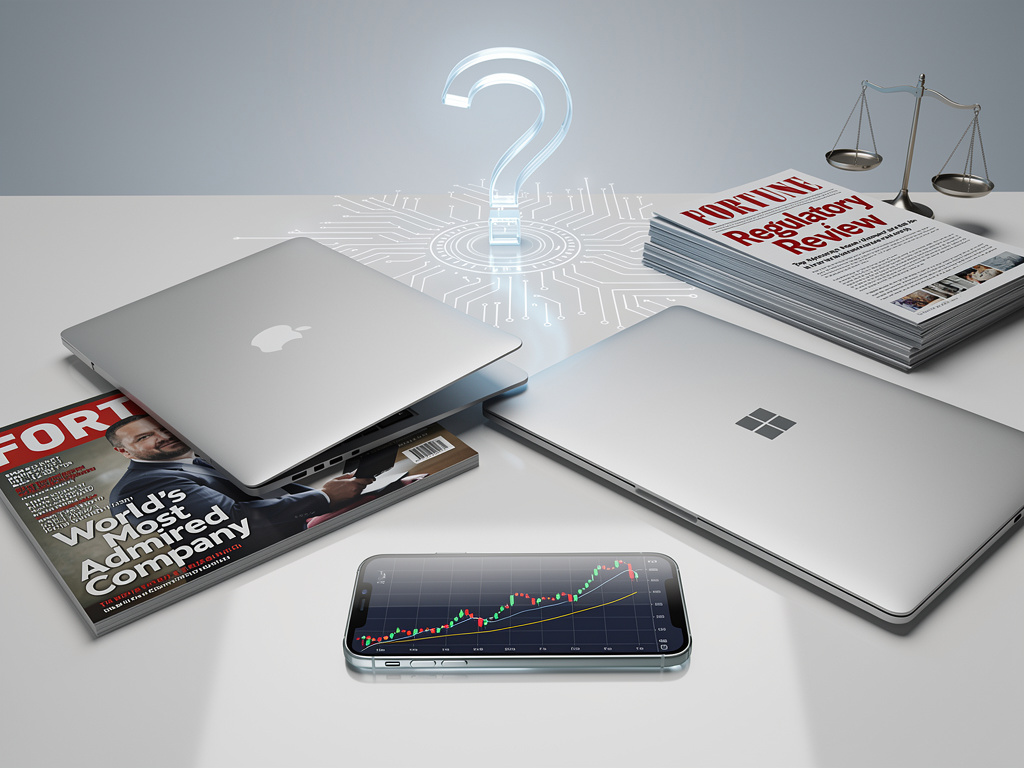
Apple’s Enduring Crown: Inside the Contradictions of Corporate Admiration Amid Market Headwinds
CUPERTINO, Calif. — For the 19th consecutive year, Apple Inc. has secured the top position on Fortune’s list of the World’s Most Admired Companies, a remarkable streak of corporate acclaim that seems almost routine. The distinction, a result of a poll of some 3,750 executives, directors, and analysts, is more than just a public relations victory; it’s a testament to a deeply entrenched reputation for operational excellence and transformative innovation. The company didn’t just win; it dominated, achieving the number one rank in all nine of the survey’s key attributes, including Quality of Products, Innovation, and Financial Soundness, as reported by AppleInsider.
This peer-reviewed accolade paints a picture of an unassailable corporate titan, a perception reinforced by a legacy of category-defining products from the iPhone to the Apple Watch. The survey, detailed in Fortune’s official publication, places Apple ahead of a formidable list of corporate giants, with Microsoft and Amazon rounding out the top three. For investors and industry observers, the ranking reaffirms the belief in Apple’s long-term investment value and the quality of its management, led by Chief Executive Tim Cook.
Yet, this year’s crowning arrives at a moment of profound contradiction for the technology giant. While it basks in the admiration of its peers, the company is simultaneously navigating some of the most significant strategic and regulatory challenges in its history. The very foundations of its business model are being tested by global regulators, its market leadership is being challenged by a resurgent rival, and its reputation for relentless innovation is facing a new, formidable test in the burgeoning field of artificial intelligence.
The Bedrock of Admiration: Product Ecosystem and Financial Fortress
The core of Apple’s enduring admiration lies in its unparalleled ability to merge hardware, software, and services into a seamless and highly desirable ecosystem. This integration creates a powerful lock-in effect that competitors have struggled to replicate, fostering immense brand loyalty and consistent revenue streams. The perfect score in “Quality of Products/Services” is not an abstract metric; it is a reflection of the daily experience of hundreds of millions of users who find value in the interoperability of their iPhone, Mac, and iCloud services. This ecosystem is a self-reinforcing engine of growth and a formidable competitive moat.
Financially, Apple remains a fortress. Its massive cash reserves, staggering profitability, and disciplined use of corporate assets provide a stability that is the envy of the corporate world. This financial might allows the company to make massive, long-term bets on new technologies and product categories without being beholden to the short-term whims of the market. The recent launch of the Apple Vision Pro, a high-risk, high-reward venture into spatial computing, is a prime example of this strategy in action—a multi-billion-dollar gamble that only a company with Apple’s resources and long-term vision could undertake.
This combination of a beloved product ecosystem and unshakable financial health creates a powerful halo effect that heavily influences the perception of executives surveyed by Fortune. They see a company that not only executes flawlessly on its current business but also has the resources and strategic patience to define the future. This perception of stability and forward-momentum is a cornerstone of its 19-year reign as the most admired enterprise.
Cracks in the Gilded Facade: Regulatory Sieges and Market Realities
Despite the glowing report from its corporate peers, the ground is shifting beneath Apple’s feet. In a landmark concession to regulators, the company recently announced significant changes to its App Store and iOS operating system in the European Union to comply with the Digital Markets Act (DMA). These changes, which allow for alternative app stores and payment systems, strike at the heart of Apple’s tightly controlled—and highly lucrative—services business, as detailed by The Verge. Similar antitrust pressures are mounting in the United States, with the Department of Justice reportedly preparing its own significant case against the company.
These regulatory battles challenge the narrative of unimpeachable management and social responsibility. Critics argue that the very practices that have made Apple so profitable and its ecosystem so seamless are anti-competitive, stifling innovation and harming smaller developers. This growing chorus of criticism from regulators and competitors presents a significant reputational risk that could, over time, erode the admiration the company currently enjoys.
The market has also delivered a recent dose of humility. In January, Microsoft briefly surpassed Apple as the world’s most valuable company, a symbolic shift driven largely by investor enthusiasm for Microsoft’s aggressive and early moves in generative AI, according to a report from Reuters. This was compounded by mounting concerns over iPhone sales, particularly in China, where analysts have noted a significant slowdown in demand amid heightened competition from local rivals like Huawei. As noted by CNBC, this weakness in a critical international market raises questions about Apple’s near-term growth trajectory and its vaunted “Global Competitiveness.”
Perception Versus Performance: An Executive Vote of Confidence
How can a company facing such intense headwinds still command such universal admiration from its peers? The answer may lie in the nature of the survey itself. The Fortune ranking is not just a measure of current stock performance or quarterly earnings; it is a reflection of a long-cultivated reputation for quality, resilience, and strategic clarity. The executives and directors polled are voting on a track record of excellence that spans nearly two decades of disruption and reinvention.
In this context, the admiration is a vote of confidence in Tim Cook’s leadership and the company’s proven ability to navigate complex challenges. The market may be captivated by the promise of AI chatbots, but corporate leaders see a company that methodically entered and then dominated the smartphone, tablet, and smartwatch markets. They are betting that Apple’s deliberate, product-focused approach will ultimately yield a more integrated and user-friendly application of AI than the solutions currently being rushed to market by competitors. In a recent earnings call, Mr. Cook confirmed Apple is investing “tremendously” in the space and plans to share details later this year, as reported by MacRumors.
Ultimately, the 19th consecutive title as the World’s Most Admired Company serves as both a lagging indicator of past success and a potential leading indicator of future resilience. The deep reservoir of goodwill and respect from the global business community is a strategic asset in itself, providing Apple with the latitude to weather regulatory storms and invest for the long term. The coming year will be a crucial test. Whether Apple can successfully integrate generative AI, navigate the new regulatory environment in Europe, and reignite growth in China will determine if its peers will grant it an unprecedented two-decade run at the top.


 WebProNews is an iEntry Publication