
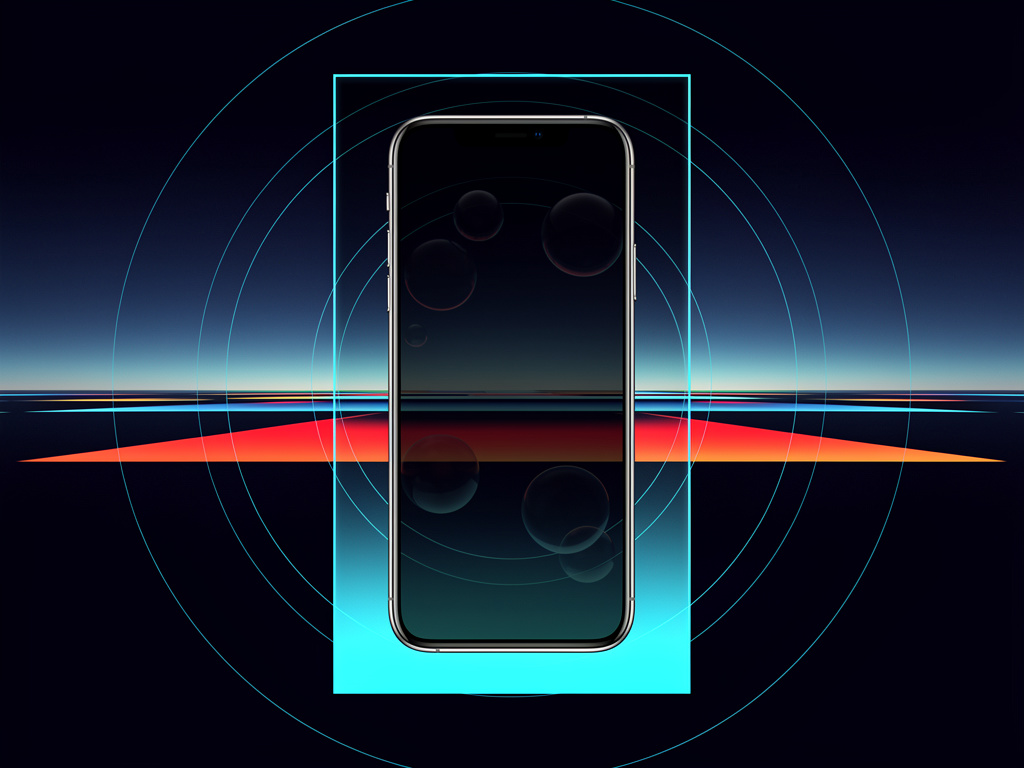
For years, the vision has tantalized Apple watchers and industrial design enthusiasts alike: an iPhone with no physical buttons, no visible ports, no camera bump — just a continuous sheet of glass and metal, unbroken by the compromises of current hardware. It’s the platonic ideal of what Jony Ive once described as technology disappearing into the object itself. And it’s not happening anytime soon.
According to a detailed report from AppleInsider, Apple’s ambitions for a truly all-screen iPhone — one that would eliminate the Dynamic Island, integrate under-display Face ID, and possibly even hide the front-facing camera beneath the panel — remain years away from commercial reality. The technological hurdles aren’t trivial. They’re foundational.
The report draws on supply chain analysis and commentary from display industry sources to paint a picture of a company that wants to get there but simply can’t yet. Not because of a lack of will or investment, but because the physics and manufacturing tolerances of current display technology won’t cooperate.
The Under-Display Camera Problem No One Has Solved Well
Samsung tried it. ZTE tried it. The results have been, charitably, mediocre.
Under-display cameras — the technology that would allow a front-facing sensor to sit behind the OLED panel and capture images through the pixels themselves — have existed in shipping Android devices for several years now. But every implementation has involved visible trade-offs: reduced image quality, a faintly visible circle where pixel density drops to let light through, and compromised performance in low-light conditions. For a company that sells tens of millions of units at premium prices and markets camera quality as a headline feature, “good enough” isn’t good enough.
Apple’s bar is higher than its competitors’ in this specific area. The company didn’t adopt OLED screens until years after Samsung popularized them in flagship phones. It waited on 5G. It waited on widgets. The pattern is consistent: Apple enters when it believes it can deliver an experience that meets its own threshold, not when the technology first becomes available. And under-display camera tech, as it stands today, doesn’t meet that threshold.
According to display analyst Ross Young, who has been cited across multiple industry reports, Apple has been evaluating under-display Face ID and camera solutions but hasn’t committed to a timeline for implementation. The Dynamic Island — introduced with the iPhone 14 Pro in 2022 — was itself a clever piece of misdirection, turning a hardware limitation (the pill-shaped cutout housing the TrueDepth sensor array) into a software feature. It bought Apple time. Quite a lot of it, apparently.
The technical challenge isn’t just about the camera. Face ID requires an infrared dot projector, a flood illuminator, and an infrared camera working in concert. Hiding all three behind an active display area while maintaining the security and speed users expect is a substantially harder problem than tucking a single selfie camera under the glass.
So the Dynamic Island stays. Possibly through 2027 or beyond.
That timeline might frustrate enthusiasts who follow every leak and patent filing, but it reflects a reality that Apple’s competitors have also struggled with. Samsung’s Galaxy S series still uses a visible punch-hole cutout for its front camera. Google’s Pixel line does the same. The industry consensus, quietly, is that under-display sensors aren’t ready for prime time in devices where camera quality and biometric security are non-negotiable.
Meanwhile, Apple has been making incremental changes. The iPhone 16 Pro reduced the size of the Dynamic Island slightly. Future models are expected to shrink it further. But elimination? That’s a different engineering challenge entirely.
Ports, Buttons, and the Minimalist Endgame
The all-screen dream doesn’t stop at the front of the device. Apple’s long-rumored goal of removing physical buttons and even the Lightning — now USB-C — port has been a recurring theme in patent filings and analyst speculation for the better part of a decade.
The company took a step in this direction with the iPhone 15 Pro’s introduction of the Action Button, replacing the legacy mute switch. And with the iPhone 16 lineup, Apple added the Camera Control button — a capacitive-touch-sensitive physical key that blurs the line between mechanical and solid-state input. These are iterative moves toward a device with fewer moving parts and fewer points of mechanical failure.
But fully solid-state buttons — the kind Apple reportedly prototyped and then shelved ahead of the iPhone 15 launch — remain elusive. The haptic feedback systems needed to convincingly simulate a button press through a rigid surface work well in controlled environments. In the real world, with cases, screen protectors, sweaty fingers, and gloved hands, the experience degrades. Apple learned this lesson with the iPhone 7’s non-moving home button, which was generally well-received, and the MacBook’s Force Touch trackpad, which most users can’t distinguish from a mechanical one. But applying that same approach to side buttons that users press dozens of times a day, often without looking, is harder than it sounds.
The port question is equally complex. Apple clearly prefers wireless everything — AirDrop, AirPlay, MagSafe charging, iCloud sync. The company has pushed aggressively toward a wireless-first usage model. But regulatory requirements in the EU now mandate USB-C, and removing the port entirely would create issues for diagnostics, data recovery, and the significant number of users who still charge via cable. CarPlay, in many vehicles, still requires a wired connection.
A portless iPhone isn’t impossible. It’s just impractical right now, for reasons that are as much about user behavior and regulatory reality as they are about technology.
Recent supply chain reports, including analysis shared by AppleInsider, suggest Apple continues to invest heavily in the component technologies that would eventually enable a more minimal device. Under-display Touch ID — a fingerprint sensor embedded beneath the screen — has been rumored for multiple iPhone generations and may finally appear as a complement to Face ID rather than a replacement. This would add biometric redundancy without requiring any visible hardware on the front face of the device.
Apple’s work on thinner devices also plays into this narrative. The anticipated iPhone 17 Air, expected later in 2025, reportedly pushes the boundaries of how thin an iPhone can be while maintaining battery life and thermal performance. Thinness alone isn’t the goal — it’s a proxy for the kind of engineering density that would be required in a truly all-screen, minimal-port device. Every millimeter matters when you’re trying to stack antennas, batteries, haptic engines, and camera modules into a form factor with no external interruptions.
And then there’s the display itself. Apple has been developing its own microLED technology, a long-term project that would give the company more control over pixel architecture and potentially enable better transparency for under-display sensors. But microLED has faced its own delays. Apple reportedly scaled back some of its microLED ambitions in 2024, pushing expected adoption further out. The Apple Watch was supposed to be the first product to get a microLED display; that timeline has slipped.
The interplay between all these technologies — under-display biometrics, under-display cameras, solid-state buttons, wireless-only connectivity, microLED panels — is what makes the all-screen iPhone so difficult. Each individual technology is advancing. But they all need to converge simultaneously in a single device that ships at scale, works reliably, and meets Apple’s quality standards. That convergence point keeps moving.
Why the Wait Might Actually Be the Right Call
There’s a reasonable argument that Apple’s patience here is a competitive advantage, not a weakness.
Every company that has rushed an under-display camera to market has paid a reputational price. Samsung’s Galaxy Z Fold series used under-display cameras in some models and the results were widely criticized. ZTE’s Axon series showcased the technology early but never gained meaningful market share, in part because the camera quality couldn’t compete with conventional designs. Consumers noticed. Reviewers were blunt.
Apple ships roughly 230 million iPhones per year. The margin for error on a feature that affects the front-facing camera — the one used for FaceTime, selfies, and video calls — is essentially zero. A perceptible drop in image quality, even a subtle one, would generate millions of complaints and unfavorable comparisons in review after review.
So Apple waits. It refines. It lets others take the arrows.
This isn’t passivity. Apple’s R&D spending has exceeded $30 billion annually in recent fiscal years. A significant portion of that goes toward display technology, sensor miniaturization, and the kind of materials science that would underpin a truly buttonless, portless, notchless device. The company holds hundreds of patents related to under-display sensing, flexible display architectures, and solid-state input mechanisms.
But patents aren’t products. And prototypes aren’t shipping hardware.
For now, the iPhone’s design evolution will continue in increments. A slightly smaller Dynamic Island here. A new button form factor there. Thinner bezels. Better coatings. Each generation a fraction closer to the all-screen ideal, but never quite arriving.
The dream of a perfectly uninterrupted iPhone — a device that is, from the front, nothing but screen — remains one of consumer technology’s most compelling design goals. Apple clearly shares that vision. It’s just honest enough with itself, or perhaps stubborn enough in its standards, to admit it isn’t ready yet. And given the state of the underlying technology, that honesty looks less like hesitation and more like discipline.
The all-screen iPhone is coming. Just not this year. Probably not next year either.


 WebProNews is an iEntry Publication