
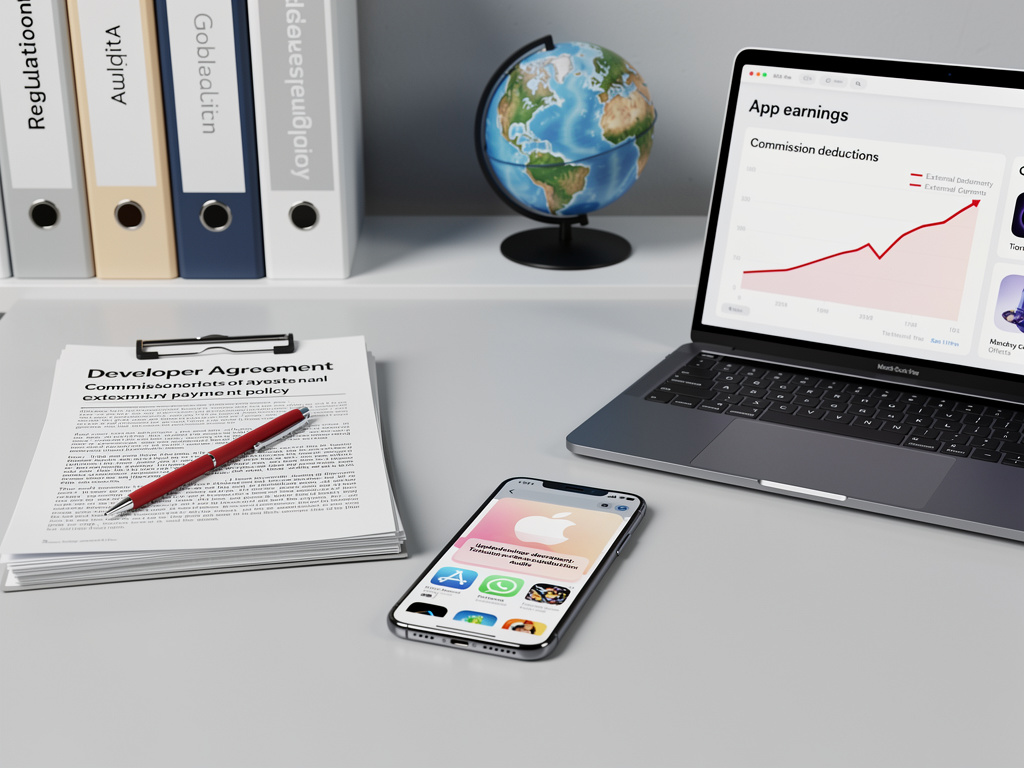
Apple Inc. has inserted itself into the role of debt collector in its latest developer agreement, empowering the iPhone maker to deduct unpaid commissions and fees directly from developers’ earnings. The update, published this week on Apple’s developer site, arrives amid escalating battles over app-store payments and comes as regulators worldwide scrutinize the company’s business practices.
Under the revised Apple Developer Program License Agreement, the company can ‘offset or recoup’ sums it deems owed, including commissions on in-app purchases and other charges, from funds Apple collects on developers’ behalf from end-users. This mechanism targets regions where laws permit links to external payment systems, such as the European Union, U.S. and Japan, where developers must still report and pay commissions on those transactions, according to TechCrunch.
The clause states: ‘You authorize Apple to offset or recoup any amounts you owe Apple, including but not limited to any unpaid commissions, fees, charges, taxes, or other amounts, from any amounts collected by Apple on your behalf from end-users.’ Developers face requirements to provide detailed reports on external payments, with Apple reserving the right to audit and recover shortfalls.
New Tools for Fee Enforcement
This shift builds on court rulings and antitrust pressures forcing Apple to allow external links. A U.S. appeals court recently modified an Epic Games injunction, permitting Apple to charge commissions on external purchases, as reported by AppleMagazine. In the EU, developers complain of higher effective costs under Apple’s ‘core technology fee’ and commission structure, prompting calls for regulatory action from groups like the Coalition for App Fairness.
Posts on X highlight developer unease. One from Techticia noted: ‘Apple developer fees update allows direct collection from in-app purchases and external payment methods.’ Another from The Mainstream warned of ‘unpredictable deductions from their earnings,’ reflecting sentiment among indie developers fearing cash-flow disruptions.
Apple’s move addresses underreporting risks in hybrid payment environments. If a developer links to an external processor but fails to remit the full 27% commission—now applicable post-Epic ruling—Apple can claw back from future App Store proceeds, per details in Yahoo Finance, which republished the TechCrunch analysis.
Developer Backlash Builds
Industry insiders view the update as a preemptive strike against evasion. ‘Apple has released an updated developer license agreement that allows it to recover unpaid commissions,’ stated Startup News FYI. For small studios, this could mean sudden shortfalls; a paid app’s one-time revenue or subscription payouts might be garnished without prior notice.
The agreement also mandates compliance with local tax reporting, expanding Apple’s recoupment to include disputed taxes. In Japan and South Korea, where external payments are permitted, developers must integrate Apple’s reporting APIs or face offsets. This aligns with Apple’s privacy updates in the same document, tightening data-sharing rules for alternative storefronts, as covered by 9to5Mac.
X discussions amplify concerns. Techiest posted: ‘Apple just updated its developer agreement, giving itself unprecedented power to act as a debt collector for unpaid fees.’ Such posts underscore fears that the policy could stifle innovation by prioritizing Apple’s revenue security over developer autonomy.
Legal and Global Ripples
Legal experts predict challenges. The Epic v. Apple saga, where a judge ruled Apple lied about external commissions, sets precedent. Judge Yvonne Gonzalez Rogers ordered zero commissions on off-app sales initially, but appeals restored Apple’s 27% cut, per Mezha. Developers now urge EU action, arguing U.S. peers gain advantages, according to The Economic Times.
Apple’s Slashdot coverage details how the firm can deduct from ‘any amounts collected by Apple on your behalf,’ extending to subscriptions and one-time fees. This offsets losses from fee reductions for small developers—15% for those under $1 million annually—but enforces rigorously on larger players.
Globally, the policy tests boundaries. In the Netherlands, dating apps won external payment rights, yet Apple imposes fees. Developers must now balance compliance costs against App Store reach, with non-payment risking account suspension.
Strategic Calculations for Developers
For enterprises like Spotify or Netflix, already using web-based billing, the clause demands meticulous reporting. Failure invites audits, with Apple able to withhold payouts. Indie developers, per X chatter from CosmicMeta, decry it as ‘new financial claws from Cupertino.’
Apple defends the changes as necessary for ecosystem integrity. The developer news page (Apple Developer News) frames updates alongside iOS 19 betas, but fee enforcement dominates discourse. Analysts at FindArticles note: ‘Apple announced it would now have the right to deduct unpaid commissions, fees and other charges from money.’
Strategic responses vary: some bolster accounting, others explore alternative platforms like Android. The agreement’s acceptance is mandatory for App Store access, locking developers into the system.
Broader Platform Power Dynamics
This escalation mirrors Google’s parallel policies, but Apple’s closed ecosystem amplifies impact. With $85 billion in 2024 services revenue, mostly App Store commissions, protecting that stream is paramount amid DMA compliance in Europe.
Regulators watch closely. EU probes into Apple’s €500 million fine and new fees continue, with developers like Deezer pushing back via CAF. U.S. DOJ suits allege monopolistic practices, potentially challenging recoupment clauses.
The update, effective immediately for new enrollments, forces a reckoning. Developers must now treat Apple not just as a distributor, but as a financial enforcer with direct access to their revenue streams.


 WebProNews is an iEntry Publication