
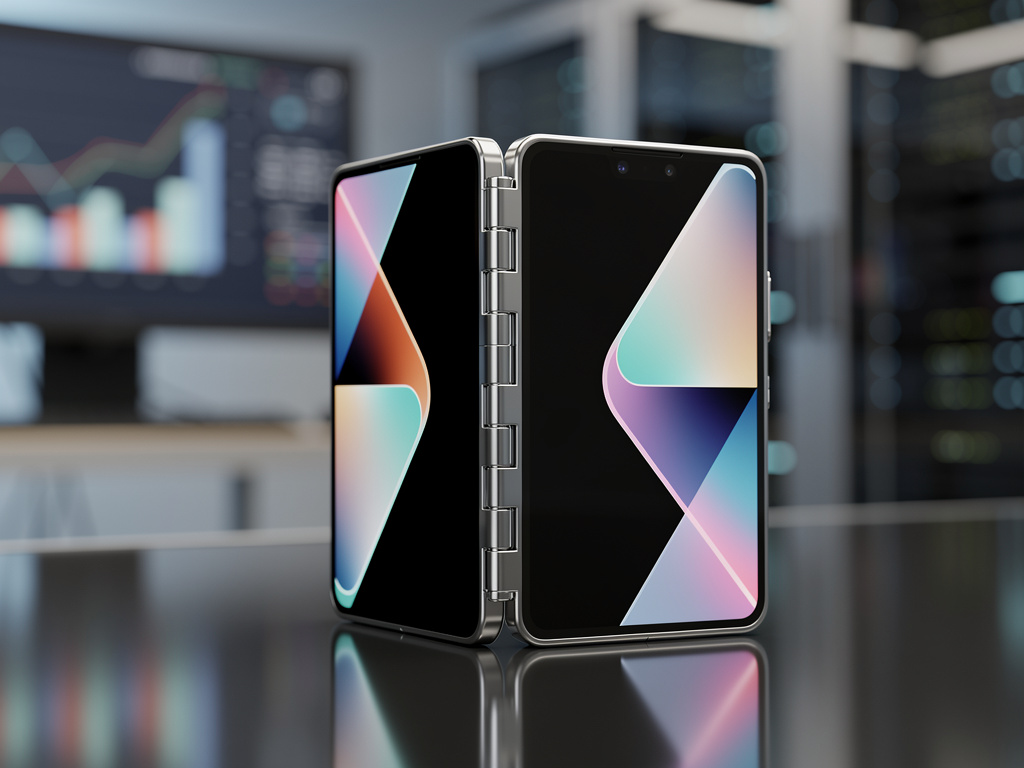
Unfolding Perfection: Apple’s Bold Leap into Crease-Free Foldables
In the ever-evolving world of smartphone innovation, Apple Inc. has long been synonymous with polished, premium devices that set industry benchmarks. Now, whispers from the supply chain and leaked renders suggest the tech giant is on the cusp of revolutionizing foldable technology with a crease-free iPhone. This development could address one of the most persistent pain points in foldable devices: the visible crease that mars the display when unfolded. Drawing from recent leaks and industry reports, this breakthrough positions Apple to potentially dominate a market segment currently led by rivals like Samsung and Google.
The journey toward a foldable iPhone has been shrouded in secrecy, with Apple notoriously tight-lipped about its R&D efforts. However, a recent leak detailed in an article from MSN reveals intriguing specifics about the device’s engineering. According to the report, Apple’s foldable iPhone features a book-style design that unfolds into a larger screen, boasting a near-invisible crease thanks to advanced hinge mechanisms and display materials. This isn’t just cosmetic; it’s a feat of materials science that could make the device feel more like a seamless tablet than a compromised hybrid.
Insiders familiar with Apple’s prototyping process indicate that the company has been iterating on foldable concepts for years, patenting technologies to eliminate creases as far back as 2024. Posts on X (formerly Twitter) from reliable tech accounts like AppleTrack and 9to5Mac have amplified these rumors, noting that Apple achieved a “breakthrough” in crease elimination, with prototypes entering the engineering validation test (EVT) stage. This stage is crucial, as it precedes mass production and ensures the device can withstand real-world use without the display degrading over time.
Engineering Marvels Behind the Seamlessness
At the heart of this innovation is Apple’s rumored use of liquid metal hinges and ultra-thin glass composites, which allow the screen to fold without creating a permanent indentation. Reports from TechRadar highlight ongoing technical challenges, such as ensuring durability while maintaining thinness, but suggest Apple is close to overcoming them. The foldable iPhone is said to feature a 5.5-inch external display for quick glances and a 7.8-inch internal screen when opened, rivaling the iPad Mini in functionality.
Leaked renders shared by YouTuber Jon Prosser, as covered in a Daily Mail Online piece, visualize a sleek, thin profile that defies expectations for foldables. Unlike bulkier competitors, Apple’s design prioritizes portability, with a hole-punch camera on the outer screen and a sophisticated camera array inside. This setup promises high-end photography capabilities, powered by what leaks describe as an A20 Pro chip, ensuring smooth performance for multitasking and augmented reality applications.
Beyond hardware, Apple’s software ecosystem will likely play a pivotal role. iOS adaptations for foldables could include split-screen modes optimized for the larger canvas, drawing from iPadOS features. X posts from accounts like MacRumors echo this, referencing supply chain sources that confirm the device has “solved the crease problem,” making it the first truly crease-free foldable on the market. This claim, if true, would give Apple a significant edge, as current foldables from Samsung and others still exhibit noticeable creases after prolonged use.
Market Implications and Competitive Pressures
The timing of these leaks aligns with Apple’s reported push toward a 2026 launch, as detailed in a MacRumors report. With development advancing to mass production prep, industry analysts speculate on pricing, with estimates ranging from $1,800 to $2,400—positioning it as a premium offering. This strategy mirrors Apple’s history of entering markets late but with superior execution, much like the Apple Watch or AirPods.
Competitors aren’t standing still. Samsung’s Galaxy Z Fold series has iterated on crease reduction, but none have fully eradicated it. A Interesting Engineering article on a Christmas Eve leak emphasizes Apple’s thin design and crease-free screen as potential game-changers, possibly pressuring rivals to accelerate their own innovations. For consumers, this means foldables could finally shed their niche status, becoming mainstream tools for productivity and entertainment.
On X, sentiment is buzzing with excitement and skepticism. Posts from tech enthusiasts and leakers like AppleLeaker discuss the $2,400 price tag and EVT progress, while others question if Apple can deliver without compromises. This online chatter underscores the high stakes: if Apple succeeds, it could redefine user expectations for flexible displays, much like the iPhone did for touchscreens in 2007.
Challenges in Prototyping and Supply Chain Dynamics
Despite the optimism, hurdles remain. Apple’s insistence on perfection has reportedly delayed the project, with TechSpot noting that early prototypes faced issues with display longevity and hinge reliability. The company is said to have produced around 100 crease-free units for testing, a milestone highlighted in X posts from 9to5Mac, indicating confidence in scaling up.
Supply chain partners, including display manufacturers like Samsung Display and LG, are crucial. Leaks suggest Apple has collaborated on specialized OLED panels that resist creasing through nanoscale engineering. A The Gadgeteer piece argues this could “kill the crease” for good, eliminating a compromise that has plagued foldables since their inception.
Moreover, regulatory and environmental considerations factor in. Apple’s focus on sustainable materials could integrate into the foldable’s design, using recycled metals for the hinge. Industry insiders speculate this aligns with broader ESG goals, potentially appealing to eco-conscious consumers amid growing scrutiny of tech manufacturing.
Design Philosophy and User Experience Focus
Apple’s design ethos—form following function—shines through in these leaks. The book-style foldable, as opposed to a flip phone, caters to professionals needing a portable workstation. Renders from Mint describe premium features like a near-invisible crease and robust build, ensuring the device feels like an extension of the iPhone lineup rather than a gimmick.
User experience will be key. Imagine unfolding the device for immersive video calls or editing documents on a larger screen, seamlessly switching to compact mode for on-the-go use. X discussions from TrueTech Official mention liquid metal hinges as a breakthrough, enhancing smoothness and durability.
Critics, however, point to potential drawbacks like battery life in a thin chassis. Yet, Apple’s track record suggests these will be addressed, possibly with advanced power management in the A20 Pro chip.
Future Prospects and Industry Ripple Effects
As 2026 approaches, anticipation builds. A Gadget Hacks report on the iPhone Fold’s breakthrough emphasizes its role in shifting market dynamics, with Apple’s entry likely spurring innovation across the board.
For developers, this opens new avenues for apps optimized for foldables, integrating with Apple’s AR/VR ecosystem. The crease-free tech could extend to future iPads or Macs, blurring lines between device categories.
Ultimately, if these leaks hold, Apple’s foldable iPhone represents more than a new product—it’s a statement on the maturity of flexible displays, promising a future where screens adapt effortlessly to our needs.
Innovation Timeline and Patent Insights
Tracing back, Apple’s patents from 2024, as noted in X posts from System Settings, laid the groundwork for crease-free displays. This long-term investment underscores a deliberate pace, contrasting with rivals’ rushed releases.
Recent advancements, per another Gadget Hacks piece, reveal a 2026 timeline with mass production gearing up. The engineering validation stage ensures reliability, with tests simulating thousands of folds.
Supply chain reports indicate partnerships are solidifying, potentially leading to exclusive features like enhanced color accuracy in the OLED panel.
Consumer Expectations and Pricing Strategy
Pricing remains a hot topic. At up to $2,400, as speculated in X leaks from AppleLeaker, it targets affluent users, but value-added features like superior cameras and integration with Apple services could justify the cost.
Comparisons to existing foldables show Apple’s potential advantage in ecosystem lock-in, where seamless continuity between devices enhances appeal.
Feedback from early renders, visualized in videos from iClarified on X, suggests strong interest, with consumers eager for a crease-free experience.
Technological Underpinnings and Materials Science
Delving deeper, the crease-free magic likely stems from self-healing polymers or advanced laminates that distribute stress evenly. This aligns with reports from Gadget Hacks, highlighting Apple’s breakthrough.
Hinge design, possibly incorporating shape-memory alloys, ensures flatness upon unfolding. Such innovations could influence other sectors, like wearables.
In essence, Apple’s approach combines hardware prowess with software finesse, setting a new standard.
Global Rollout and Market Reception
Launch strategies may include staggered releases, starting in key markets like the US and China. Analyst buzz on X predicts high demand, potentially straining initial supply.
Reception could hinge on real-world performance, but if creaseless claims prove true, it might convert skeptics.
This foldable could also boost Apple’s revenue streams, diversifying beyond traditional iPhones amid saturating markets.
Refining the Vision for Tomorrow’s Devices
As prototypes evolve, refinements in thickness and weight will be critical. Leaks suggest a thinner-than-expected build, enhancing portability.
Integration with emerging tech like AI-driven interfaces could make the device indispensable.
Looking ahead, Apple’s foldable ambitions signal a commitment to pushing boundaries, ensuring its place at the forefront of mobile innovation.


 WebProNews is an iEntry Publication