
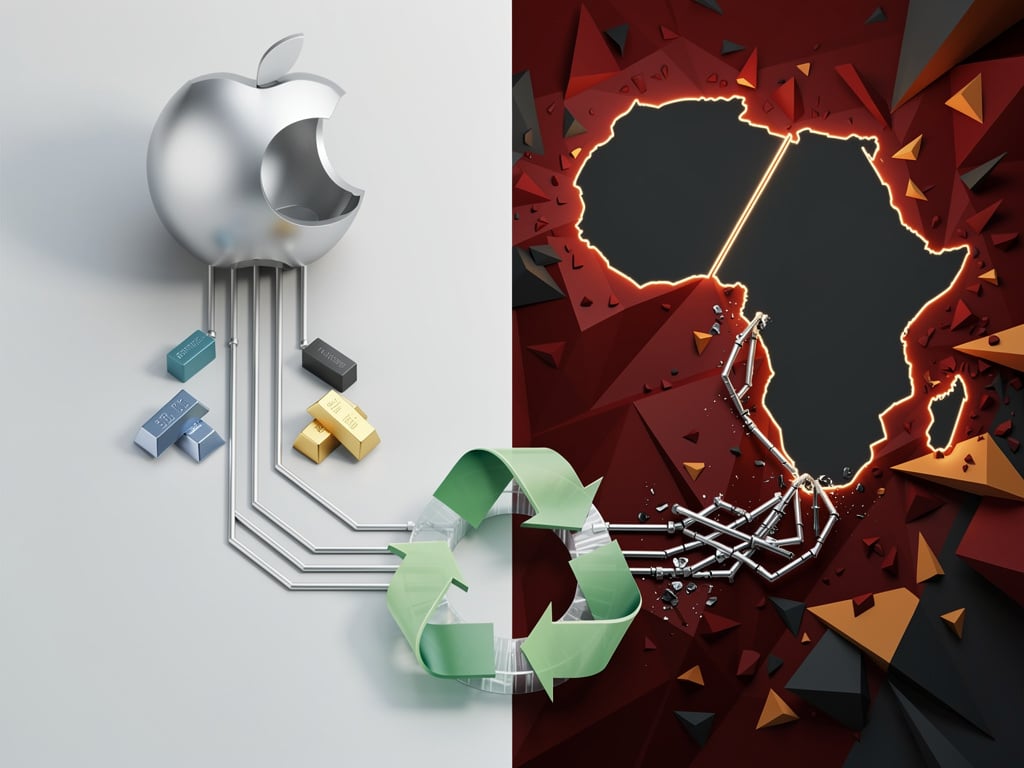
Apple has once more declared its supply chain free of minerals that directly fund armed groups in central Africa. The company’s latest report to regulators states there exists no reasonable basis to conclude that any of the 234 smelters and refiners processing tin, tantalum, tungsten or gold for its products in 2024 financed conflict in the Democratic Republic of the Congo or neighboring states.
The finding comes at a delicate moment. Advocacy groups and the Congolese government itself have accused the iPhone maker of turning a blind eye to smuggling routes that launder minerals from militia-controlled mines through Rwanda. Yet Apple’s data paints a picture of rigorous oversight. For the tenth year running, 100 percent of identified smelters participated in independent third-party audits. Since 2009 the company has removed 203 such facilities from its network.
The Apple Conflict Minerals Report for 2024 leaves little room for ambiguity. “Based on our due diligence, including analyzing the information provided by third-party audit programs, upstream traceability programs, independent reporting, and our suppliers, we found no reasonable basis for concluding that any smelters or refiners of 3TG identified in our supply chain as of December 31, 2024 directly or indirectly financed or benefited armed groups in the Democratic Republic of the Congo or an adjoining country.”
That assertion directly undercuts complaints leveled against the company in recent years. In November 2025 the advocacy organization IRAdvocates filed suit in Washington, D.C., claiming Apple’s supply chain still includes cobalt, tin, tantalum and tungsten linked to child labor, forced labor and armed groups in Congo and Rwanda. The group pointed to three Chinese smelters on Apple’s own list that allegedly processed coltan smuggled from militia-seized mines. Reuters reported the complaint alleges Apple’s accounting for recycled cobalt allows mixing with ore from conflict zones.
Apple pushed back immediately. A spokesman told Reuters the claims were “baseless.” The company had instructed suppliers to stop sourcing 3TG from the DRC and Rwanda as early as June 2024 after reports of escalating regional conflict, smuggling and illegal taxation. Engagement with suppliers on the new restrictions continues.
Earlier legal pressure from the Congolese government produced similar denials. Criminal complaints filed in France and Belgium in late 2024 accused Apple subsidiaries of covering up war crimes through their mineral purchases. Apple disputed those allegations too. It suspended purchases traceable to the DRC while maintaining its position that audits reveal no direct link to armed groups.
The disconnect between Apple’s filings and its critics runs deeper than one year’s data. Previous complaints, including protests outside Apple stores in 2024 and questions from the DRC government about supplier conduct, suggested the company benefited indirectly from minerals that pass through Rwanda. Production figures tell part of the story. Rwanda reports almost no domestic output of certain 3T minerals, yet exports significant volumes. Investigators have long alleged systematic laundering from Congolese mines.
Apple does not buy minerals straight from mines. It relies on suppliers further up the chain and demands compliance with its Supplier Code of Conduct and Responsible Sourcing Standard at every level. The company participates in the Responsible Minerals Initiative and supports multistakeholder efforts. It publishes its smelter list and encourages audits under the OECD due diligence framework.
Still, full traceability remains elusive. Smelters often report aggregate data. Recycled material complicates the picture further. Apple aims to reach 100 percent recycled cobalt in all its designed batteries by the end of 2025 using mass balance accounting. The same target applies to tin soldering, gold plating in circuit boards and rare earth elements in magnets. In 2024 the firm reported 76 percent recycled cobalt in devices according to some coverage, though spokespeople have cited higher figures for batteries specifically.
The AppleInsider analysis published May 28, 2026 highlights how the newest report appears to contradict the wave of complaints. Where Apple once terminated suppliers found sourcing from conflict areas in 2018, 2019 and 2022, it now insists none of the current participants show such ties. The company cannot always pinpoint exact country of origin. That limitation fuels skepticism among watchdogs who argue the system permits plausible deniability.
And the human cost in eastern Congo stays grim. Armed groups control mining sites. They tax shipments, exploit child labor and commit atrocities. The conflict has killed thousands and displaced hundreds of thousands. Cobalt, which Apple uses in batteries, comes predominantly from the DRC. The country supplies roughly 70 percent of global output. Tightened Congolese export controls aim to starve militias of revenue but have also squeezed legitimate supply chains.
Apple’s report acknowledges these realities. It describes support for local organizations in mining communities and engagement with civil society. It stresses that removal of a supplier often fails to remedy conditions for workers and may simply shift problems elsewhere in the industry. The preferred approach remains corrective action plans, training and ongoing audits. Suppliers receive 30 to 90 days to address shortcomings.
Yet critics remain unconvinced. The IRAdvocates lawsuit seeks a court declaration that Apple violates certain standards plus an injunction against what it calls deceptive marketing around responsible sourcing. No monetary damages are requested. A University of Nottingham study cited in the complaint linked forced and child labor at Congolese sites to suppliers connected to Apple.
Industry observers note the broader stakes. Electronics manufacturers collectively consume large shares of the world’s tantalum and tin. Automotive and aerospace sectors compete for the same materials. Any successful legal precedent against Apple could ripple across supply chains. At the same time, complete separation from the DRC proves difficult given the region’s dominance in certain ores.
So Apple doubles down on recycled content. The 2025 target for 100 percent recycled key minerals represents a strategic bet. If achieved it would shrink demand for newly mined material from high-risk areas. Mass balance accounting allows the company to credit recycled volumes without tracking every atom. Detractors call the method convenient. Apple calls it practical given current technology limits.
The latest filing also lists progress on cobalt. Plans call for full transition in batteries within months. Similar goals exist for other materials. These moves align with Apple’s wider environmental reporting, though the conflict minerals document stays narrowly focused on 3TG and related due diligence.
Transparency efforts continue. Apple maintains a supplier list and publishes annual updates. It invites stakeholders to review its smelter and refiner roster. Participation in the Responsible Minerals Assurance Process remains high. All identified facilities met audit standards last year.
But the gap between audit results and on-the-ground allegations persists. Reports from the United Nations Group of Experts on the DRC, referenced in Apple’s own notification to suppliers, documented ongoing smuggling and taxation by armed factions. The company cited those findings when it directed suppliers to halt DRC and Rwanda sourcing in mid-2024.
That directive itself creates new pressures. Alternative sources must be found. Costs may rise. Quality and availability of recycled material must scale rapidly to meet 2025 targets. Suppliers face disruption as they reconfigure their own networks.
Apple insists its approach delivers results. Ten consecutive years of full audit participation. Hundreds of smelters removed over time. Billions of dollars invested in responsible sourcing programs. Support for community projects in mining regions. The company views these as evidence of genuine commitment rather than checkbox compliance.
Critics counter that filings like the newest one offer comfort to investors while conditions in Congo deteriorate. They point to whistleblower information allegedly shared with Apple managers about specific smelters handling Rwandan material of questionable origin. Such claims surface repeatedly yet rarely produce smoking-gun proof that reaches Apple’s final products.
The truth likely sits somewhere in the middle. Global mineral trade resists perfect oversight. Smuggling networks adapt faster than policy. Audits capture what suppliers report, not always what happens at remote mine sites. Recycled streams blur origins further.
Even so, Apple’s latest disclosure strengthens its position in the court of regulatory opinion. The SEC filing meets legal requirements under Dodd-Frank rules. It demonstrates process. Whether that process adequately addresses the human suffering tied to conflict minerals remains subject to fierce debate.
Further lawsuits seem probable. The DRC government has signaled continued pursuit of accountability. Advocacy organizations show no sign of relenting. Apple, for its part, shows no inclination to alter its core narrative. The minerals in its devices do not, according to its analysis, fund the violence tearing through eastern Congo.
That claim will face fresh tests in coming months. New data, additional complaints, evolving geopolitical realities around Rwanda and the DRC. The company’s 2025 report, already referenced in recent coverage from 9to5Mac, maintains the same conclusion. No reasonable basis for concern. The cycle of assertion and challenge continues.


 WebProNews is an iEntry Publication