
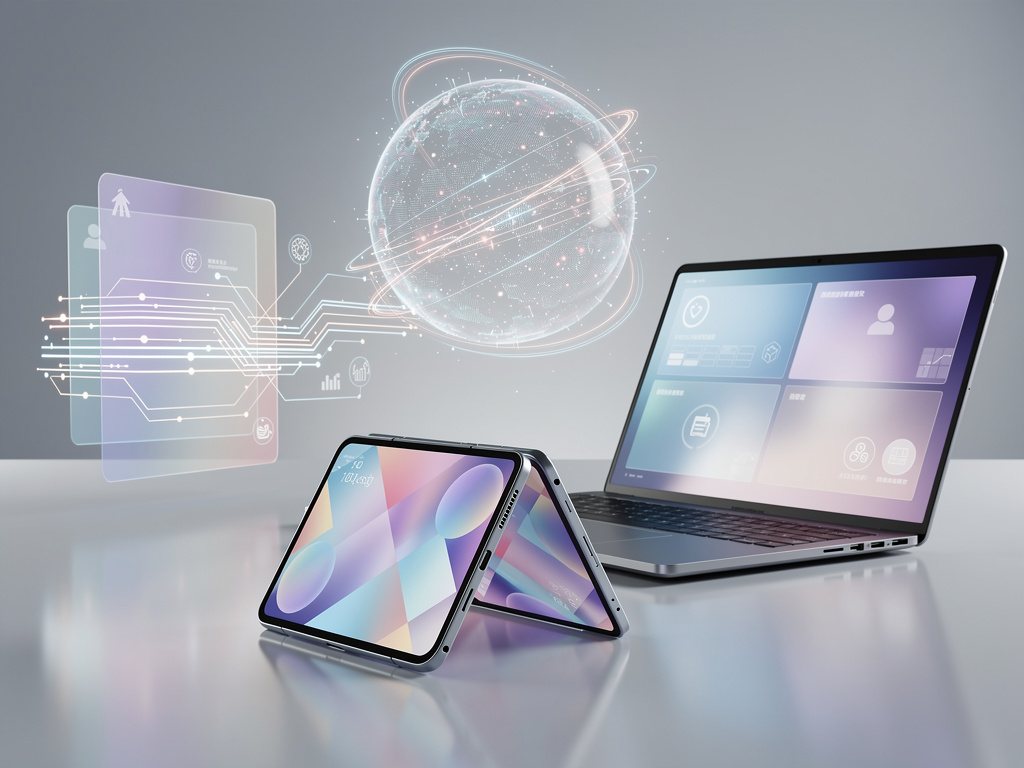
Betas rarely make headlines. Yet the latest ones from Apple point to hardware departures the company has long avoided. Foldable phones. Touch-friendly laptops. A conversational assistant that finally feels present.
Developers installed iOS 27 and macOS 27 previews in recent days. The code and interface changes inside them tell a consistent story. Apple prepares for devices that bend, stretch and respond to fingers in ways current products do not. And the artificial-intelligence features woven throughout suggest the company wants software ready the moment those devices ship.
Mark Gurman first connected the dots. In his Bloomberg newsletter he described code in the iOS 27 beta that references a product with multiple displays, additional sensors and the ability to detect how open the device sits. The description matches every rumor about a foldable iPhone. Bloomberg.
MacOS 27 pushes the same idea from another direction. Its updated iPhone Mirroring app now lets users stretch the mirrored window into layouts that resemble iPad multitasking. The change looks minor on a conventional Mac. On a device whose screen can unfold into a larger canvas it becomes essential. Apple also told developers at WWDC to focus on app adaptability across widely different screen sizes. The advice carries new weight when one of those sizes can hinge open or closed.
Betas rarely lie about hardware direction.
Gestures add further evidence. MacOS 27 introduces pull-to-refresh on trackpads and mice, a motion borrowed directly from iOS. Sidecar, which turns an iPad into a secondary display, now accepts direct touch input on the Mac side of the connection. Previously users needed a pointer or pencil. The shift feels preparatory. So does the new Siri interface. On macOS the assistant appears as a pill-shaped control identical to the one that lives in the iPhone’s Dynamic Island. Gurman has reported for months that a touchscreen MacBook will include that same pill. The visual match fits too cleanly to ignore.
These clues arrive months after Apple shipped iOS 26, iPadOS 26 and their companions last September. That release brought the first major visual overhaul since iOS 7. The company calls the new look Liquid Glass. Translucent elements reflect and refract according to wallpaper and lighting. Icons, controls and notifications adapt in real time. The aesthetic carries forward into the current betas with additional customization sliders that let users dial the effect up or down. MacRumors.
Performance gains appear substantial too. Early testers report smoother animations and better battery life even in these early builds. Adaptive Power Mode, introduced last year, receives refinements. Faster wireless charging tops out at 25 watts on supported iPhones. Small changes. They add up when the hardware itself changes shape.
But the real focus sits with intelligence features. Apple Intelligence has moved beyond the experimental stage. In iOS 27 and macOS 27 it powers a reimagined Siri that Apple now brands Siri AI. The assistant handles natural back-and-forth conversation. Users summon it with the power button, a swipe from the Dynamic Island or a dedicated app. Once active it reads context from the screen and suggests reminders or notes without further prompting.
Live Translation arrives in Messages, Phone and FaceTime. Conversations switch languages in real time. The feature requires an Apple Intelligence-enabled device and currently works in a handful of languages with more coming later this year. Visual Intelligence now processes screenshots in addition to camera views. Reminders sorts tasks intelligently. Shortcuts accepts natural-language descriptions to build automations.
Image Playground gains photorealistic generation options. Limits tie to iCloud storage tiers. Genmoji lets users blend custom illustrations with standard emoji. Photos receives cleanup tools, an Extend function that generates additional image content and Spatial Reframe for adjusting composition. Mashable.
PCMag ranked the AI announcements from WWDC. Top spots went to contextual Siri responses, one-tap message replies drawn from screen content, and the new image tools. The publication noted that many features remain in beta and will roll out gradually through the fall. Some will not reach Europe or China at launch because of regulatory reviews. PCMag.
Hardware compatibility stretches back further than many expected. iOS 27 supports iPhone 11 and later models. The same broad net applies to iPads and Macs with M1 chips or newer. Apple appears determined to give as many users as possible a taste of the new capabilities even if on-device processing power varies.
WatchOS, tvOS and visionOS betas dropped alongside their phone and computer counterparts. They share the Liquid Glass treatment and tie into the same intelligence framework. VisionOS in particular receives attention as Apple prepares for broader headset adoption. Yet the foldable phone and touchscreen laptop dominate speculation because they would break long-standing design rules.
Apple has avoided foldables while competitors shipped several generations. A MacBook with a touchscreen has been the subject of rumors for more than a decade. The company once argued that trackpads and keyboards made more sense. The betas suggest that argument no longer holds. Or at least that the company now sees value in offering both input methods.
Timing remains uncertain. The foldable iPhone could appear at the September product event alongside the standard iPhone 19 lineup. A touchscreen MacBook might wait until late 2026 or early 2027. Apple rarely confirms plans until the stage lights come on. The code tells its own schedule.
Bugs still plague these early previews. Some users report screenshot cropping failures in iOS 27 beta 1. Battery drain appears higher than expected in certain conditions. Standard beta behavior. The real test will come when public betas open in July and millions of testers push the software harder.
Developers already adjust. The emphasis on adaptive layouts in the WWDC sessions reads like preparation for screens that change physical dimensions. Apps that assume a fixed aspect ratio may need rework. Those that embrace the new guidelines could feel native on both current and future devices.
So the betas do more than preview software. They preview a shift in Apple’s product thinking. Flexible hardware paired with contextual intelligence. A Siri that understands not just commands but situations. Visual interfaces that respond to light, orientation and user preference.
Whether the foldable phone lands this fall or the touchscreen Mac arrives next year matters less than the direction. Apple has spent years refining the rectangle. Now it experiments with new shapes. The code in these betas makes that experiment official.
And the changes arrive at a moment when competition in AI assistants grows sharper. OpenAI, Google and others push conversational models that remember context across sessions. Apple’s bet is that on-device processing, tight hardware integration and respect for privacy will keep users inside its world. The betas test whether that bet holds.


 WebProNews is an iEntry Publication