
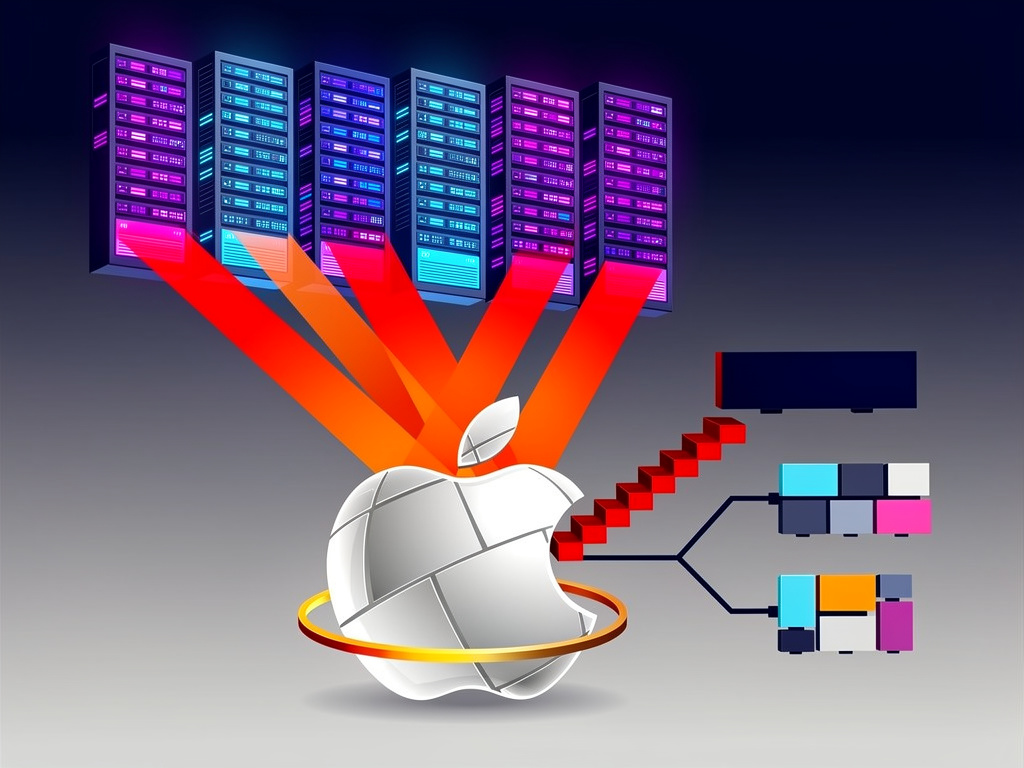
Apple’s empire faces a squeeze unlike any in years. Memory chips, once a minor line item, now threaten to devour nearly half of every iPhone’s parts cost. Tim Cook laid it bare on the company’s April 30 earnings call: costs spiked in the March quarter, they’ll jump significantly higher in June, and beyond that, they’ll hammer the bottom line harder still. MacRumors captured the CEO’s words precisely—Apple’s stockpiled inventory has blunted the blow so far, but that’s ending soon.
Picture this. JPMorgan analysts peg current iPhone memory at about $65 per unit in fiscal 2025. By fiscal 2027? $228. That’s NAND flash and DRAM combined, rocketing from 10% of the bill of materials to 45%. MacRumors, citing JPMorgan via the Financial Times, warns the total BOM could climb to $596 from $514, pushing average selling prices toward $1,000 even with modest hikes. Apple ships memory for 250 million iPhones annually—one of the world’s biggest buyers, reduced to bidding against AI giants.
AI servers gobble supply. Nvidia’s clusters, packed with HBM stacks, outpay consumer gear by miles. Cloud behemoths like Microsoft and Google drop billions upfront to lock in capacity from Samsung, SK Hynix, and Micron. Consumer electronics? Second fiddle now. As Bank of America analyst Wamsi Mohan put it in the Financial Times, by September Apple picks: hike prices or chase share. AppleInsider flags this as incoming CEO John Ternus’s first crisis—he steps in September 1, right as iPhone 18 decisions loom.
Stockpiles buy time. Cook noted minimal December impact, offset by carry-in inventory through March and into June. But post-June? No buffer. “Beyond the June quarter will be a problem, with [a] further increase in impact,” he said. Apple eyes options. Absorb and eat 200-300 basis points off gross margins? Pass to buyers, risking sales in price-sensitive China and India? Or tweak specs, like splitting iPhone 18 launches—Pro models fall, base delayed to spring 2027 alongside a foldable.
Shortages ripple wide. Mac mini and Mac Studio configs with 64GB RAM face 4-5 month delays, per MacRumors. Demand surges for these AI-friendly boxes, thanks to unified memory architectures that crush rivals in local inference. Yet supply chases AI data centers first. M5 MacBook Airs tempt with 32GB deals at $1,399, but higher configs strain availability. AppleInsider shows LPDDR5X chips from Samsung as the new norm—faster, power-sipping, but pricier amid scarcity.
And the pain compounds. X posts from analysts like @F28X5 hammer it home: this isn’t cyclical. AI infra yields thousands in margins per byte; iPhones, tens. Autonomous vehicles and robots next—each demanding automotive-grade memory at premiums. Suppliers prioritize. Apple, once terms-setter, now price-taker. @StockSavvyShay notes Micron and SanDisk feast as Apple validates NAND power.
Ternus inherits chaos. U.S. pressures mount—Trump-era pledges of $600 billion in 2025 investments, $400 million more through 2030 for domestic components. Mac minis assemble in Houston, but iPhones stay Asia-bound, shifting to India amid China tensions. Diversify too fast? Beijing balks. Too slow? Washington fumes. Memory merely the spark.
Options narrow. JPMorgan sketches hedges: squeeze non-memory costs 10% via scale, mix-shift to premium configs. But if prices hold flat, iPhone margins drop 295 basis points to 42%; company-wide, 200. A $50 ASP bump softens it to 30 basis points. Consumers notice. Rivals like Samsung Mobile scramble too, but Apple’s volumes amplify the hit.
Cook stays cool. “Apple is continuing to evaluate the situation, and it has a range of options available.” Vague. Strategic. Margins held 49% last quarter despite early pressure. Share gains on Macs, iPads. But June looms. Investors watch shipments, guidance. One thing clear: the free ride on cheap memory ends. Apple adapts—or pays.


 WebProNews is an iEntry Publication