
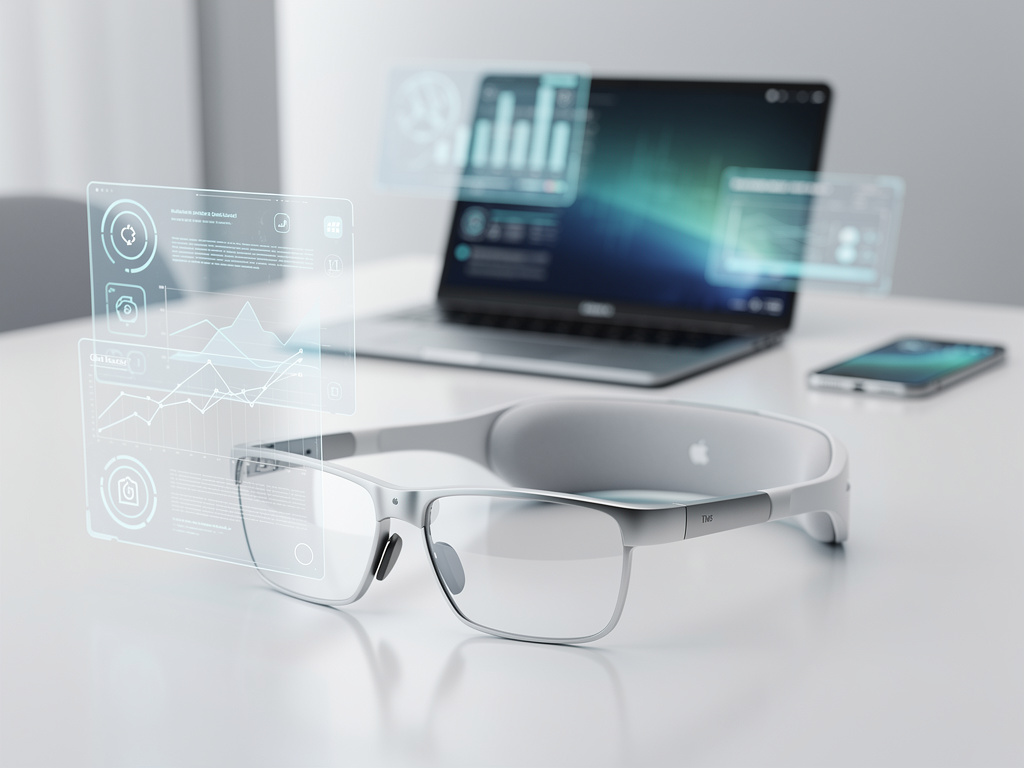
Apple’s Horizon: Tim Cook’s AR Vision Set to Materialize in 2026
In the ever-evolving realm of consumer technology, Apple Inc. stands at a pivotal juncture as it approaches 2026. Under the stewardship of CEO Tim Cook, the company is poised to unveil what could be its most ambitious product since the iPhone: a pair of augmented reality (AR) glasses. This development, long rumored and eagerly anticipated, represents Cook’s “top priority” in shaping Apple’s future beyond smartphones and wearables. Recent reports suggest that next year’s product launches could finally bring this vision to fruition, marking a significant milestone in Apple’s push into mixed reality.
Drawing from insights in a recent article by 9to5Mac, the unveiling of Apple Glasses is expected to be a cornerstone of the company’s 2026 lineup. The piece highlights how Cook has personally championed AR as the next frontier, viewing it as a technology that could seamlessly integrate digital information into the physical world. This isn’t just about hardware; it’s about creating an ecosystem where AR enhances everyday experiences, from navigation to social interactions, without the bulkiness of current headsets like the Vision Pro.
Industry insiders note that Apple’s journey into AR has been methodical, building on years of research and acquisitions. The company’s acquisition of startups like Metaio and Akonia Holographics laid the groundwork for advanced optics and display technologies essential for lightweight glasses. As Cook himself has stated in past interviews, AR holds the potential to be as transformative as the smartphone, allowing users to overlay digital elements onto reality in a natural, unobtrusive way.
The Evolution of Apple’s AR Strategy
The path to Apple Glasses hasn’t been without hurdles. The Vision Pro, launched in 2024, served as a high-end entry into spatial computing but faced criticism for its price and weight, limiting mass adoption. According to reports from CNBC, recent executive shake-ups at Apple reflect mounting pressure on Cook to deliver innovative products amid slowing iPhone sales. These changes, including transitions in key roles like general counsel, underscore a broader effort to streamline operations and focus on breakthrough technologies.
Posts on X (formerly Twitter) from analysts like Mark Gurman of Bloomberg have echoed this sentiment, pointing to Apple’s 2025 roadmap that emphasized AI integration and smart home expansions as precursors to AR advancements. While these social media insights aren’t definitive, they capture the buzz around Apple’s internal priorities, with many speculating that AR glasses will feature seamless integration with Apple Intelligence, the company’s AI suite.
Furthermore, a Gadget Hacks article details how Cook’s decision to extend his tenure until at least 2026 is tied to overseeing this project’s completion. The Gadget Hacks report explains that reaching age 65 prompted retirement rumors, but Cook’s commitment to AR has kept him at the helm. This extension allows him to guide the product from concept to market, ensuring it aligns with Apple’s ethos of polished, user-centric design.
Technological Foundations and Challenges
At the heart of Apple Glasses lies cutting-edge technology designed to overcome the limitations of existing AR devices. Sources indicate that the glasses will employ micro-LED displays for high-resolution overlays, powered by custom chips that minimize latency and power consumption. This builds on Apple’s silicon expertise, as seen in the M-series processors, adapted for wearable form factors.
However, challenges remain in battery life, comfort, and privacy. AR glasses must last a full day on a single charge while being light enough for all-day wear, a feat that has eluded competitors like Meta’s Quest line. Apple’s approach, as inferred from patent filings and leaks, involves advanced sensors for environmental mapping and gesture recognition, potentially revolutionizing how users interact with digital content.
Cult of Mac’s end-of-year roundup for 2025 praises Apple’s incremental successes, such as the iPhone 17’s enhanced camera systems that could preview AR capabilities. The Cult of Mac article notes that while 2025 brought surprises like AI-driven software updates, the real game-changer is slated for 2026, with AR at the forefront.
Market Implications and Competitive Pressures
The competitive environment adds urgency to Apple’s AR push. Meta Platforms Inc., led by Mark Zuckerberg, has invested heavily in VR and AR, with products like the Ray-Ban Meta smart glasses already in the market. X posts from users like Evan highlight Cook’s determination to outpace Meta, describing AR glasses as something Cook “cares about nothing else.” This rivalry underscores the high stakes, as the first company to deliver truly wearable AR could dominate a market projected to reach hundreds of billions in value.
Analysts from CNET express wishes for basic upgrades in Apple’s 2026 lineup, including more accessible AR features. In their CNET piece, they argue that if Cook is indeed stepping down post-launch, the company should prioritize innovations that broaden appeal, such as affordable AR entry points.
Beyond competition, Apple’s AR strategy ties into broader ecosystem plays. Integration with iOS, macOS, and services like Apple Music and Maps could create a sticky user experience, locking in loyalty. Recent news from Apple’s own announcements, such as executive transitions reported on the company’s newsroom, signal a leadership refresh aimed at accelerating these initiatives.
Internal Dynamics and Leadership Transition
Inside Apple, the focus on AR coincides with significant organizational shifts. MacDailyNews reports that the Tim Cook era appears to be winding down, with 2026 marking a potential handover. The MacDailyNews analysis draws parallels to transitions at other tech giants, suggesting Cook wants to cement his legacy with a product that rivals Steve Jobs’ iPhone introduction.
This internal pressure is compounded by external factors, including regulatory scrutiny and supply chain challenges. Apple’s massive investments in U.S. manufacturing, as mentioned in X posts by Youssef El Manssouri, aim to reduce dependence on China and bolster AR production capabilities. These efforts, reportedly exceeding NASA’s budget, highlight the scale of Apple’s commitment.
Moreover, software rebrands teased in X updates from users like NIK point to a unified branding strategy that could encompass AR products, simplifying developer tools and consumer understanding. Such moves are crucial for fostering an app ecosystem around Apple Glasses, ensuring a rich launch library.
Economic and Consumer Impact
Economically, the launch of Apple Glasses could inject new life into Apple’s revenue streams, diversifying beyond iPhone dependency. With global smartphone sales plateauing, AR represents untapped growth. Industry estimates suggest that by 2030, the AR market could influence sectors from retail to education, with Apple positioned to capture a lion’s share through its premium branding.
For consumers, the promise is a device that blends seamlessly into daily life. Imagine glasses that provide real-time translations during travel or virtual try-ons for shopping, all powered by Apple’s privacy-focused AI. However, affordability will be key; pricing them accessibly could democratize AR, much like the iPhone did for smartphones.
Referencing back to the 9to5Mac report, the article posits that 2026’s product slate, including over 20 new items, will pave the way for this AR debut. This comprehensive rollout underscores Apple’s holistic approach, integrating hardware, software, and services.
Future Prospects and Legacy Building
Looking ahead, success in AR could redefine Apple’s identity in the post-iPhone era. Cook’s emphasis on this technology, as reiterated in various sources, reflects a belief in its potential to enhance human capabilities without distraction. Challenges like user adoption and technological maturity remain, but Apple’s track record of refining products post-launch bodes well.
Critics, however, warn of overhype. Past ventures like the Apple Car project, which was ultimately shelved, remind us that not all ambitions materialize. Yet, with Cook’s personal investment, AR glasses seem more assured.
In the broader context of tech innovation, Apple’s move could spur industry-wide advancements, pushing competitors to elevate their offerings. As 2026 approaches, all eyes are on Cupertino to see if Cook’s top priority will indeed take shape and transform how we interact with the world.
Refining the Vision: Challenges Ahead
Despite optimism, technical hurdles persist. Achieving high-fidelity AR in a compact form requires breakthroughs in optics and processing. Apple’s patents suggest holographic displays and eye-tracking, but scaling these for mass production is non-trivial.
Supply chain insights from analysts like Ross Young on X indicate Apple’s push for advanced display tech, such as LTPO for better refresh rates, which could extend to AR applications. While not conclusive, these discussions highlight ongoing developments.
Ultimately, the success of Apple Glasses will hinge on ecosystem integration and developer support. By fostering a vibrant app environment, Apple can ensure the product isn’t just a gadget but a platform for innovation.
Strategic Positioning in a Dynamic Market
Strategically, Apple is positioning AR as a complement to its existing lineup. Integration with the Apple Watch for health metrics or AirPods for spatial audio could create a synergistic wearable ecosystem.
Economic analysts predict that a successful launch could boost Apple’s market cap significantly, rewarding investors who’ve weathered recent volatility. The company’s focus on sustainability, with recycled materials in hardware, aligns with consumer demands.
As reported in StartupNews, the anticipation for Tim Cook’s priority product is building, with 2026 slated as the year it finally materializes. This StartupNews update reinforces the timeline, emphasizing AR’s role in Apple’s future.
The Human Element: User-Centric Design
At its core, Apple’s AR endeavor is about human-centered design. Cook has emphasized creating technology that empowers rather than overwhelms, a philosophy evident in iterative improvements to iOS.
Consumer feedback loops, gathered through beta programs, will be crucial in refining the glasses. Privacy features, like on-device processing, will differentiate Apple from data-hungry rivals.
In wrapping up this exploration, it’s clear that 2026 could be a defining year for Apple, with AR glasses potentially etching Cook’s legacy alongside tech legends. The journey from concept to reality encapsulates the innovation that has long defined the company.


 WebProNews is an iEntry Publication