
CUPERTINO, Calif. — Apple on Monday unveiled a long-awaited successor to its popular AirTag item tracker, a move aimed squarely at tightening its grip on the accessories market while simultaneously attempting to quell years of controversy over the device’s potential for misuse. The new generation tracker, detailed in a press release on the Apple Newsroom, boasts significant internal upgrades, including a next-generation chip for expanded range and more precise location finding, and a host of enhanced anti-stalking features designed to build user trust.
Priced at $35, a slight increase from the original’s $29 launch price, the redesigned AirTag retains its familiar circular shape but packs Apple’s second-generation Ultra Wideband (UWB) chip. This is the same silicon that debuted in the company’s more premium products, and its inclusion marks a strategic effort to fortify the AirTag’s primary competitive advantage: the unrivaled scale of the Find My network. For consumers, the immediate promise is a more reliable and less frustrating experience finding lost items; for Apple, it represents a deepening of the moat around its lucrative ecosystem.
A More Precise Search Through Next-Generation Silicon
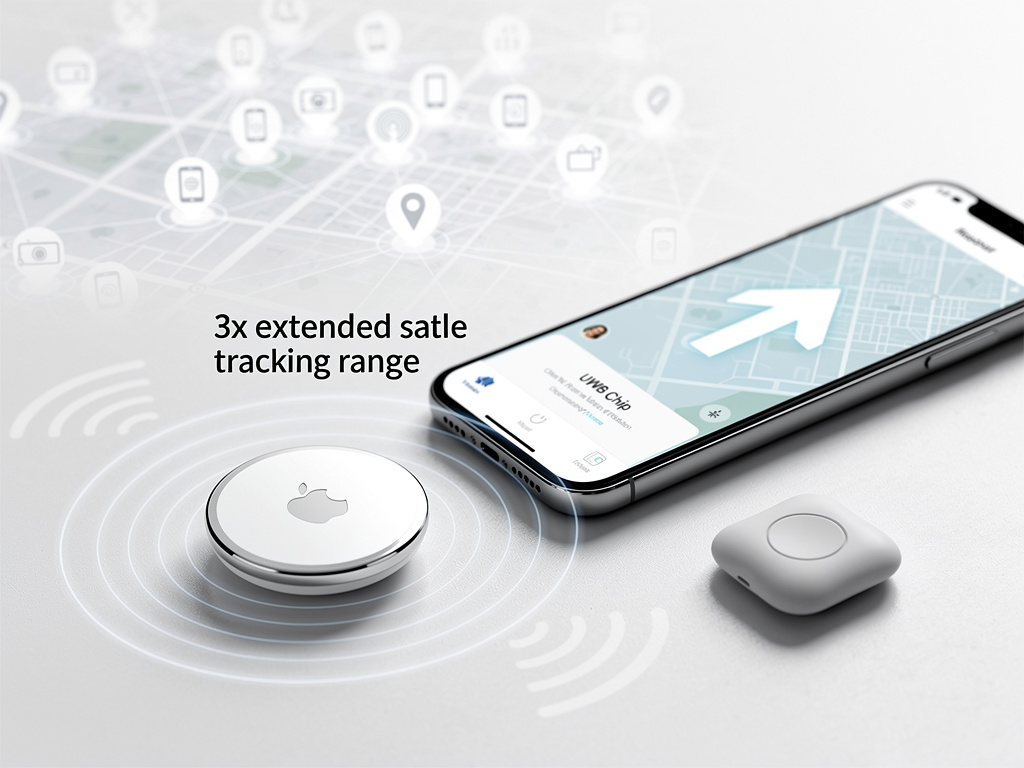
The centerpiece of the new AirTag is undoubtedly the upgraded UWB chip, which Apple says triples the connection range for its Precision Finding feature. This technology allows users with compatible iPhones to receive turn-by-turn visual, haptic, and audio guidance to their lost item. The first-generation UWB chip was a key differentiator, but its range was often limited by walls and other obstructions. By incorporating the second-generation chip, Apple is leveraging technology it has already battle-tested in its flagship devices.
This is the same chip that, according to a 2023 Apple announcement, enables iPhone 15 users to find friends in crowds with a feature called Precision Finding for People. Extending this enhanced capability to its item trackers is a logical, and powerful, next step. In practice, this means a user looking for their keys in a large park or a multi-level parking garage will be able to establish a precise connection from much farther away, transforming the feature from a close-quarters tool into a more versatile location utility.
Confronting a Controversial Legacy
While the technological upgrades are significant, the most scrutinized aspect of the launch will be Apple’s efforts to address the safety and privacy concerns that have plagued the AirTag since its 2021 debut. The device’s effectiveness made it an unwitting tool for stalkers and thieves, leading to a slew of negative headlines and lawsuits. The company has previously implemented software updates, such as alerts for unknown trackers traveling with a user, but the new hardware introduces more forceful deterrents.
The new model features a redesigned internal speaker that is, according to Apple, 50% louder, making a hidden device significantly easier to locate when it is triggered remotely or automatically chimes to alert someone of its presence. Furthermore, the company has introduced what it calls “Proactive Separation Alerts for Android,” a feature that will push a notification to a user of its Tracker Detect app if an unknown AirTag appears to be traveling with them, without requiring a manual scan. This move seeks to address criticism that its protections were less effective for the billions of people outside its own operating system, a vulnerability that has been a central point in ongoing public debate, as extensively covered by outlets like the BBC News.
Intensifying Pressure on the Competitive Field
The launch of a more capable and safer AirTag places immense pressure on long-standing competitors like Tile and Samsung. Tile, which once dominated the Bluetooth tracker market, has struggled to compete with Apple’s Find My network, an instant-on system leveraging the hundreds of millions of iPhones, iPads, and Macs active globally. Each Apple device acts as a passive, anonymous node, creating a location network with a density no competitor can realistically match.
Tile has previously argued that Apple’s integration of the AirTag into iOS constitutes anti-competitive behavior. The company’s general counsel, Kirsten Daru, testified during a 2021 Senate hearing that Apple’s platform control gave it an unfair advantage, a sentiment reported by Reuters at the time. This new AirTag, with its superior UWB technology and deeper integration, will only amplify that challenge. Competitors are now forced to compete not just on the price or form factor of their hardware, but against the sheer physics of Apple’s ubiquitous device network.
An Ecosystem Anchor Disguised as an Accessory
Industry analysts view the AirTag not as a major revenue driver on its own, but as a low-cost, high-volume anchor for Apple’s broader ecosystem. At $35 for a single unit or $119 for a four-pack, the device is an accessible entry point that makes the Find My network tangible and useful for everyday items like keys, luggage, and backpacks. Each AirTag sold reinforces the value of owning an iPhone, and each positive user experience deepens the customer’s reliance on Apple’s integrated suite of hardware and software.
This strategy of using accessories to enhance the stickiness of core products is a well-worn page from the Apple playbook, seen with the Apple Watch and AirPods. The new AirTag’s enhanced functionality makes that ecosystem even more compelling. The ability to find a wallet from across a stadium or receive more reliable alerts about a forgotten bag at the airport are powerful incentives that keep customers from considering a switch to a rival smartphone platform.
The Unspoken Question of Future Form Factors
Notably absent from Monday’s announcement was any mention of new form factors. The classic disc shape is versatile but not ideal for all use cases, particularly wallets. Competitors like Tile have long offered trackers in a thin, credit-card shape, a product that remains a significant gap in Apple’s lineup. While the upgraded internals of the new AirTag are a major step forward, the lack of a ‘wallet’ version suggests Apple is either confident in the third-party accessory market to solve this or is holding back other designs for a future release.
This calculated omission leaves a strategic opening for rivals, but it may be a temporary one. Apple’s pattern is to enter a product category with a single, highly polished offering before slowly expanding its lineup. Insiders will be watching closely to see if a wallet-friendly AirTag or trackers integrated directly into other products will follow, further closing the door on competitors who currently rely on product variety as a key point of differentiation.


 WebProNews is an iEntry Publication