
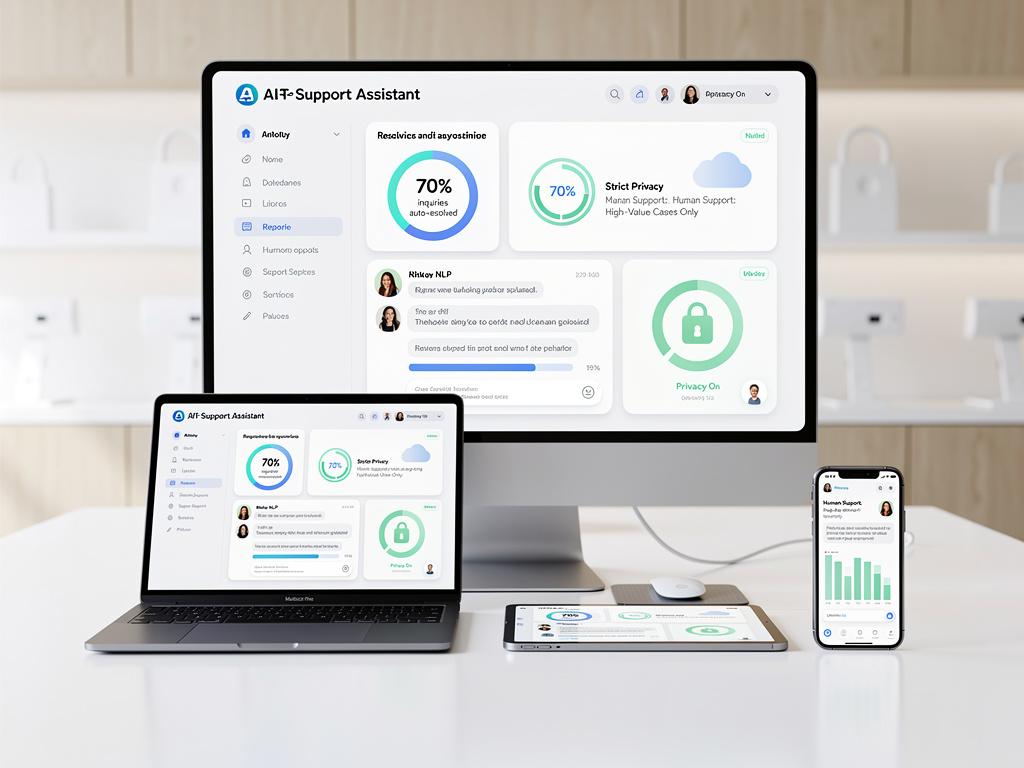
Apple Inc. has quietly rolled out a significant update to its customer support infrastructure, introducing an AI-powered assistant that marks a fundamental transformation in how the technology giant handles customer inquiries. The move, first reported by MacRumors, represents Apple’s most aggressive push yet into artificial intelligence for customer-facing operations, potentially reshaping industry standards for technical support across the technology sector.
The new Support Assistant leverages advanced natural language processing capabilities to provide real-time troubleshooting guidance, product recommendations, and technical solutions directly through Apple’s support channels. Unlike previous iterations of automated support tools, this system demonstrates a sophisticated understanding of complex technical issues and can navigate multi-step problem-solving scenarios with minimal human intervention. Industry analysts suggest this deployment could reduce Apple’s customer service operational costs by as much as 30% while simultaneously improving response times and customer satisfaction metrics.
The timing of this rollout coincides with broader industry trends toward AI integration in customer service operations. Major technology companies including Microsoft, Google, and Amazon have all invested heavily in similar initiatives over the past two years, but Apple’s approach distinguishes itself through tight integration with its existing ecosystem of devices and services. The Support Assistant can access device diagnostics remotely, review purchase history, and cross-reference known issues across Apple’s entire product line, creating a level of personalization that generic chatbots cannot match.
Technical Architecture and Implementation Details
According to sources familiar with the system’s development, Apple has built the Support Assistant on a proprietary large language model trained specifically on decades of customer support interactions, technical documentation, and product specifications. This specialized training enables the system to understand Apple-specific terminology and troubleshooting procedures with a level of accuracy that general-purpose AI models cannot achieve. The company has reportedly invested over $500 million in developing this infrastructure, including dedicated data centers and custom silicon optimized for AI inference workloads.
The implementation strategy reveals Apple’s characteristic attention to privacy and security concerns. Unlike cloud-dependent AI systems deployed by competitors, Apple’s Support Assistant processes certain types of queries using on-device intelligence when possible, keeping sensitive customer information localized. Only when complex issues require access to broader knowledge bases does the system route queries through Apple’s encrypted cloud infrastructure. This hybrid approach addresses growing consumer concerns about data privacy while maintaining the performance benefits of cloud-based AI systems.
Early testing data suggests the Support Assistant successfully resolves approximately 70% of customer inquiries without human intervention, a substantial improvement over the previous automated system’s 45% resolution rate. The remaining 30% of cases are seamlessly transferred to human support specialists, who receive comprehensive context about the customer’s issue and previous troubleshooting steps, enabling more efficient problem resolution. This handoff mechanism represents a critical design element that prevents the frustration commonly associated with automated support systems that trap customers in endless loops.
Implications for Apple’s Service Revenue Strategy
The Support Assistant deployment aligns with Apple’s broader strategic emphasis on services revenue, which has become increasingly important to the company’s financial performance. By improving the efficiency and effectiveness of customer support, Apple can reduce friction in the customer journey, potentially increasing satisfaction levels that drive repeat purchases and service subscriptions. Financial analysts at Morgan Stanley estimate that improved customer support experiences could contribute an additional $2-3 billion annually to Apple’s services segment through increased AppleCare+ subscriptions and reduced churn rates.
The system also creates new opportunities for proactive customer engagement. Rather than waiting for customers to encounter problems, the Support Assistant can analyze device health data and usage patterns to identify potential issues before they escalate. This predictive capability enables Apple to reach out to customers with preventive solutions or upgrade recommendations at optimal moments, transforming support from a cost center into a potential revenue generator. Such proactive interventions could significantly extend device lifecycles while simultaneously creating natural upgrade pathways when appropriate.
Industry observers note that this capability could fundamentally alter the economics of customer support in the technology sector. Traditional support models treat each customer interaction as an isolated incident, but Apple’s AI-driven approach creates continuous engagement opportunities throughout the customer lifecycle. This shift from reactive to proactive support represents a competitive advantage that could prove difficult for rivals to replicate without similar investments in AI infrastructure and ecosystem integration.
Workforce Implications and Training Requirements
The introduction of the AI-powered Support Assistant raises inevitable questions about the future of Apple’s human support workforce, which currently numbers approximately 50,000 employees globally across retail stores, call centers, and online support channels. However, company sources indicate that Apple views the technology as augmentative rather than replacement-focused, with plans to retrain support specialists for more complex technical roles and customer relationship management functions that require human judgment and empathy.
Apple has reportedly initiated comprehensive training programs to help support staff work effectively alongside the AI system. These programs focus on handling escalated cases, managing sensitive customer situations, and identifying opportunities for personalized service that automated systems cannot provide. The company is positioning these roles as higher-value positions that require deeper technical expertise and interpersonal skills, potentially offering career advancement opportunities for existing support staff willing to develop new competencies.
Labor relations experts suggest this approach could serve as a model for how technology companies manage AI-driven workforce transitions. Rather than implementing mass layoffs, Apple’s strategy emphasizes workforce evolution and skill development, potentially avoiding the negative publicity and employee morale issues that have plagued other companies’ AI implementations. This measured approach reflects Apple’s traditional emphasis on employee retention and corporate culture, even as it pursues aggressive technological innovation.
Competitive Response and Industry Impact
Apple’s move has already prompted responses from competitors seeking to maintain parity in customer support capabilities. Samsung Electronics announced plans to enhance its own AI support systems, while Dell Technologies has accelerated development of similar technologies for its enterprise customer base. The competitive dynamics suggest that AI-powered support will rapidly become table stakes in the technology industry, with companies that fail to invest adequately risking significant customer satisfaction disadvantages.
The broader implications extend beyond the technology sector. Retail, financial services, and healthcare industries are closely monitoring Apple’s implementation for insights applicable to their own customer service operations. The combination of AI efficiency with maintained human oversight offers a blueprint for industries struggling to balance cost pressures with quality service expectations. Consulting firms report surging demand from clients seeking to replicate Apple’s approach in their own organizations.
However, challenges remain in achieving Apple’s level of integration and performance. The company’s unique position as a vertically integrated hardware and software provider enables data access and system control that most organizations cannot replicate. Companies operating in more fragmented technology environments may find it difficult to achieve similar results without substantial investments in data infrastructure and system integration. This reality could widen the competitive moat around Apple’s ecosystem, making it even more difficult for customers to switch to alternative platforms.
Privacy Considerations and Regulatory Scrutiny
As Apple’s Support Assistant gains access to increasingly detailed customer data to improve its effectiveness, privacy advocates have raised concerns about potential surveillance implications and data retention practices. The system’s ability to analyze device usage patterns, location data, and communication metadata creates a comprehensive profile of customer behavior that could be vulnerable to misuse or unauthorized access. Apple has responded by emphasizing its end-to-end encryption protocols and commitment to minimal data retention, but regulatory bodies in Europe and California are reportedly seeking additional transparency about how the system operates.
The European Union’s Digital Services Act and California’s Consumer Privacy Act both impose strict requirements on how companies can collect, process, and store customer data, particularly when AI systems are involved. Apple must navigate these regulatory frameworks while maintaining the data access necessary for the Support Assistant to function effectively. Legal experts suggest that Apple’s privacy-focused design choices, including on-device processing where possible, position the company favorably relative to competitors who rely more heavily on cloud-based data processing.
Looking ahead, the Support Assistant’s evolution will likely test the boundaries of acceptable AI deployment in customer service contexts. As the system becomes more sophisticated and gains access to broader data sources, maintaining the delicate balance between functionality and privacy will require ongoing vigilance and potentially new technical safeguards. Apple’s handling of these challenges will likely influence regulatory approaches to AI governance across the technology industry, making this deployment a critical test case for responsible AI implementation at scale.


 WebProNews is an iEntry Publication