
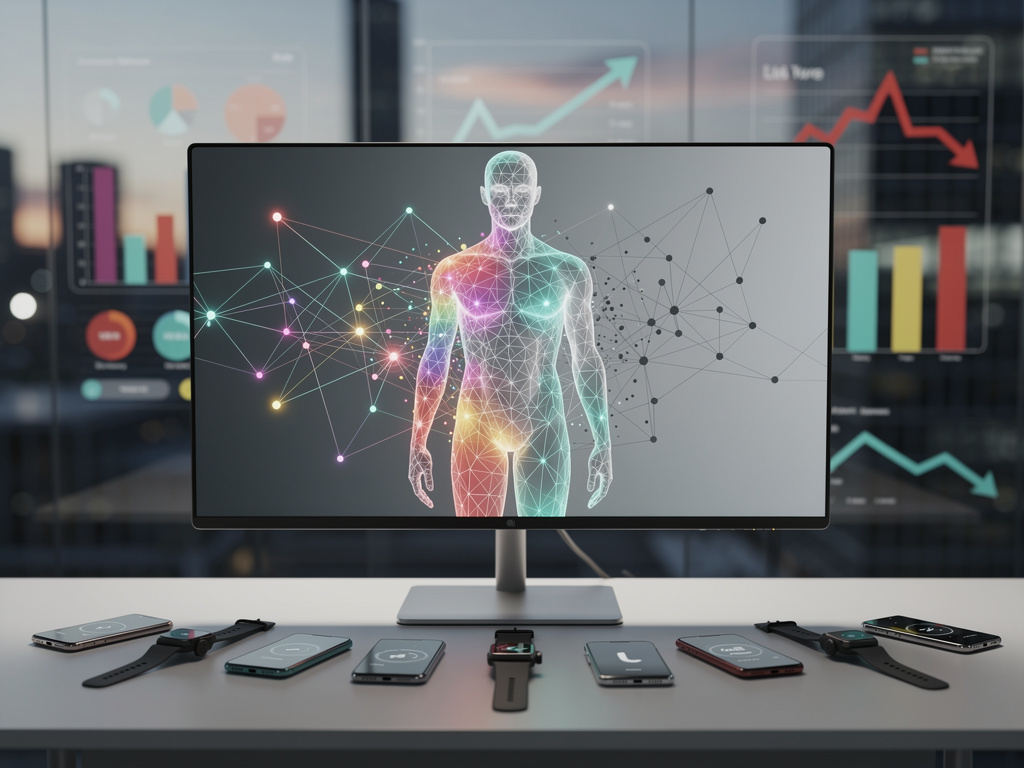
Apple Inc., long celebrated for its methodical approach to product launches, is pulling back on one of its most ambitious artificial intelligence initiatives — an AI-powered health coaching service that was expected to represent the company’s boldest foray yet into the intersection of consumer wellness and machine learning. The decision to scale back the project, first reported by Bloomberg, reveals not just a single product setback but a broader reckoning within Apple about the pace and scope of its AI ambitions in the health sector.
The health coach service, which had been in development for several years under the internal umbrella of Apple’s health technology division, was envisioned as a premium offering that would leverage data from the Apple Watch, iPhone, and other devices to deliver personalized wellness recommendations. Think of it as a virtual nutritionist, fitness trainer, and sleep consultant rolled into one — powered by the same class of large language models that have fueled the generative AI revolution across Silicon Valley. The service was expected to be a cornerstone of Apple’s broader push into health services, potentially bundled with Apple Watch purchases or offered as a standalone subscription.
From Moonshot to Managed Expectations: What Went Wrong
According to people familiar with the matter cited by Bloomberg, the scaling back is not a complete cancellation but rather a significant reduction in the service’s initial scope. Features that were originally planned for the first release — including real-time dietary coaching, mental health check-ins, and integration with third-party medical providers — have been either delayed or removed from the near-term roadmap. What remains is a more modest version focused primarily on fitness and activity tracking insights, capabilities that already exist in a rudimentary form within the current Apple Watch ecosystem.
The reasons behind the retreat are multifaceted. Sources indicate that Apple’s internal testing revealed significant challenges with the reliability and accuracy of AI-generated health recommendations. In a domain where incorrect advice could lead to genuine harm — suggesting an inappropriate exercise regimen for someone with a heart condition, for instance, or providing dietary guidance that conflicts with a user’s medication — the margin for error is essentially zero. Apple’s leadership, known for its obsession with product quality, reportedly grew uncomfortable with the gap between the AI’s current capabilities and the standard required for a health-facing consumer product bearing the Apple name.
The Regulatory Minefield Beneath the Surface
Regulatory considerations also played a decisive role. The U.S. Food and Drug Administration has been increasingly attentive to AI-driven health tools, and Apple’s legal team flagged concerns that certain features of the health coach — particularly those veering into diagnostic or prescriptive territory — could trigger classification as a medical device. Such a classification would subject the service to a lengthy and unpredictable approval process, fundamentally altering the economics and timeline of the launch. Apple has navigated FDA waters before, most notably with the Apple Watch’s electrocardiogram and blood oxygen features, but those were discrete hardware capabilities rather than an open-ended AI service generating continuous personalized recommendations.
The company’s caution stands in contrast to the approach taken by several competitors and startups that have rushed AI health products to market with fewer guardrails. Companies like Whoop have integrated AI-driven coaching into their fitness platforms, while startups backed by venture capital have launched AI nutritionists and mental health chatbots with varying degrees of clinical validation. Apple’s decision to slow down rather than speed up reflects a philosophical difference — one rooted in the company’s belief that its brand equity depends on trust, and that trust in health contexts is particularly fragile.
Apple Intelligence and the Health Data Dilemma
The health coach initiative was also deeply intertwined with Apple Intelligence, the company’s suite of AI features introduced in 2024 and expanded throughout 2025. Apple Intelligence was designed to process sensitive data on-device wherever possible, a privacy-first architecture that has become a key differentiator for the company. But the health coach’s more advanced features required cloud-based processing of deeply personal health information — sleep patterns, heart rate variability, menstrual cycle data, workout history, and potentially even food intake logs. Reconciling this data-hungry AI model with Apple’s privacy commitments proved more difficult than anticipated.
Internal debates reportedly centered on whether Apple could build a sufficiently capable health AI within the constraints of its Private Cloud Compute infrastructure, which processes data in secure enclaves without Apple itself having access. While the architecture is technically sound, the computational demands of running sophisticated health models — particularly those requiring cross-referencing of multiple data streams in real time — pushed against the limits of what the current system could handle without compromising response times or recommendation quality. Engineers working on the project described a tension between the privacy team’s requirements and the AI team’s need for more expansive data processing, according to people briefed on the discussions.
Wall Street Reads the Tea Leaves
For investors, the scaling back raises questions about Apple’s services growth trajectory. The company has increasingly leaned on its services segment — which includes the App Store, Apple Music, iCloud, and Apple TV+ — to drive revenue growth as hardware sales in key categories like the iPhone have matured. A premium health coaching subscription, potentially priced between $15 and $25 per month, would have represented a meaningful new revenue stream, particularly given the installed base of more than 100 million Apple Watch users worldwide. Analysts had begun factoring some version of the service into their forward estimates for Apple’s services business.
The news also arrives at a sensitive moment for Apple’s broader AI narrative. While competitors like Google, Microsoft, and Meta have aggressively deployed generative AI across their product lines, Apple has taken a more measured approach — one that critics have characterized as slow and that supporters have described as disciplined. The health coach setback provides ammunition to both camps. Bears will point to it as evidence that Apple is falling behind in the AI race; bulls will argue that the company’s willingness to delay a product rather than ship something substandard is precisely the kind of judgment that sustains long-term brand value.
The Competitive Pressure Isn’t Going Away
Meanwhile, the competitive environment in AI-driven health technology continues to intensify. Google’s Fitbit division has been integrating Gemini-powered health insights into its wearable platform, offering users AI-generated summaries of their health trends and personalized goal-setting. Samsung, which competes directly with Apple in the smartwatch market, has partnered with health AI startups to offer similar capabilities through its Galaxy Watch line. And Amazon, through its Halo health platform (which it previously scaled back and then relaunched with new AI features), has been experimenting with subscription-based wellness coaching that blurs the line between consumer technology and healthcare.
Apple’s retreat does not mean the company is abandoning the health coach concept entirely. Bloomberg’s reporting suggests that a more limited version of the service could still launch later this year, potentially as a feature within the existing Health app rather than as a standalone subscription product. This approach would lower the regulatory risk, reduce the privacy engineering burden, and allow Apple to iterate on the AI’s capabilities over time — a strategy more consistent with the company’s historical pattern of introducing features incrementally rather than all at once.
What This Means for Apple’s Long-Term Health Strategy
The broader implications extend beyond a single product. Apple has invested billions of dollars in health technology over the past decade, building one of the most sophisticated biometric sensor platforms in the consumer electronics industry. The Apple Watch can now detect atrial fibrillation, measure blood oxygen levels, track sleep stages, monitor skin temperature, and log workouts with remarkable precision. What has been missing is the intelligence layer — the software that transforms all of that raw data into actionable, personalized guidance. The health coach was supposed to be that layer.
The fact that Apple is struggling to build it speaks to a challenge that extends across the entire technology industry: the gap between what generative AI can do in controlled demonstrations and what it can do reliably in high-stakes, real-world applications. Health is perhaps the most demanding domain for AI deployment, requiring not just technical accuracy but also sensitivity to individual context, cultural awareness, liability management, and regulatory compliance. No company, no matter how well-resourced, has fully cracked this problem.
A Defining Test for Tim Cook’s Apple
For Tim Cook, who has repeatedly said that Apple’s greatest contribution to mankind will be in health, the scaling back of the AI health coach is a reminder that ambition and execution do not always move at the same speed. The company’s health team, led by executives who have been with the initiative since its earliest days, remains intact and committed to the long-term vision. But the timeline has shifted, and the initial product will be more modest than what was originally conceived.
In the end, Apple’s decision to scale back may prove to be the right call — a recognition that in health technology, the cost of getting it wrong far exceeds the cost of being late. But it also underscores a fundamental tension at the heart of Apple’s AI strategy: the company’s premium brand demands perfection, while the current state of artificial intelligence delivers something considerably less. How Apple resolves that tension will define not just the future of its health business but the trajectory of its AI efforts for years to come.


 WebProNews is an iEntry Publication