
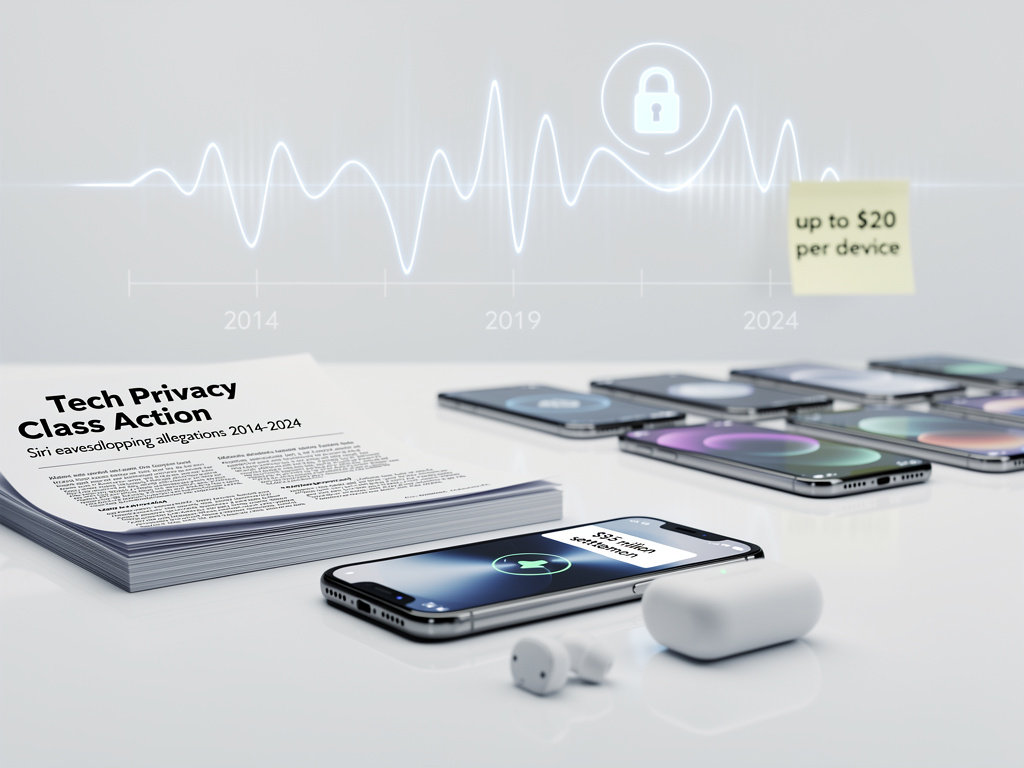
Apple has agreed to pay $95 million to settle a class-action lawsuit alleging that its voice assistant Siri routinely recorded private conversations without user consent, marking one of the most significant privacy settlements in the tech industry’s history. The preliminary settlement, filed in Oakland federal court, addresses claims that Apple violated users’ privacy by allowing contractors to listen to confidential discussions inadvertently triggered by the voice assistant between 2014 and 2024.
According to TechRepublic, eligible claimants who owned Siri-enabled devices during this period can receive up to $20 per device, with a maximum of five devices per person. The settlement comes after years of legal wrangling and follows revelations from a 2019 whistleblower who exposed Apple’s practice of having human contractors review Siri recordings, including intimate moments, medical discussions, and drug deals that were captured without users’ knowledge or explicit permission.
The case highlights a fundamental tension in modern technology: the trade-off between convenience and privacy. Voice assistants like Siri have become ubiquitous in smartphones, smart speakers, and wearable devices, yet their always-listening nature creates unprecedented opportunities for privacy violations. This settlement forces a reckoning with how tech companies handle the massive amounts of personal data they collect through these devices, and whether current disclosure practices adequately inform consumers about the risks they’re accepting.
The Mechanics of Unintended Surveillance
The lawsuit centered on allegations that Siri frequently activated without users speaking the wake phrase “Hey Siri,” capturing conversations that users believed were private. These recordings were then sent to Apple’s servers and, in some cases, reviewed by human contractors as part of the company’s quality control process. The plaintiffs argued that this practice violated California’s privacy laws and constituted an invasion of privacy, as users were not adequately informed that their conversations might be heard by third-party contractors.
Apple has consistently maintained that it did not violate any laws and denies all allegations of wrongdoing. The company emphasized in court filings that the settlement is not an admission of liability but rather a business decision to avoid the costs and uncertainties of prolonged litigation. However, the substantial settlement amount suggests that Apple recognized the serious nature of the privacy concerns raised by the lawsuit and the potential for even greater liability if the case proceeded to trial.
From Whistleblower Revelations to Legal Action
The controversy erupted in 2019 when a Guardian report, based on information from an Apple contractor, revealed that workers regularly heard confidential medical information, drug deals, and recordings of couples having sex while reviewing Siri recordings. The whistleblower explained that accidental activations were common, with Siri sometimes triggered by sounds similar to the wake phrase or even by the simple act of the device being in a pocket or bag. These revelations sparked immediate public outcry and prompted Apple to make significant changes to its Siri review program.
In response to the initial backlash, Apple suspended its Siri grading program globally and later reinstated it with new safeguards. The company announced that it would no longer retain audio recordings of Siri interactions by default and would allow users to opt into having their audio reviewed by Apple employees rather than contractors. Additionally, Apple committed to using only Apple employees, not contractors, for the review process and to deleting recordings that were inadvertently triggered. These changes, while significant, came only after the privacy violations had already affected millions of users over a five-year period.
The Settlement Structure and Payout Process
Under the terms of the preliminary settlement, class members who owned Siri-enabled devices between September 17, 2014, and December 31, 2024, are eligible to file claims. According to TechRepublic, eligible devices include iPhones, iPads, Apple Watches, MacBooks, iMacs, HomePods, Apple TVs, and iPod Touch devices that had Siri enabled during the relevant period. Claimants can receive up to $20 per device, with a maximum of five devices per person, potentially netting individuals up to $100 if they owned multiple Siri-enabled products.
The claims process requires class members to submit documentation proving ownership of eligible devices during the specified timeframe. This may include receipts, serial numbers, or other evidence of device ownership. The deadline for filing claims and the exact procedures for submission will be announced after the court grants final approval to the settlement, which is expected following a fairness hearing. Legal experts note that the per-device payout amount may be adjusted depending on the total number of valid claims submitted, a common provision in class-action settlements to ensure the total payout does not exceed the agreed-upon amount.
Broader Implications for the Tech Industry
The Apple settlement arrives at a critical moment for the technology industry, as regulators and consumers worldwide increasingly scrutinize how companies collect, store, and use personal data. Voice assistant technology, in particular, has faced mounting criticism over privacy concerns, with similar allegations leveled against Amazon’s Alexa and Google Assistant. This settlement may embolden other plaintiffs to pursue legal action against tech companies whose devices employ always-listening technology, potentially opening the floodgates for a wave of privacy-related litigation.
The case also underscores the limitations of current privacy regulations in the United States. While California’s privacy laws provided the legal foundation for this lawsuit, the patchwork nature of state-level privacy regulations creates inconsistencies in how consumer data is protected across the country. Advocates for stronger privacy protections argue that comprehensive federal legislation is needed to establish uniform standards for how companies must handle sensitive personal information collected through IoT devices and voice assistants.
Consumer Trust and Corporate Responsibility
Beyond the immediate financial impact, the settlement raises important questions about consumer trust in technology companies. Apple has long positioned itself as a champion of user privacy, with CEO Tim Cook frequently emphasizing the company’s commitment to protecting customer data as a fundamental human right. The revelations underlying this lawsuit, however, suggest a significant gap between Apple’s public statements and its actual practices, at least during the period covered by the lawsuit.
The incident illustrates how even well-intentioned technology can be implemented in ways that compromise user privacy. Voice assistants require sophisticated algorithms to distinguish wake words from background noise, and improving these systems necessitates analyzing real-world usage data. However, the lawsuit argues that Apple failed to adequately balance this business need with its obligation to protect user privacy and obtain meaningful consent for audio recording and review by human listeners.
The Evolution of Voice Assistant Privacy Protections
Since the 2019 revelations, Apple has implemented numerous changes designed to enhance Siri’s privacy protections. The company now processes more Siri requests directly on users’ devices rather than sending them to cloud servers, reducing the amount of data that leaves the device. Apple has also introduced more granular privacy controls, allowing users to delete their Siri history and opt out of having their audio recordings reviewed for quality improvement purposes.
These changes reflect a broader industry trend toward on-device processing and enhanced user control over personal data. However, privacy advocates argue that such measures should have been implemented from the outset, rather than as reactive responses to public outcry and legal pressure. The settlement serves as a costly reminder that privacy-by-design principles must be integrated into product development from the beginning, not added as afterthoughts following controversy.
Looking Forward: The Future of Voice Technology and Privacy
As voice assistant technology continues to evolve and proliferate, the tension between functionality and privacy will likely intensify. Emerging applications of voice AI, including integration with large language models and expanded smart home capabilities, will create new opportunities for both innovation and privacy violations. The Apple settlement establishes an important precedent that companies can be held financially accountable for privacy failures, potentially incentivizing more robust privacy protections in future products.
The case also highlights the need for greater transparency in how tech companies use personal data for product improvement. While most users understand that their interactions with voice assistants generate data, few realize that human contractors may listen to their recordings. Moving forward, companies must provide clearer, more accessible explanations of their data practices and obtain explicit, informed consent from users before collecting and reviewing sensitive personal information. The $95 million price tag of this settlement sends a clear message: in an era of heightened privacy awareness, the cost of failing to protect user data extends far beyond reputational damage to include substantial financial liability.


 WebProNews is an iEntry Publication