
Apple’s Strategic Sprawl: Pouring Billions into Silicon Valley Soil
In a move that underscores its unyielding commitment to dominating the heart of Silicon Valley, Apple Inc. has shelled out $216 million for two office buildings in Cupertino, California, further solidifying its physical footprint in the region where it was born. The acquisition, detailed in property records, involves structures at 10400 and 10500 North Tantau Avenue, properties that Apple had already been leasing. This deal not only expands the company’s operational space but also pushes its total real estate investments in the South Bay past the $1 billion mark for 2025 alone, according to multiple reports.
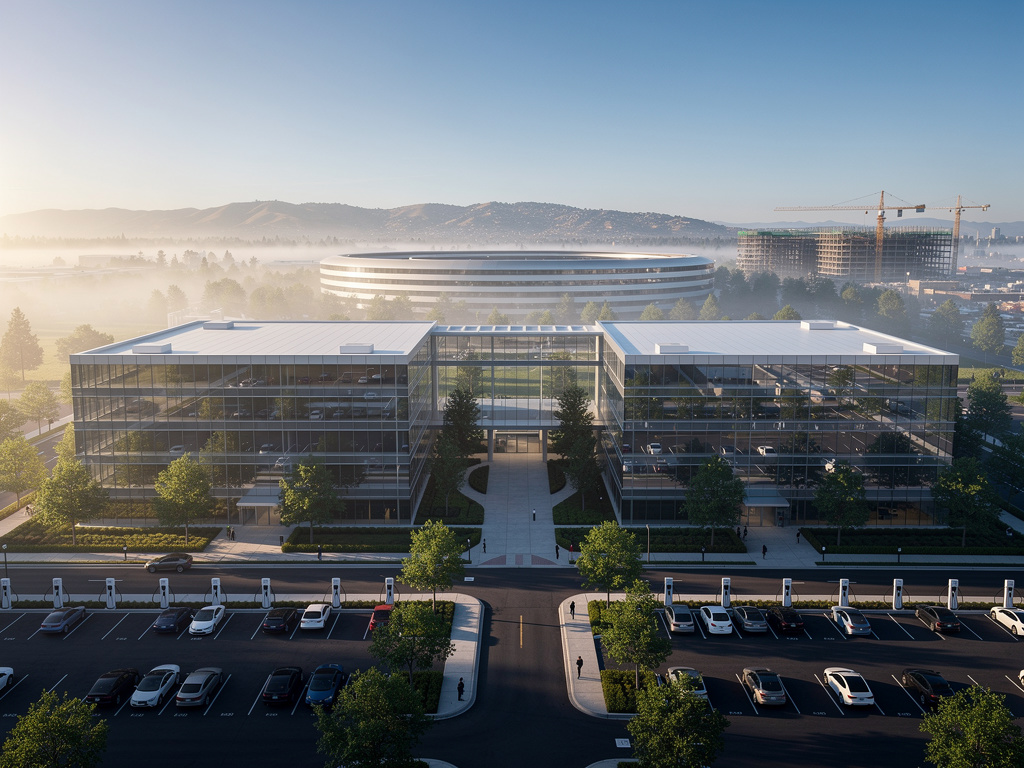
The buildings, totaling around 300,000 square feet, are strategically located near Apple’s iconic spaceship-like headquarters, known as Apple Park. Insiders familiar with the transaction note that the purchase was an all-cash deal, a testament to Apple’s robust financial health amid fluctuating market conditions in the commercial real estate sector. This isn’t just about adding square footage; it’s a calculated play to consolidate control over key assets in a highly competitive area where tech giants vie for talent and infrastructure.
Apple’s real estate strategy has been aggressive this year, with previous buys including a $300 million office complex in Sunnyvale and other properties in San Jose. The Cupertino purchase, as reported by AppleInsider, fits into a pattern of the company transitioning from lessee to owner, potentially locking in long-term cost savings and operational flexibility. Real estate experts suggest this could hedge against rising rental rates in the Bay Area, where demand for premium office space remains high despite remote work trends.
Unpacking the Financial Muscle Behind the Buy
Delving deeper into the numbers, the $216 million price tag breaks down to approximately $720 per square foot, a premium valuation that reflects the desirability of Cupertino’s prime locations. This figure aligns with recent transactions in the area, where tech-driven demand has kept property values elevated. Apple’s cash reserves, bolstered by record iPhone sales and services revenue, enable such large-scale investments without dipping into debt, a luxury few competitors can match.
Beyond the immediate financials, this acquisition signals Apple’s confidence in the enduring value of in-person collaboration. Even as the pandemic accelerated hybrid work models, the company has mandated a return to office for many employees, a policy that has sparked internal debates but underscores the importance of physical proximity in fostering innovation. Industry analysts point out that owning rather than leasing allows Apple to customize spaces for specialized needs, such as research labs or design studios.
The seller in this deal was a group led by executives from Sand Hill Property Co., as noted in coverage from The Mercury News. This transaction continues a trend where Apple absorbs properties it already occupies, minimizing disruption while expanding its portfolio. With over $1.1 billion spent on Santa Clara County real estate since June, according to estimates compiled from public records, Apple’s moves are reshaping the local market dynamics.
Echoes of Growth Amid Housing Strains
Apple’s expansion isn’t occurring in a vacuum; it’s intertwined with broader challenges in Cupertino, a city synonymous with the company’s rise. Historical data reveals a stark imbalance: while Apple’s employee count ballooned from 18,000 in 2006 to over 116,000 a decade later, the number of housing units in Cupertino barely budged, inching from about 20,000 to 21,000 over the same period. This disparity has fueled ongoing debates about sustainable development in tech hubs.
Posts on X, formerly Twitter, from years past highlight public frustration with this imbalance. For instance, urban planning advocates have repeatedly called out Cupertino for approving massive office campuses, like the 14,000-person Apple Park, while stifling residential projects. One notable critique pointed to the city’s resistance to housing near major employment centers, exacerbating commutes and affordability issues for workers.
More recent sentiment on X echoes these concerns, with users noting that since Apple Park’s opening in 2017, which accommodates 12,000 employees, the city has permitted only a few hundred new housing units. Meanwhile, average home prices have surged by more than $1.25 million. These discussions, amplified by figures in urban policy, underscore how Apple’s real estate ambitions collide with community needs, potentially pressuring local governments to rethink zoning priorities.
Strategic Implications for Tech’s Power Centers
Looking ahead, Apple’s buying spree could influence how other tech behemoths approach their physical assets. Competitors like Google and Meta have also invested heavily in Bay Area properties, but Apple’s all-cash, ownership-focused strategy sets it apart. This approach not only provides tax advantages through depreciation but also insulates the company from landlord whims, ensuring stability in volatile times.
Financially, these investments represent a fraction of Apple’s $200 billion-plus cash hoard, yet they carry symbolic weight. By pouring money into Cupertino, Apple is doubling down on its roots, even as it expands globally with campuses in Austin, Texas, and planned facilities in North Carolina. Insiders speculate that the new buildings might house teams working on emerging technologies like augmented reality or autonomous systems, areas where proximity to core engineering talent is crucial.
Comparisons with past expansions reveal a consistent pattern. In 2011, Apple acquired land for what became Apple Park at a cost of around $300 million, a deal that transformed a former Hewlett-Packard site into a modern marvel. Today’s purchases, while smaller in scale, build on that legacy, potentially paving the way for further integrations with existing infrastructure.
Navigating Market Shifts and Local Impacts
The broader commercial real estate environment in Silicon Valley adds another layer to Apple’s strategy. Post-pandemic, office vacancy rates in some Bay Area submarkets have hovered around 20%, yet Cupertino’s tech-centric appeal keeps demand resilient. Apple’s moves could stabilize values in the area, benefiting smaller landlords and signaling confidence to investors wary of remote work’s long-term effects.
On the employment front, these acquisitions support Apple’s growing workforce, which now exceeds 160,000 globally. In Cupertino alone, the company employs tens of thousands, contributing significantly to the local economy through taxes and spending. However, this concentration raises questions about over-reliance on a single employer, a risk highlighted in economic analyses of similar tech monocultures.
Recent news coverage, such as from 9to5Mac, emphasizes how this deal caps a year of aggressive acquisitions, including a $200 million purchase on Main Street earlier in 2025. That transaction, Apple’s fourth in the Santa Clara Valley this year, involved office space long leased by the company, mirroring the Tantau Avenue strategy.
Broader Horizons in a Competitive Arena
Extending the view, Apple’s real estate playbook reflects a broader industry shift toward vertical integration. By owning the buildings where innovation happens, the company controls more variables in its ecosystem, from energy efficiency to security protocols. This is particularly relevant as Apple pushes into new frontiers like artificial intelligence and health tech, where proprietary spaces can safeguard intellectual property.
Critics, however, argue that such expansions exacerbate inequality. In Cupertino, where median home prices exceed $2 million, the influx of high-paid tech workers drives up living costs, pricing out essential service providers. Advocacy groups have urged more balanced growth, including mandates for affordable housing tied to commercial developments.
Drawing from additional reports, like those in The Mac Observer, Apple’s total South Bay spending surge past $1 billion underscores a commitment to the region despite global diversification efforts. This local focus might also serve as a talent magnet, offering employees state-of-the-art facilities in a desirable location.
Future Trajectories and Enduring Commitments
As Apple continues to invest, questions arise about sustainability. The company’s campuses emphasize green design, with Apple Park boasting extensive solar arrays and recycled water systems. The new buildings could similarly be retrofitted to meet ambitious carbon-neutral goals, aligning with Apple’s pledge to achieve net-zero emissions by 2030.
Economically, these purchases ripple outward. Real estate brokers report increased interest in nearby properties, potentially sparking a mini-boom. Yet, for residents, the benefits must be weighed against traffic congestion and strained public services, issues that have persisted since Apple’s early expansions.
In synthesizing these elements, Apple’s $216 million deal emerges as more than a transaction—it’s a statement of permanence in Silicon Valley’s core. With over a billion dollars invested this year, as corroborated by outlets like SiliconValley.com, the company is not just buying buildings; it’s fortifying an empire that blends technological prowess with territorial dominance.
Reflections on Innovation’s Physical Footprint
Ultimately, this acquisition invites reflection on how physical spaces shape corporate culture. In an era of digital nomads, Apple’s bet on owned real estate challenges prevailing narratives, suggesting that for breakthrough innovation, there’s no substitute for shared environments.
Industry observers anticipate more such moves, perhaps extending to mixed-use developments that incorporate housing. While no official plans have been announced, pressure from stakeholders could push Apple toward more holistic contributions to the communities it inhabits.
Posts on X from real estate watchers celebrate the deal as a bullish sign for the sector, with some noting Apple’s role in countering downturns. As the company navigates these waters, its actions will likely influence policy discussions on tech’s societal responsibilities, ensuring that growth benefits extend beyond boardrooms.


 WebProNews is an iEntry Publication