
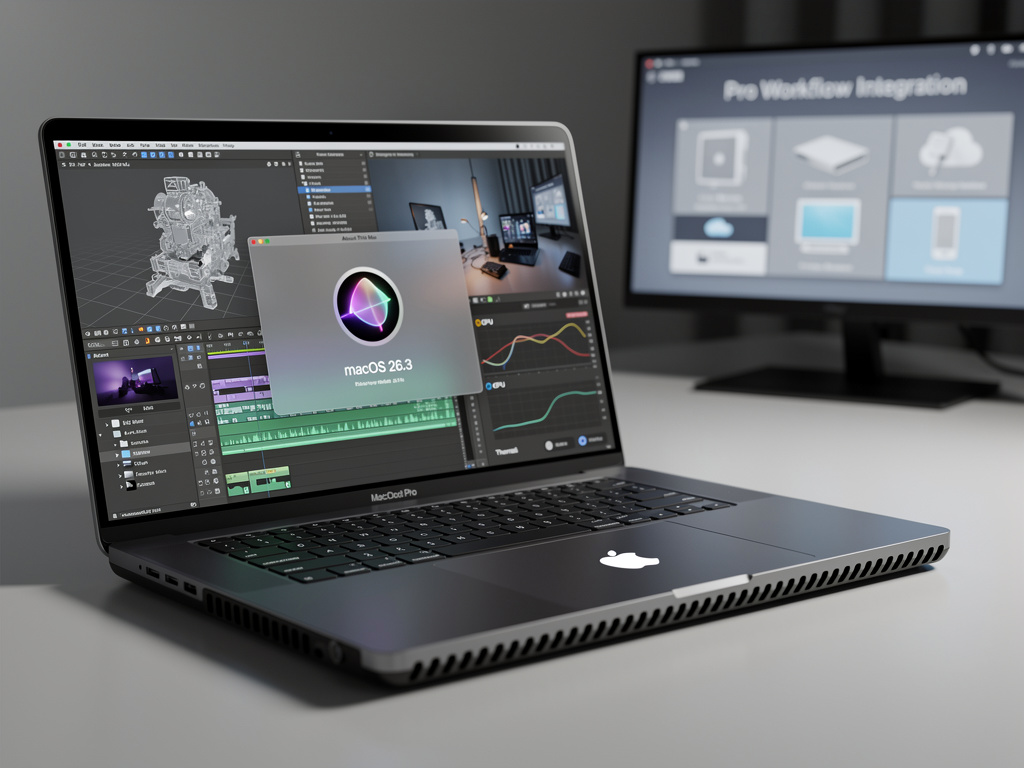
Apple’s MacBook Pro lineup stands poised for its most significant transformation since the company introduced Apple Silicon processors in 2020. According to recent industry intelligence, the Cupertino-based technology giant is preparing to unveil a completely redesigned MacBook Pro alongside macOS 26.3, marking a pivotal moment in the evolution of professional computing hardware. The forthcoming release represents more than incremental improvements—it signals Apple’s commitment to redefining what professionals expect from premium portable workstations.
The timing of this development carries particular significance as Apple navigates an increasingly competitive professional computing market. While the company has maintained its position as the preferred choice for creative professionals, emerging competitors have intensified pressure on Apple to innovate beyond processor improvements. The rumored redesign suggests Apple recognizes that hardware evolution must extend beyond internal components to encompass the entire user experience, from physical design to software integration.
Engineering Revolution: What Industry Sources Reveal About Hardware Changes
Multiple sources within Apple’s supply chain have indicated that the new MacBook Pro will feature substantial modifications to its physical architecture. According to MacRumors, the redesign will coincide with the release of macOS 26.3, suggesting a coordinated hardware-software launch strategy that Apple has historically employed for major product transitions. The synchronization between operating system updates and hardware releases typically indicates fundamental changes to system architecture rather than superficial cosmetic adjustments.
Industry analysts have noted that Apple’s development cycle for the MacBook Pro has entered a critical phase where previous design decisions require reevaluation. The current chassis, introduced alongside the M1 Pro and M1 Max processors, represented a return to professional-focused features including additional ports and improved thermal management. However, the next generation appears positioned to address remaining pain points that professionals have identified over the past several years of real-world usage.
The macOS 26.3 Connection: Software Driving Hardware Innovation
The specific mention of macOS 26.3 in connection with the new MacBook Pro suggests that software capabilities will play a defining role in the product’s value proposition. Operating system updates of this magnitude typically introduce system-level features that require new hardware capabilities to function optimally. This pattern has repeated throughout Apple’s history, from the transition to Retina displays through the shift to Apple Silicon processors.
Software developers familiar with Apple’s ecosystem have observed that macOS updates carrying point-three version numbers often introduce substantial under-the-hood improvements rather than merely cosmetic changes. These updates frequently enable new professional workflows, enhanced performance characteristics, or improved integration with Apple’s broader ecosystem of devices and services. The pairing of macOS 26.3 with new hardware suggests that Apple has developed features requiring capabilities beyond what current MacBook Pro models can deliver.
Market Positioning and Competitive Pressures
Apple’s professional computing division faces mounting pressure from competitors who have made significant strides in portable workstation capabilities. Windows-based manufacturers have introduced machines with impressive specifications, competitive pricing, and features that appeal to specific professional niches. While Apple has maintained strong loyalty among creative professionals, technical professionals in fields like data science and software development have shown increasing willingness to consider alternatives.
The professional computing market has evolved substantially since Apple’s last major MacBook Pro redesign. Remote work has become permanently embedded in corporate culture, increasing demand for portable machines that can serve as complete workstation replacements. Professionals now expect their laptops to handle intensive computational tasks, drive multiple high-resolution displays, and maintain performance throughout extended work sessions—all while remaining portable enough for frequent travel. Apple’s rumored redesign appears calculated to address these evolved requirements comprehensively.
Supply Chain Implications and Manufacturing Challenges
The introduction of a redesigned MacBook Pro carries significant implications for Apple’s global supply chain operations. Major design changes require coordination across dozens of suppliers and manufacturing partners, each of whom must retool production processes and quality control systems. Industry sources suggest that Apple has been working with key suppliers for over eighteen months to prepare for the transition, indicating the scope and complexity of the planned changes.
Manufacturing sources have indicated that Apple has placed substantial orders for new components that differ from current MacBook Pro specifications. These procurement patterns suggest changes to display technology, thermal management systems, and potentially the physical materials used in construction. The scale of these orders indicates that Apple anticipates strong demand for the redesigned models, reflecting confidence in the product’s market reception.
Professional Workflow Integration and Performance Expectations
Professional users have developed increasingly sophisticated workflows that push hardware capabilities to their limits. Video editors working with 8K footage, software developers managing complex compilation processes, and data scientists training machine learning models all require sustained high performance without thermal throttling. The new MacBook Pro must address these demanding use cases while maintaining the portability and battery life that distinguish laptops from desktop workstations.
Apple’s approach to professional computing has historically emphasized optimization across the entire stack, from silicon design through operating system software to professional applications. This vertical integration enables performance characteristics that competitors struggle to match, even with theoretically superior specifications. The combination of new hardware with macOS 26.3 suggests that Apple plans to leverage this integration advantage more extensively, potentially introducing capabilities that require tight coordination between hardware and software layers.
Display Technology and Visual Computing Advances
Display technology represents a critical component of professional computing, particularly for creative professionals who depend on accurate color reproduction and high resolution. Apple’s current MacBook Pro displays have set industry standards for color accuracy and brightness, but emerging technologies promise further improvements. Mini-LED backlighting in current models delivers impressive contrast ratios, but newer display technologies could offer advantages in power efficiency, brightness uniformity, or color gamut coverage.
The professional community has expressed particular interest in display improvements that enhance outdoor usability and reduce eye strain during extended work sessions. Some professionals have requested higher refresh rates for specific applications, while others prioritize color accuracy and calibration stability. Apple’s challenge lies in balancing these diverse requirements while maintaining the thin profile and extended battery life that users expect from premium laptops.
Thermal Management and Sustained Performance
Thermal management has emerged as a defining characteristic separating professional-grade laptops from consumer models. Apple’s transition to Apple Silicon processors delivered substantial performance improvements while reducing heat generation, but the most demanding professional workflows still push thermal limits. The rumored redesign may incorporate enhanced cooling systems that enable sustained performance under heavy workloads without excessive fan noise or surface temperatures.
Engineering sources suggest that Apple has invested significantly in thermal simulation and testing to optimize heat dissipation in the new design. Advanced materials and innovative airflow designs could enable higher sustained performance levels while maintaining acceptable acoustic characteristics. Professional users have consistently identified thermal performance as a priority, particularly those working in noise-sensitive environments or handling extended rendering and compilation tasks.
Connectivity and Expandability Considerations
Port selection and connectivity options remain contentious topics among MacBook Pro users. Apple’s current models restored several ports that had been eliminated in previous generations, but professionals continue debating the optimal configuration. The new design may introduce additional connectivity options or updated standards that reflect evolving professional requirements, from faster external storage interfaces to enhanced display connectivity supporting higher resolutions and refresh rates.
The professional computing environment has shifted toward hybrid workflows that combine local processing with cloud resources and external peripherals. Modern professionals expect seamless connectivity to external displays, storage systems, audio interfaces, and networking equipment. Apple’s connectivity decisions in the new MacBook Pro will signal the company’s vision for how professionals will work over the coming years, potentially influencing peripheral manufacturers and workflow development across the industry.
Pricing Strategy and Market Segmentation
Apple’s pricing strategy for the redesigned MacBook Pro will significantly influence its market impact and competitive positioning. The company has historically commanded premium pricing for professional products, justified by superior build quality, performance characteristics, and ecosystem integration. However, competitive pressure has intensified as alternatives have closed the gap in key performance metrics while maintaining lower price points.
The introduction of a redesigned model typically enables Apple to adjust its product lineup and pricing structure. The company may retain current models at reduced prices while positioning the new design as a premium offering, or it may replace the entire lineup with redesigned models across multiple price points. These decisions will reflect Apple’s assessment of market conditions and competitive dynamics, as well as its confidence in the new design’s ability to command premium pricing based on differentiated capabilities and user experience.


 WebProNews is an iEntry Publication