
Apple’s 2026 Horizon: Revolutionizing Devices in a Competitive Arena
As Apple Inc. gears up for what could be one of its most transformative years, industry observers are buzzing with anticipation over a slate of innovative products set to redefine consumer technology. Drawing from recent reports, 2026 promises a foldable iPhone, an enhanced Siri powered by large language models, and a potential shift in how the company structures its launch events. This comes at a time when Apple faces intensifying rivalry in artificial intelligence and hardware from competitors like Google and Samsung. According to a detailed analysis in Business Insider, Apple is poised to unveil these advancements amid a backdrop of strategic hints from the company itself, which has traditionally been secretive about its roadmap.
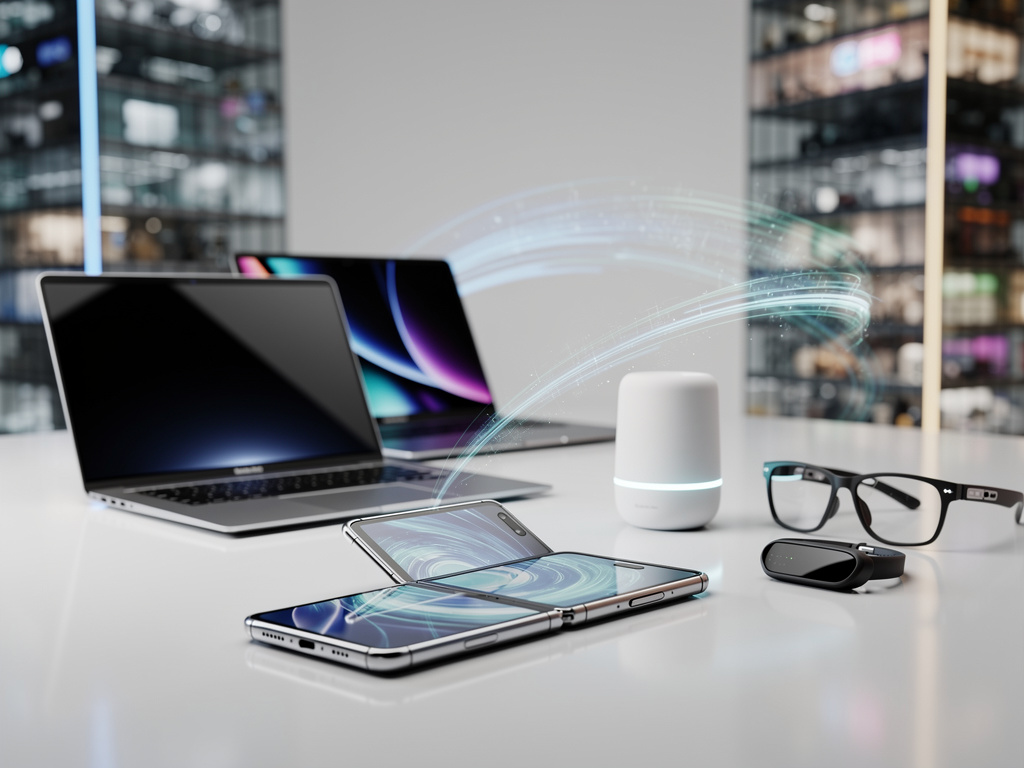
The foldable iPhone, long rumored, is expected to mark Apple’s entry into a market segment dominated by foldable devices from other manufacturers. Insiders suggest this device could feature a clamshell design similar to Samsung’s Galaxy Z Flip, potentially launching in the latter half of 2026. This move is seen as Apple’s response to stagnating iPhone sales and the need to inject excitement into its flagship product line. Meanwhile, upgrades to Apple Intelligence, the company’s AI suite, are anticipated to address criticisms of its current execution, with CEO Tim Cook acknowledging areas for improvement in recent statements.
Beyond hardware, Apple’s voice assistant Siri is slated for a significant overhaul, incorporating advanced large language model technology to make it more conversational and capable. This upgrade aims to close the gap with AI leaders like OpenAI’s ChatGPT, which have set new benchmarks for user interaction. Reports indicate that these enhancements could be rolled out through software updates, possibly coinciding with new device launches to maximize impact.
Unpacking the Foldable iPhone Strategy
Delving deeper into the foldable iPhone, rumors compiled by MacRumors paint a picture of a device that splits from Apple’s traditional iPhone release cycle. Instead of the usual annual refresh, 2026 might see the foldable model debuting alongside iPhone 18 Pro variants, with the standard iPhone 18 delayed until 2027. This staggered approach could allow Apple to focus resources on perfecting the foldable technology, which involves complex engineering challenges like durable hinges and crease-resistant screens.
Industry analysts note that this strategy reflects broader shifts in Apple’s product planning. For instance, the introduction of a low-cost MacBook is another highlight, aimed at capturing budget-conscious consumers in emerging markets. Priced potentially under $1,000, this laptop would feature Apple’s in-house silicon, possibly the M5 chip, and target education and entry-level professional users. Such a move could broaden Apple’s market reach, especially in regions where Chromebooks have gained traction.
On the AI front, the revamped Siri is expected to leverage large language models for more natural dialogue, context awareness, and integration across Apple’s ecosystem. This isn’t just about voice commands; it’s about creating an AI companion that anticipates user needs, from scheduling to content creation. Sources from recent X posts, including those from tech leakers, emphasize that this Siri upgrade could be a game-changer, addressing long-standing user frustrations with the assistant’s limitations.
Expanding into Smart Home and Wearables
Apple’s ambitions extend beyond phones and laptops into the smart home arena. A new home hub device, rumored to resemble a wall-mounted iPad with a 6-inch display, is anticipated for 2026. This gadget, running on a bespoke homeOS, would integrate Apple Intelligence for seamless control of connected devices, FaceTime calls, and media playback. Insights from Tom’s Guide suggest it could launch as early as the first quarter, positioning Apple to compete more aggressively with Amazon’s Echo and Google’s Nest ecosystems.
In wearables, updates to the Apple Watch lineup are on the horizon, though details remain sparse. The Apple Watch Ultra 4 might see incremental improvements rather than revolutionary changes, focusing on battery life and health monitoring features. However, there’s speculation about AI-infused smart glasses, which could represent Apple’s foray into augmented reality beyond the Vision Pro headset. These glasses might offer heads-up displays for navigation, notifications, and real-time translations, powered by lightweight AI processing.
Moreover, Apple’s push into AI extends to software enhancements across its platforms. iOS 20 and macOS updates are expected to incorporate deeper AI integrations, such as improved photo editing tools and predictive text in apps like Messages and Notes. This holistic approach underscores Apple’s strategy to weave AI into every facet of user experience, from casual interactions to professional workflows.
Navigating Competitive Pressures and Market Dynamics
As Apple prepares these launches, it must navigate a gauntlet of competitive pressures. Rivals like Samsung and Huawei have already established footholds in foldables, while AI advancements from Microsoft and Meta challenge Apple’s ecosystem dominance. Business Insider highlights how Tim Cook’s leadership has been critiqued for lagging in AI execution, despite early investments. The 2026 products could be pivotal in reclaiming narrative control, especially as Apple Intelligence struggles to become a household name.
Economic factors also play a role. Rising component costs, including NAND and RAM shortages, could lead to higher prices for some devices. Tariffs on imported goods might further impact profitability, prompting Apple to diversify its supply chain. Reports from Cult of Mac indicate that up to 15 new products are in the pipeline, including refreshed iPads and Macs with OLED displays, which promise better color accuracy and energy efficiency.
From X discussions, sentiment among tech enthusiasts is optimistic, with posts highlighting the potential for a “Mac renaissance” driven by competitive RAM prices and powerful M5 chips. Leakers suggest stability fixes in iOS 27 could address bugs that have plagued recent releases, enhancing user trust in Apple’s software reliability.
Innovations in Displays and Computing Power
A key innovation for 2026 is the rumored introduction of OLED screens in MacBook Pros, marking a shift from LCD technology. This upgrade, detailed in MacRumors, would deliver deeper blacks and higher contrast ratios, appealing to creative professionals in video editing and graphic design. The first OLED MacBook Pro could debut mid-year, powered by the M5 Pro or Ultra chips, offering unprecedented performance for tasks like 8K video rendering and machine learning workloads.
Complementing this, a budget MacBook variant aims to democratize access to Apple’s computing prowess. Unlike the premium models, this entry-level laptop might forgo some high-end features to hit a lower price point, yet still include essentials like a Retina display and all-day battery life. This strategy echoes Apple’s successful iPhone SE line, balancing affordability with brand prestige.
In the realm of accessories, an updated AirTag 2 is speculated, with improved tracking precision and integration with Apple’s Find My network. Such enhancements could bolster Apple’s ecosystem stickiness, encouraging users to stay within its walled garden.
Strategic Shifts in Launch Cadence
Apple’s potential alteration of its launch events is another intriguing development. Traditionally, the company holds major keynotes in September for iPhones and spring events for other products. However, 2026 might see a reconfiguration, with split iPhone launches to accommodate the foldable model’s debut. This could mean an earlier event for Pro models and a later one for the foldable, allowing for tailored marketing campaigns.
Insights from The News International point to early 2026 releases, including upgraded iPads and MacBooks in the first quarter. These could feature M5 chips and enhanced AI capabilities, setting the stage for a year of continuous innovation.
X posts from influencers like Mark Gurman reinforce this, discussing Apple’s roadmap with details on app revamps and multitasking improvements. Such leaks, while unofficial, provide a pulse on industry expectations and fuel speculation.
Ecosystem Integration and Future Prospects
At the heart of Apple’s 2026 strategy is deeper ecosystem integration. The foldable iPhone, for example, could sync seamlessly with the new home hub for unified control of smart devices. Siri’s LLM upgrades would enable cross-device continuity, where a conversation started on an iPhone continues on a Mac or Apple Watch without missing a beat.
This interconnectedness is crucial for retaining users in an era of fragmenting loyalties. As noted in Tom’s Guide, potential smart glasses could extend this ecosystem into wearable AR, offering experiences like virtual overlays for real-world navigation or collaborative work sessions.
Looking ahead, Apple’s investments in AI and hardware position it to tackle emerging trends like edge computing and privacy-focused AI. By prioritizing on-device processing, the company maintains its stance on data security, differentiating from cloud-heavy competitors.
Challenges and Opportunities Ahead
Despite the excitement, challenges loom. Regulatory scrutiny over app store practices and antitrust concerns could impact Apple’s ability to monetize its ecosystem. Additionally, supply chain disruptions, as mentioned in Cult of Mac, might delay launches or increase costs.
Yet, opportunities abound. The low-cost MacBook could open doors in education sectors, while the foldable iPhone might attract a new demographic of tech-savvy consumers seeking novelty. Enhanced Siri could finally make Apple a frontrunner in AI assistants, boosting adoption of Apple Intelligence features.
Industry insiders, drawing from sources like Business Insider, believe 2026 could redefine Apple’s trajectory, much like the original iPhone did in 2007. With a blend of hardware innovation and software prowess, the company aims to not just compete, but lead in the evolving tech domain.
Vision for Sustained Growth
Apple’s broader vision includes exploring new categories, such as advanced robotics or health tech integrations. While not confirmed for 2026, rumors of AI-driven health monitoring in wearables suggest a focus on wellness as a growth area.
Financially, these launches could drive revenue diversification beyond iPhones, which still account for a significant portion of Apple’s income. Analysts project that successful rollouts could push the company’s market cap higher, rewarding investors who have weathered recent stock fluctuations.
In essence, 2026 represents a pivotal chapter for Apple, blending bold hardware bets with AI refinements to secure its place in a dynamic tech environment. As details emerge, the industry will watch closely to see if these products live up to the hype.


 WebProNews is an iEntry Publication