
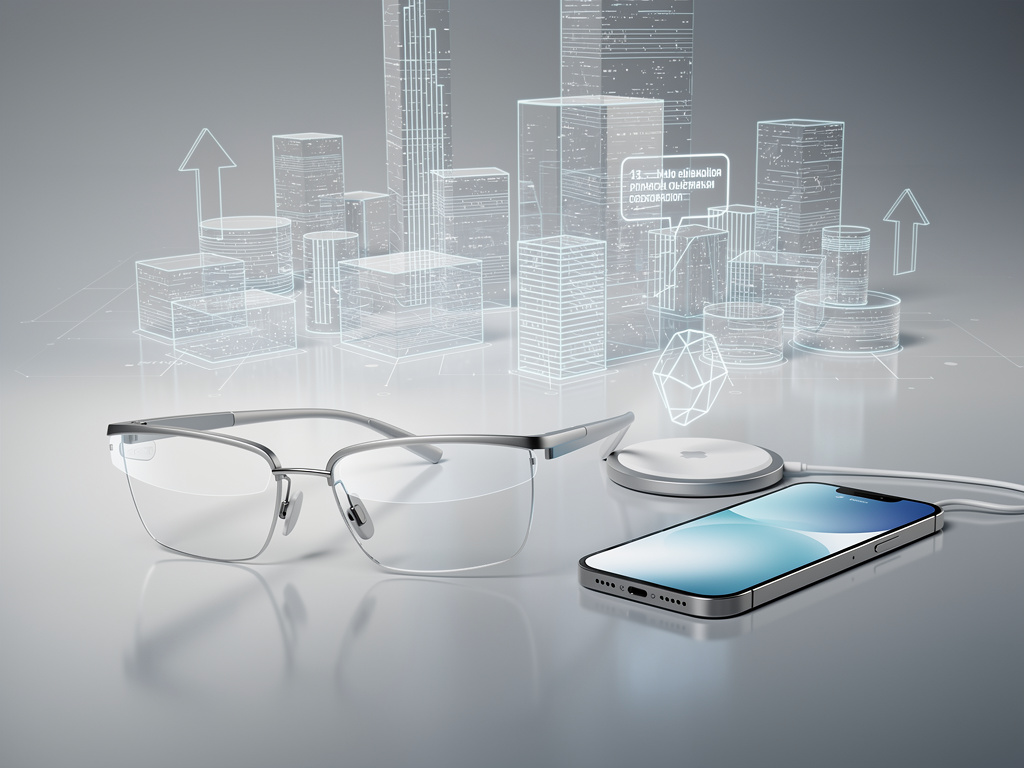
Through the Looking Glass: Apple’s Ambitious Foray into Augmented Reality Wearables
Apple Inc. is poised to redefine how we interact with the digital world, with whispers of its upcoming smart glasses generating buzz across the tech sector. Drawing from a blend of insider leaks, analyst predictions, and recent reports, the device—tentatively dubbed Apple Glasses—promises to integrate artificial intelligence, augmented reality, and seamless connectivity in a lightweight form factor. Unlike bulkier predecessors like the Vision Pro headset, these glasses aim for everyday wearability, potentially launching as early as 2026. This move comes amid intensifying competition from rivals like Meta Platforms Inc. and now Google, which recently announced its own AI-infused smart glasses for the same timeline.
The foundation of these rumors stems from credible sources within the supply chain and tech journalism. For instance, a detailed breakdown in 9to5Mac outlines key features based on leaks, emphasizing how Apple plans to leverage its ecosystem for a compelling user experience. Analysts suggest the glasses will rely heavily on the iPhone for processing power, keeping the hardware slim and battery-efficient. This approach echoes Apple’s strategy with the Apple Watch, where the companion device handles the heavy lifting.
Beyond basic notifications, the glasses are expected to offer heads-up displays for navigation, real-time translations, and contextual information overlays. Imagine walking through a city and seeing directions superimposed on your view, or having subtitles appear during a foreign-language conversation. Such capabilities could transform mundane tasks, making the device a staple for professionals in fields like logistics, healthcare, and education.
Unveiling the Core Technologies Powering Apple Glasses
At the heart of Apple Glasses lies advanced AI integration, powered by upgrades to Siri and the broader Apple Intelligence suite. Reports indicate built-in cameras and sensors will enable environmental awareness, allowing the glasses to scan surroundings and provide instant insights—such as identifying objects or suggesting actions based on visual data. This mirrors features in Google’s forthcoming glasses, but Apple’s version is rumored to emphasize privacy, with on-device processing to minimize data sharing.
Pricing speculation places the glasses in the $600 to $700 range, according to insights from Geeky Gadgets, positioning them as a premium yet accessible entry into AR wearables. This cost strategy could broaden appeal beyond tech enthusiasts, targeting consumers already invested in Apple’s ecosystem. Integration with existing devices like the iPhone and AirPods is a key selling point, enabling features such as audio passthrough for calls or music without removing the glasses.
Development timelines have shifted over the years, with early predictions from analyst Ming-Chi Kuo pointing to a 2026 or 2027 debut. Posts on X (formerly Twitter) from Kuo and others highlight a roadmap that positions smart glasses as the next big wave in consumer electronics, potentially driving sales similar to the AirPods phenomenon. These discussions underscore Apple’s pivot from more ambitious projects, like a camera-equipped smartwatch, to focus on eyewear that balances innovation with practicality.
Competitive Pressures and Market Positioning
The announcement of Google’s AI smart glasses, detailed in a MacRumors piece, has undoubtedly accelerated Apple’s timeline. Google’s offering includes built-in speakers, microphones, and cameras for interacting with its Gemini AI, setting a benchmark for hands-free assistance. In response, Apple is enhancing Siri with generative AI capabilities, aiming for more natural conversations and proactive suggestions. This rivalry could benefit consumers, pushing both companies toward more refined products.
Industry insiders note that Apple’s glasses may debut with a sleek, minimalist design reminiscent of everyday eyewear, avoiding the “glasshole” stigma associated with earlier attempts like Google Glass. A report from Business Standard suggests onboard cameras for visual AI tasks, such as object recognition or live captioning, integrated with upgrades to Siri for voice commands that feel intuitive and responsive.
Moreover, the glasses are anticipated to support augmented reality overlays without the need for a full headset, making them ideal for mobile professionals. For example, architects could visualize blueprints on-site, or surgeons might access patient data mid-procedure. This utility extends to everyday users, with features like real-time fitness tracking or social media notifications displayed discreetly in the periphery of vision.
Ecosystem Synergies and User Experience Innovations
Seamless connectivity within Apple’s walled garden is a cornerstone of the glasses’ appeal. Pairing with an iPhone could unlock advanced functionalities, such as using the phone’s processor for complex AI computations, thereby extending battery life to a full day. Leaks suggest integration with Apple Maps for AR navigation, where directions appear as floating arrows in the real world, enhancing safety by keeping eyes on the road.
Audio features are another highlight, with rumors of directional sound that simulates spatial audio without earbuds. However, some X posts speculate compatibility with AirPods for a more immersive experience, allowing users to switch seamlessly between modes. This flexibility could make the glasses versatile for different scenarios, from commuting to workouts.
Privacy remains a focal point, with Apple likely incorporating features like end-to-end encryption for captured data and user controls over AI processing. This contrasts with competitors’ approaches and aligns with Apple’s brand ethos, potentially giving it an edge in a market wary of data breaches.
Challenges in Development and Potential Roadblocks
Despite the excitement, Apple faces hurdles in bringing these glasses to market. Supply chain constraints, particularly for high-resolution micro-displays, have delayed similar projects in the past. Analyst reports from AppleInsider detail the technical challenges of creating a heads-up display (HUD) that’s both lightweight and powerful, powered indirectly by an iPhone.
Battery life and comfort are critical concerns; early prototypes reportedly struggled with heat management during extended use. Apple may address this by offloading intensive tasks to connected devices, but this dependency could limit standalone functionality. Additionally, regulatory scrutiny over AI and privacy in wearables might slow the rollout, especially in regions with strict data laws.
Competition isn’t limited to Google; Meta’s Ray-Ban smart glasses have already gained traction with features like live streaming and AI queries. Apple’s entry could disrupt this space by offering deeper integration with productivity tools, such as real-time collaboration in apps like Keynote or Pages via AR overlays.
Future Implications for Wearable Tech
Looking ahead, Apple Glasses could catalyze a shift toward always-on computing, where digital information blends effortlessly with the physical world. Industry observers on X, including posts from Mark Gurman, discuss Apple’s pivot from a lighter Vision headset to these glasses, suggesting a strategic focus on mobility over immersion.
Enhancements to visionOS, the operating system powering Apple’s spatial computing efforts, are expected to adapt for the glasses’ form factor. When connected to a Mac, the interface might expand to full virtual desktops, while mobile use offers a streamlined UI for quick interactions. This duality positions the glasses as a bridge between casual and professional use.
For developers, the device opens new avenues for app creation, from AR games to enterprise tools. Apple’s App Store ecosystem could see a surge in glasses-optimized software, further entrenching its market dominance.
Strategic Shifts and Long-Term Vision
Apple’s roadmap, as outlined in various leaks, includes iterative improvements post-launch, such as enhanced cameras for better low-light performance or expanded AI models. A Tom’s Guide compilation of rumors emphasizes the glasses’ role in Apple’s broader AI push, rivaling offerings from OpenAI and others.
The shelving of projects like a camera-equipped smartwatch, as noted in X posts from Gurman, indicates a concentrated effort on eyewear. This focus might stem from user feedback on the Vision Pro, which highlighted the need for more portable AR solutions.
Ultimately, success will hinge on balancing innovation with usability. If Apple delivers on the rumored features—AI-driven insights, seamless ecosystem ties, and a comfortable design—the glasses could become as ubiquitous as the iPhone, reshaping daily interactions in profound ways.
Broader Industry Ripple Effects
The entry of Apple into smart glasses could accelerate adoption across sectors. In healthcare, for instance, real-time data overlays might assist in diagnostics, while in retail, virtual try-ons could enhance shopping experiences. Education stands to benefit from interactive AR lessons, making abstract concepts tangible.
Economically, the device might boost Apple’s revenue streams through accessories, subscriptions to enhanced AI services, and app sales. Analysts predict it could capture a significant share of the growing wearables market, projected to expand rapidly in the coming years.
Rivals will likely respond with their own advancements, fostering a cycle of innovation that elevates the entire field. For consumers, this means more choices, but for Apple, it’s an opportunity to solidify its position as a leader in personal technology.
Refining Expectations Amid Speculation
While much of the information draws from leaks, it’s worth noting the fluid nature of product development. Recent X discussions, including those from tech journalists, speculate on names like “Apple Vision” or even playful monikers such as “EyePods,” reflecting community enthusiasm.
Integration with emerging technologies, like advanced haptics for subtle notifications, could further differentiate the glasses. Reports suggest compatibility with Apple’s health features, potentially monitoring biometrics through temple sensors.
As 2026 approaches, more concrete details will emerge, but for now, the anticipation builds on a foundation of promising rumors and strategic pivots. Apple’s track record of polished launches suggests the wait could be worthwhile, potentially ushering in a new era of wearable intelligence.


 WebProNews is an iEntry Publication