
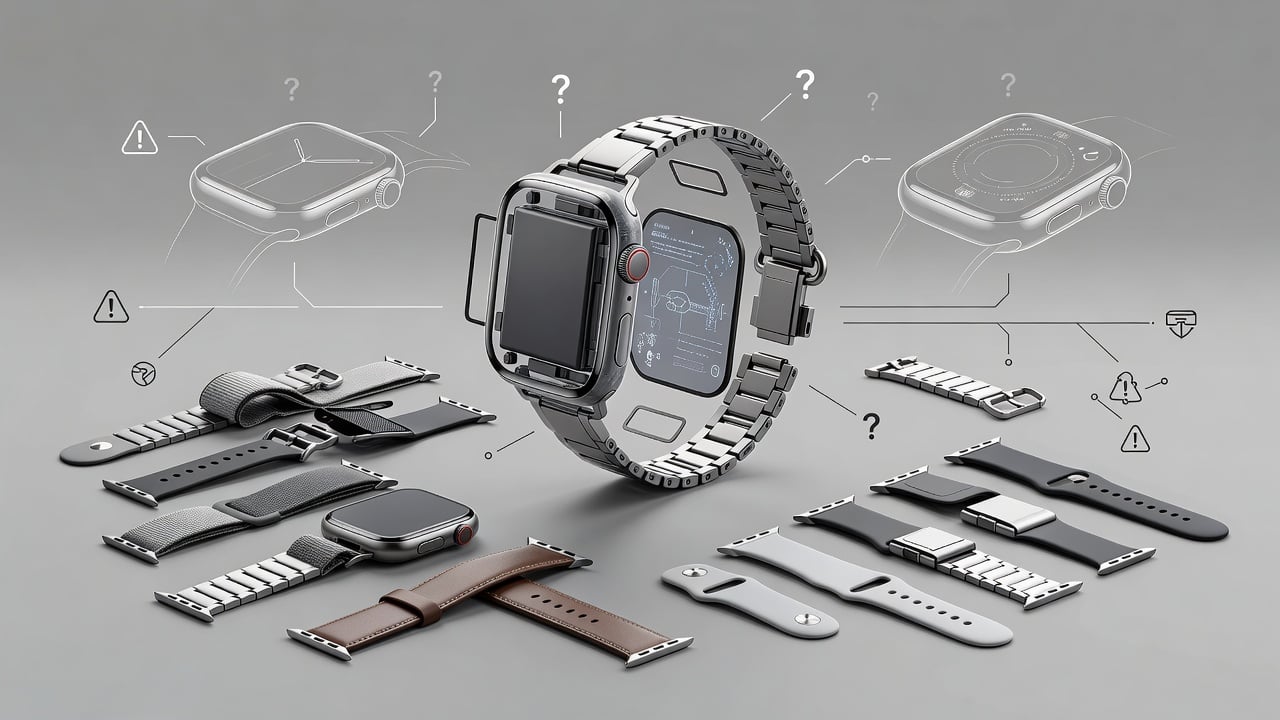
Apple stands on the verge of its most disruptive change to the Apple Watch in over a decade. A fresh leak points to 2027 as the year the wearable receives a mechanical overhaul. The shift centers on how bands connect to the case. And that connection change carries consequences for millions of owners.
According to a Weibo post by the tipster known as Instant Digital, the standard Apple Watch model scheduled for 2027 will adopt an entirely new band attachment system. Macworld reported the claim in detail. The modification would free up internal volume. That extra room could support a larger battery. Yet it would also break compatibility with every band designed for Apple Watches since the original 2015 model.
Buyers have grown accustomed to swapping straps across generations. The slide-in lugs have remained consistent. This continuity created a vast market of first-party and third-party options. Now that consistency may end. Wareable captured the practical fallout. The site advised readers to hold off on new band purchases. Existing collections risk becoming incompatible with the next major model.
The rumor revives elements first floated years ago. Back in 2023 Bloomberg’s Mark Gurman described plans for an “Apple Watch X.” That concept included a thinner case, magnetic band attachment, and advanced sensors. None of those features reached production in the Series 10 or subsequent releases. The latest details from Instant Digital suggest Apple postponed rather than abandoned the direction.
Timing fits Apple’s historical pattern. The company typically refreshes the Apple Watch exterior every three generations or so. The design introduced with the Series 7 carried through later models. Series 10 brought larger screens and thinner profiles but kept the core attachment method. Series 12, expected this fall, should retain the current look according to multiple reports. The real break arrives with what would be the Series 13 in 2027.
Space gained from the new attachment could address a persistent complaint. Battery life on standard Apple Watch models still hovers around 18 to 24 hours for many users under typical conditions. A larger cell might push that higher. Yet Apple has not confirmed any specifications. The leaker offered no further technical details beyond the attachment change and its battery implication.
Display technology could receive its own upgrade around the same period. Korean outlet The Elec reported that Apple is evaluating LG Display’s high-mobility oxide, or HMO, thin-film transistor technology for future OLED panels. MacRumors covered the development on June 2. The new backplane promises better electron mobility than current LTPO solutions. Resulting efficiency gains could reduce power consumption. That pairs well with any battery enlargement from the chassis redesign.
Analysts caution against overconfidence. Similar redesign stories have circulated since 2022. Some predicted sweeping changes for 2025 or 2026 that never materialized. Instant Digital’s track record includes both hits and misses. The pattern indicates Apple continues to refine concepts internally while supply chain partners leak fragments.
Health monitoring remains a parallel focus. Earlier reports from DigiTimes suggested Apple is preparing a refined high blood pressure notification feature. It would build on existing optical heart rate sensor capabilities already used for hypertension trend detection in watchOS. The new alert reportedly remains under FDA review. Such additions could appear before the 2027 redesign. They would not require the mechanical changes now under discussion.
Apple Watch Ultra models have followed a somewhat separate path. The rugged variant received its own updates in recent years, including expanded sensor arrays in some leaks. Yet the 2027 overhaul rumor specifically targets the standard Series line. Whether the Ultra adopts the same band system remains unclear. A split approach could preserve some backward compatibility through the SE lineup, as Wareable speculated. An updated SE model might continue supporting legacy bands.
Consumer reaction on X reflects the tension. Recent posts highlight frustration over potential waste. One user noted the investment many have made in premium leather, metal, and sport bands. Another called the rumored change historic yet controversial. The discussion echoes past transitions such as the shift from 30-pin to Lightning connectors. Those moves eventually won acceptance. But they also left drawers full of obsolete accessories.
From a business perspective the redesign presents risks and opportunities. Apple earns significant revenue from bands and accessories. A clean break could spur new purchases. At the same time it might deter upgrades among owners heavily invested in current straps. The company has maintained the same lug width and attachment for more than ten years. That stability helped the Apple Watch mature into a fashion item as much as a health device.
Supply chain preparations would need to begin soon if a 2027 launch holds. Component orders for new cases and attachment hardware typically ramp up months in advance. No public evidence of such orders has surfaced yet. That absence fuels skepticism. But the absence also aligns with Apple’s tight control over information.
The original TechRepublic article that prompted wider coverage laid out the stakes clearly. Published July 2, it traced the rumor directly to Instant Digital and connected it to the earlier Apple Watch X concept. TechRepublic emphasized how the change would render a decade of bands obsolete. The piece noted the credibility questions that surround recurring redesign claims. Still, the consistency across reports suggests the idea holds appeal inside Apple.
Engineers face trade-offs. A magnetic or alternative attachment must feel secure during intense activity. It cannot add significant thickness or weight. The system must support quick swaps, a hallmark of the current design. And it must integrate with existing case manufacturing processes where possible. These constraints explain why the shift has taken time.
Broader context includes competition. Devices from Garmin, Whoop, and Oura offer multi-day battery life and specialized metrics. Apple has answered with software features and incremental hardware gains. A larger battery delivered through chassis redesign could close some of that gap without sacrificing the slim profile users prefer.
Regulatory hurdles add another layer. Any new blood pressure or glucose-related capabilities require careful validation. The hypertension notification already available uses the optical sensor to detect patterns rather than deliver exact readings. Future features may seek clearer clinical claims. That process can delay hardware integration.
Developers and accessory makers watch these rumors closely. A band incompatibility would force rapid redesign of countless products. Inventory could become dead stock. Third-party manufacturers might hesitate to invest until prototypes or official specifications emerge.
Apple itself has stayed silent. The company rarely comments on future products. Its September event will focus on the immediate lineup. Expect refinements to processors, possible satellite features in watchOS, and health software updates. The 2027 discussion belongs to a longer horizon.
Yet the prospect already influences buying behavior. Some owners delay accessory purchases. Others accelerate upgrades to lock in current compatibility while it lasts. The rumor, even unconfirmed, begins to shape the market.
History shows Apple eventually delivers on big wearable changes. The transition from Series 3 to Series 4 brought a larger display and thinner body. Series 7 introduced flatter edges. Each step felt evolutionary until viewed in retrospect. The 2027 shift could mark another such moment. Or it could slip further as technical challenges mount.
Either way, the conversation has restarted in earnest. Leaks from Weibo, analysis from MacRumors, Macworld, and Wareable, plus fresh coverage across tech sites, paint a picture of deliberate evolution. Apple appears to be preparing a meaningful break with the past. The details will matter. So will how the company manages the transition for its loyal users.
One thing seems increasingly likely. The Apple Watch that arrives in 2027 will look and attach differently than the one on wrists today. Your current band collection may indeed have an expiration date. The only question is how soon that date arrives.


 WebProNews is an iEntry Publication