
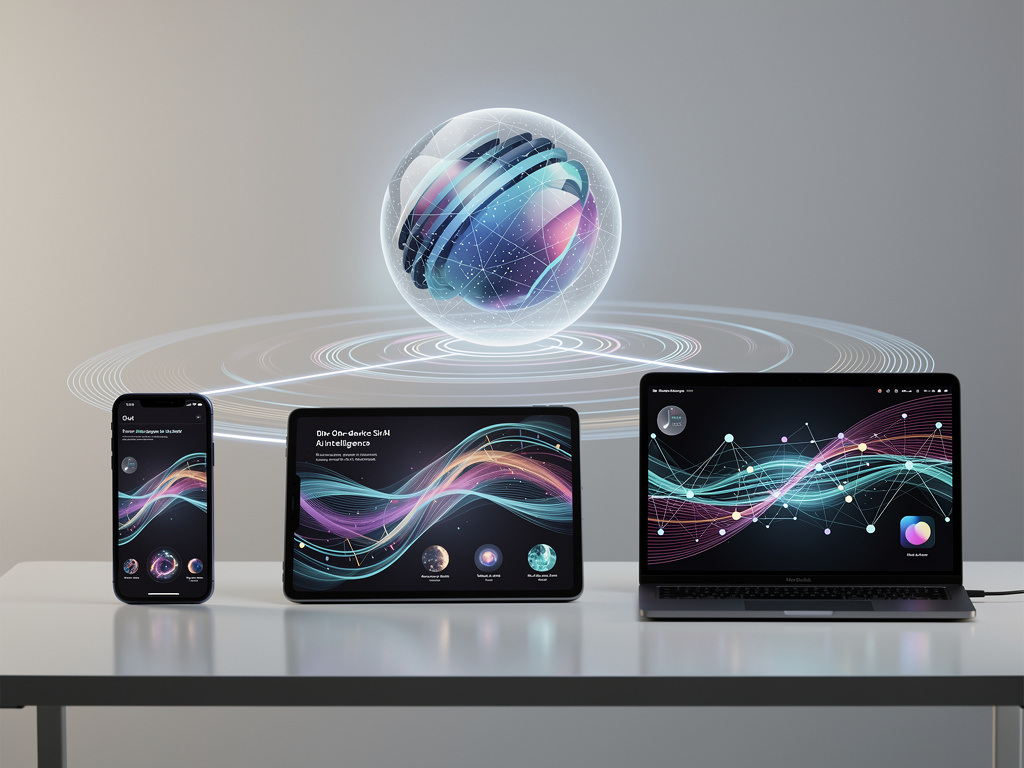
Apple has announced Siri AI, a significantly upgraded version of its voice assistant that brings advanced intelligence and a more personalized approach to daily interactions with iOS, iPadOS, and macOS devices. The announcement, shared through an official Apple Newsroom post, outlines how the new system moves beyond simple command responses to offer context-aware support that adapts to individual user patterns and preferences.
The updated Siri AI processes requests with greater accuracy and maintains awareness across multiple conversations. Users can now engage in extended dialogues where the assistant recalls previous topics without repeated explanations. For instance, someone planning a trip might ask about flight options, follow up with questions about local weather patterns, and then request restaurant suggestions in the same city, all while Siri AI connects the details naturally. This continuity stems from an enhanced on-device language model that handles complex sentence structures and follows through on multi-step instructions more effectively than previous versions.
Privacy remains a central focus in the design of Siri AI. Apple processes the majority of requests directly on the device using the latest A-series and M-series chips, which contain specialized neural engines capable of running sophisticated models without sending data to external servers. When a query requires additional computing power, the system routes it through Private Cloud Compute, a secure infrastructure that Apple says prevents the company from accessing user information. This approach addresses long-standing concerns about voice assistants storing conversations indefinitely and allows people to speak more freely about sensitive topics such as health, finances, or personal scheduling.
Visual intelligence represents one of the most noticeable improvements. Siri AI can now analyze what appears on the device screen and provide relevant actions without users needing to describe the content verbally. If a photo shows a specific plant, the assistant can identify the species, suggest care instructions, and add reminders to water it on a regular schedule. Similarly, when viewing a webpage with an unfamiliar term, users can ask Siri AI for clarification and receive definitions or related background information drawn from trusted sources. The system also works with photos and videos stored in the library, allowing natural language searches such as “show me pictures from last summer where we went hiking” and then offering to edit those images based on spoken preferences.
Integration with Apple’s broader application lineup has been expanded considerably. Siri AI connects directly with Calendar, Reminders, Notes, Messages, and Mail to perform actions that previously required multiple steps. A user could say, “Set up a meeting with the design team next Tuesday at 10 a.m. and pull the latest sales figures from last quarter into the agenda,” and the assistant would create the event, attach the relevant spreadsheet, and notify participants automatically. The new version also works across Apple devices, so a request started on an iPhone can be completed on a Mac or responded to through HomePod speakers without losing context.
Developers receive new tools that allow third-party applications to add their own capabilities to Siri AI. Through updated APIs, apps can expose specific functions that the assistant can trigger conversationally. A fitness application might let users ask Siri AI to start a custom workout routine, adjust difficulty based on recent performance, and log results back into the app. Music services can enable requests for playlists built around particular moods or activities, with Siri AI learning individual tastes over time and suggesting new artists that match established patterns.
The announcement highlights several practical examples that demonstrate the assistant’s expanded range. In one scenario, a parent asks Siri AI to help coordinate after-school activities for two children while preparing a grocery list that accounts for dietary restrictions. The assistant cross-references family calendars, checks traffic conditions, suggests appropriate meals, and adds missing ingredients to a shopping list shared with other household members. Another example shows a student requesting help with research for a paper. Siri AI gathers information from approved academic sources, organizes key points into a structured outline, and even suggests citation formats based on the required style guide.
Performance improvements come from multiple technical advances. The underlying foundation models have been trained on vastly larger datasets while maintaining strict controls over content quality and factual accuracy. Apple partnered with selected publishers to include high-quality reference material that helps the assistant provide reliable answers on topics ranging from historical events to scientific concepts. When Siri AI encounters a question it cannot answer with certainty, it now clearly states the limitation and offers to search the web through integrated Safari capabilities rather than guessing or providing misleading information.
Accessibility features have been enhanced alongside the core intelligence upgrades. Voice commands for users with limited mobility now include more natural phrasing options, reducing the cognitive load of remembering specific trigger words. The system can describe images in greater detail for those with visual impairments and offers improved dictation that better understands varied speech patterns, accents, and medical terminology. Real-time translation between supported languages has become more fluid, with Siri AI maintaining context across multiple exchanges during conversations with people who speak different languages.
Security measures extend beyond data privacy to include protection against unauthorized access. The assistant now requires explicit user confirmation for actions that involve financial information, personal messages, or device settings. Biometric authentication through Face ID or Touch ID can be linked to specific command categories, adding an additional layer of control. Apple also introduced parental controls that allow families to set boundaries on what types of information Siri AI can share with younger users while still providing age-appropriate educational support.
Industry observers note that the updates position Siri AI as a more competitive option against other major voice platforms. The combination of on-device processing, cross-device continuity, and application integration creates experiences that feel distinctly tied to Apple’s hardware and software philosophy. Early demonstrations shown during the announcement event illustrated how the assistant can manage smart home devices with greater precision, adjusting lighting, temperature, and security settings based on learned routines rather than rigid schedules.
The rollout schedule begins with developer beta versions available immediately, followed by a public preview for compatible devices later in the year. Full availability is expected in the first half of 2027 alongside the next major operating system releases. Devices as recent as the iPhone 15 Pro, iPad models with M1 chips or newer, and Macs equipped with Apple silicon will support the complete feature set, while older hardware will receive partial updates focused primarily on conversational improvements.
Apple emphasizes that Siri AI represents years of research into machine learning, natural language processing, and human-computer interaction. The company’s machine learning teams worked closely with designers to ensure the personality of the assistant remains approachable and consistent with the original Siri character while gaining substantially more capability. Voice options have been expanded with new natural-sounding tones, and users can customize how assertive or gentle the assistant sounds in different contexts, such as professional environments versus casual home use.
Feedback mechanisms allow users to rate responses and provide corrections that help improve the system over time. These ratings are processed anonymously and contribute to model refinements without compromising individual privacy. The company has also established an external red team of experts who test the assistant for potential biases, safety issues, and unintended behaviors before each major update reaches consumers.
Business users stand to benefit from several productivity-focused additions. Siri AI can now join video calls as a participant that takes notes, identifies action items, and distributes summaries to all attendees afterward. Integration with enterprise applications allows the assistant to pull information from approved corporate systems while maintaining strict data governance policies that many organizations require. Small business owners can use voice commands to check inventory levels, generate basic reports, and respond to common customer inquiries without switching between multiple applications.
Education applications of the new technology appear particularly promising. Teachers can use Siri AI to create customized learning materials, adapt explanations based on student progress, and provide additional resources for students who need extra support. The assistant can read aloud complex texts with appropriate pacing and emphasis, answer questions about the material, and even generate practice questions tailored to specific learning objectives. Students benefit from a patient tutor that remains available at any hour and adjusts its teaching style to match individual comprehension speeds.
Health and wellness features have been carefully implemented with input from medical professionals. Siri AI can help track medication schedules, interpret wearable device data, and provide reminders for physical activity based on established fitness goals. The system connects with the Health app to offer insights without offering medical diagnoses, always directing users to consult healthcare providers for interpretation of symptoms or test results. Privacy safeguards ensure that health-related conversations remain encrypted and never contribute to advertising profiles or shared datasets.
Looking forward, Apple indicates that future updates will continue expanding Siri AI’s knowledge base and interaction methods. Planned enhancements include deeper integration with augmented reality experiences, where the assistant can provide real-time guidance overlaid on the camera view. Voice synthesis improvements may allow the assistant to replicate specific user voices for accessibility purposes or to read personal messages in a familiar tone. The company also hints at expanded emotion awareness that could detect stress levels in a user’s voice and suggest appropriate calming techniques or breaks from demanding tasks.
The introduction of Siri AI marks a substantial step in making digital assistants feel less like tools and more like helpful colleagues that understand context and anticipate needs. By combining powerful local processing with carefully architected cloud support, Apple has created a system that delivers advanced capabilities while respecting user privacy and maintaining transparency about its limitations. As the features become available to millions of device owners worldwide, the ways people interact with their technology may shift toward more natural conversation and less menu navigation, potentially changing how we accomplish everyday tasks across work, home, and creative pursuits. The updates demonstrate Apple’s continued investment in making its products more intuitive and responsive to the people who use them every day.


 WebProNews is an iEntry Publication