
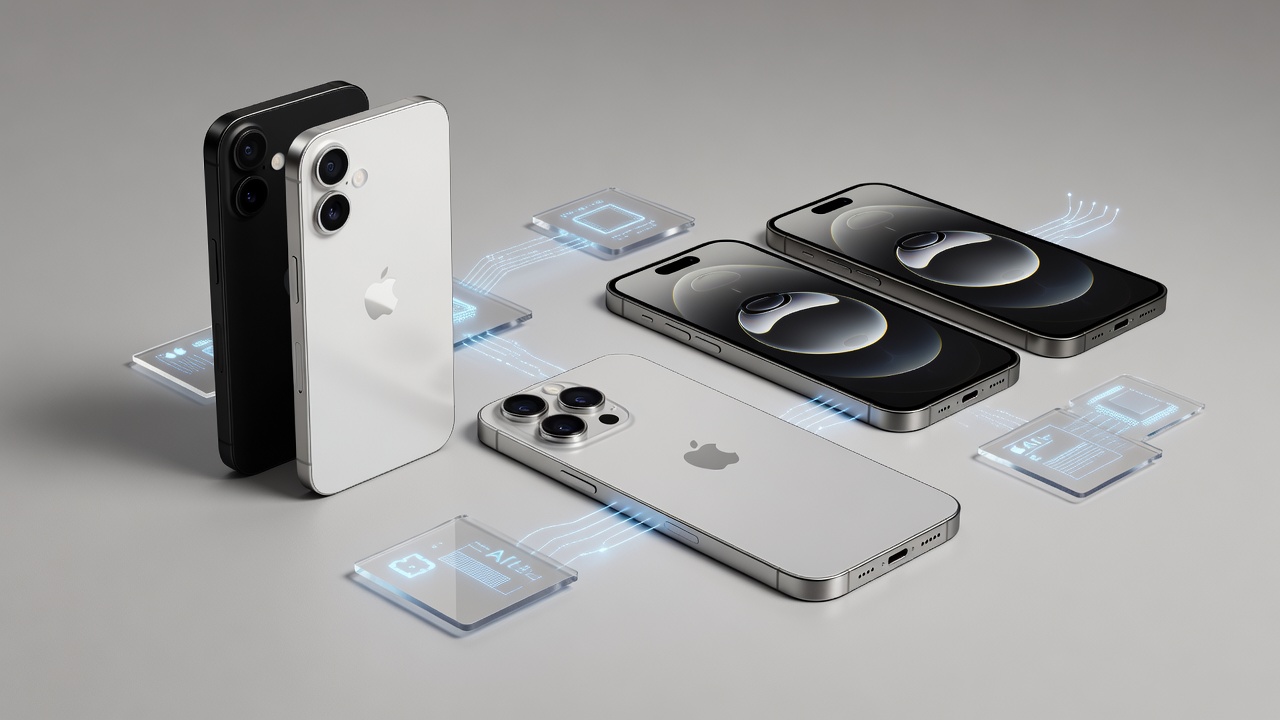
Apple is preparing to launch five distinct iPhone models in 2025, according to multiple reports from supply chain sources familiar with the company’s plans. This expanded lineup would mark a departure from the four-model strategy Apple has followed consistently since the iPhone 12 series debuted in 2020. The decision reflects growing pressure to differentiate products across price segments while addressing slowing sales in key markets.
The information, first reported by Yahoo Finance, draws from analysts who track component orders and manufacturing schedules in Asia. Their findings suggest Apple intends to introduce an entirely new device category positioned between the standard iPhone and the Pro models. This addition would give consumers more options without forcing them into the significantly higher price brackets occupied by the Pro and Pro Max variants.
Industry observers expect the fifth model to carry the iPhone 17 Air designation or a similar slim-profile name. Early indications point to an ultra-thin design measuring less than 6 millimeters thick, which would make it the slimmest iPhone ever produced. Achieving this reduced thickness requires substantial engineering adjustments, including a shift away from traditional battery configurations and the possible adoption of new materials for the chassis.
Supply chain partners have already begun tooling up for higher production volumes across multiple iPhone variants. Samsung Display and LG Display are reportedly increasing output of specialized panels that accommodate the different form factors. The standard iPhone 17 and iPhone 17 Plus would continue to use LCD technology rather than OLED, maintaining a clear visual distinction from the more expensive models while keeping costs in check for budget-conscious buyers.
The Pro models are expected to receive meaningful upgrades that justify their premium positioning. Both the iPhone 17 Pro and iPhone 17 Pro Max may feature under-display Face ID technology, eliminating the Dynamic Island cutout that has defined iPhone design since 2022. This change would create a truly edge-to-edge screen experience that many Android competitors have already achieved through various implementations.
Camera systems across the lineup will see incremental improvements rather than dramatic overhauls. The base models might upgrade from 48-megapixel to higher resolution sensors, while the Pro versions could introduce a new tetraprism telephoto lens with enhanced optical zoom capabilities. These camera enhancements align with Apple’s continued emphasis on computational photography, where software processing often matters more than raw hardware specifications.
Performance improvements will center around a new A19 chip manufactured using TSMC’s advanced 2-nanometer process. This smaller transistor size promises better power efficiency and higher clock speeds without proportional increases in heat generation. The Pro models are rumored to receive an A19 Pro variant with additional GPU cores, giving them a noticeable advantage in graphics-intensive tasks and artificial intelligence processing.
Apple Intelligence features introduced with iOS 18 have created new demands on hardware capabilities. The on-device processing requirements for advanced AI functions necessitate more powerful neural engines and additional system memory. The expanded lineup allows Apple to distribute these capabilities strategically across different price points, ensuring that even mid-range models can handle basic AI tasks while reserving the most sophisticated functions for the Pro variants.
Manufacturing challenges associated with the rumored ultra-thin model have created some uncertainty around production timelines. Sources indicate that initial yields for the slim chassis have been lower than expected, potentially affecting availability during the critical holiday sales period. Apple has reportedly instructed suppliers to prepare for multiple design iterations, suggesting the company remains flexible about final specifications as testing continues.
The Chinese market, which accounts for roughly 20 percent of Apple’s total revenue, continues to face intense competition from domestic brands like Huawei, Xiaomi, and Oppo. These manufacturers have released compelling foldable devices and aggressively priced flagships that offer similar specifications at lower price points. By introducing five models, Apple can create more targeted offerings that address specific consumer preferences in this crucial region.
Pricing strategy will play a decisive role in the success of the expanded lineup. The new slim model will likely start around $899, positioning it as a more accessible premium option compared to the $999 iPhone 17 Pro. This creates a logical progression from the $699 base model through the slim variant and up to the Pro versions that exceed $1,100 when configured with maximum storage.
Analysts at investment firms have mixed reactions to the five-model approach. Some argue that additional segmentation will confuse consumers and complicate inventory management for retailers. Others see it as a necessary response to market saturation, where meaningful differentiation becomes increasingly difficult within the constraints of a four-product strategy.
The ultra-thin design presents both opportunities and risks. On one hand, it could generate significant excitement among consumers who prioritize elegant form factors. The device might appeal particularly to professionals who value portability and distinctive styling. However, the engineering compromises required to achieve such thinness could impact battery life or structural integrity, creating potential vulnerabilities that competitors might exploit in their marketing.
Display technology represents another area of differentiation. The Pro models are expected to adopt anti-reflective glass coatings similar to those found on high-end ceramic shields but with improved durability. Variable refresh rates might extend down to the non-Pro models for the first time, though likely limited to 120Hz maximum compared to the ProMotion displays that can drop to 1Hz for power savings.
Software support remains one of Apple’s strongest competitive advantages. All five 2025 models should receive at least six years of iOS updates, creating a compelling value proposition against Android manufacturers who typically offer three to four years of major version upgrades. This long-term support encourages customers to stay within the Apple ecosystem even when hardware upgrades seem less urgent.
The decision to expand the iPhone range coincides with broader shifts in consumer behavior. Many users now keep their devices longer than in previous years, with replacement cycles stretching beyond three years in developed markets. This trend forces manufacturers to provide more compelling reasons to upgrade, whether through dramatic design changes, significant camera improvements, or new capabilities like advanced artificial intelligence features.
Component suppliers are adjusting their forecasts based on Apple’s expanded production targets. Foxconn, Pegatron, and Luxshare have all reportedly received updated orders that reflect the additional model. These changes ripple through the entire supply chain, affecting everything from semiconductor orders to camera module production and battery cell manufacturing.
Color options may play a larger role in product differentiation than in recent years. The slim model could debut with unique finishes not available on other variants, creating visual distinction on store shelves and in marketing materials. Apple has historically used color as a subtle way to signal different market positioning, and this approach seems likely to continue with the 2025 lineup.
Retail partners have begun preparing for the increased complexity that comes with stocking five models instead of four. Carrier representatives will need additional training to explain the differences between variants, while inventory systems require updates to handle the new stock-keeping units. These operational changes, while manageable, add friction to what has become a well-oiled annual launch process.
The competitive response from Samsung, Google, and Chinese manufacturers will shape how consumers perceive Apple’s expanded offerings. Samsung has successfully maintained multiple Galaxy lines including A-series, S-series, and Z-series foldables. Their experience managing diverse product portfolios may provide insights into potential challenges Apple could face with five iPhone models.
Market research indicates that consumers respond positively to having more choices within the premium smartphone segment. However, the data also shows that too many similar options can lead to decision paralysis. Apple’s challenge lies in creating clear distinctions between the five models that guide buyers toward the device that best matches their needs and budget.
Early prototypes suggest the iPhone 17 Air or Slim could feature a single rear camera rather than the dual or triple setups found on other models. This minimalistic approach would reinforce the device’s focus on elegant design while still delivering high-quality photography through advanced image processing. The trade-off might include reduced versatility for certain shooting scenarios that benefit from multiple lenses.
Battery technology continues advancing behind the scenes. The ultra-thin model will likely use a stacked battery design that maximizes capacity within minimal thickness. New materials and improved energy density allow manufacturers to pack more power into smaller spaces, though thermal management becomes increasingly complex as devices get thinner.
The 2025 iPhone launches will coincide with Apple’s broader artificial intelligence initiatives. The company has committed substantial resources to developing on-device machine learning capabilities that reduce reliance on cloud processing. Different iPhone models will support varying levels of these features based on their hardware specifications, creating natural upgrade incentives for users who want access to the latest AI tools.
Global economic conditions will influence purchasing decisions when the new phones arrive in stores. Interest rates, inflation pressures, and consumer confidence all affect discretionary spending on expensive electronics. Apple’s pricing decisions for the five-model lineup will need to account for these macroeconomic factors while maintaining profit margins that satisfy investors.
The reports about five iPhones have generated considerable discussion among technology enthusiasts and financial analysts. While some details remain unconfirmed, the consistency across multiple supply chain sources suggests Apple has committed to this direction. The coming months will reveal more specifics as component orders solidify and prototypes move into advanced testing phases.
Apple’s ability to execute on this expanded strategy will demonstrate the company’s continued capacity for innovation within a product category it has dominated for nearly two decades. The five-model approach represents a calculated response to market conditions rather than a radical departure from established practices. Success will depend on how effectively Apple communicates the distinct value propositions of each device and whether consumers embrace the additional choices.
As development progresses, attention will focus on how these devices balance form, function, and price. The ultra-thin model in particular carries both the potential for significant market impact and the risk of falling short of expectations if technical challenges prove too difficult to overcome completely. Apple has overcome similar obstacles in the past through careful engineering and strategic compromises.
The smartphone market has matured considerably since the first iPhone transformed the industry in 2007. What once seemed like unlimited growth opportunities has evolved into a replacement market where manufacturers compete intensely for incremental gains. Apple’s decision to offer five distinct iPhones in 2025 acknowledges this reality and attempts to capture additional market share through greater product variety and targeted feature sets.
Supply chain reports will continue emerging in the coming weeks and months, providing more details about specific specifications and production timelines. Until Apple makes its official announcement, typically in September, these leaks and rumors will fuel speculation about how the company plans to maintain its position as the world’s most valuable technology brand through strategic product expansion. The five iPhone strategy, if executed well, could refresh interest in a category that many observers had begun to consider somewhat predictable in recent years.


 WebProNews is an iEntry Publication