
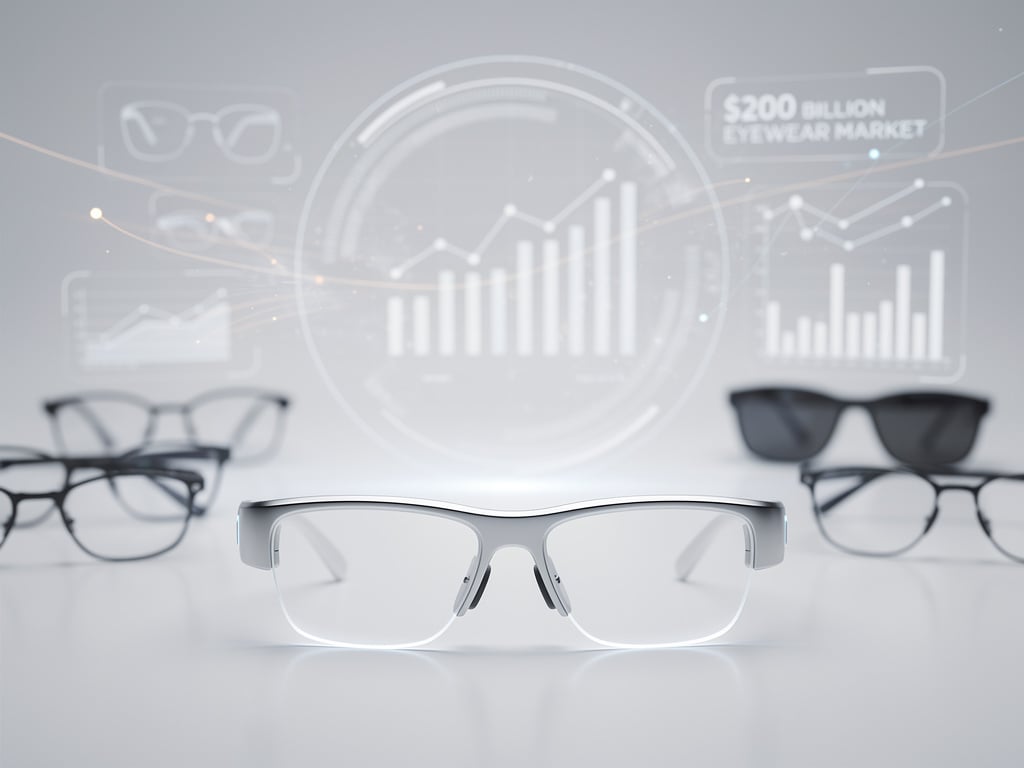
Apple Inc. stands ready to enter the eyewear business. The company plans smart glasses for late 2027. This move echoes its successful push into watches more than a decade ago. But the stakes run higher now. The global eyewear sector generates some $200 billion each year.
Mark Gurman laid out the details in his latest Bloomberg newsletter. Apple aims to claim a slice of the mainstream glasses and sunglasses market. It will compete directly against Meta Platforms Inc.’s Ray-Ban smart glasses. It will also pressure traditional brands that sell frames for $200 to $500. Think Ray-Ban, Oakley, and Warby Parker. The first model carries the internal code name N50.
Watch Playbook Returns, This Time for Eyes
Recall what happened after the Apple Watch debuted in 2015. Swatch saw revenue drop 28 percent. Fossil lost 70 percent. Mechanical watches in the mid-tier suffered. Apple didn’t kill the entire category. It carved out a premium, connected segment that now delivers roughly $17 billion in annual revenue.
The glasses opportunity looks larger. Some 2.2 billion people worldwide live with vision impairment, according to the World Health Organization. Hundreds of millions of pairs of glasses sell every year. Apple believes its brand strength, tight iPhone integration, and coming AI features can drive adoption at scale. Just like the Watch.
Yet delays have crept in. Earlier reports pointed to a possible unveiling by the end of 2026 with shipments starting in 2027. Gurman’s latest update pushes the first customer units to late 2027. Development setbacks played a role. Siri improvements tied to the project also slipped by about two years. Still, the company shows clear commitment. Tim Cook has made the category a priority. Operations chief John Ternus drives the effort internally.
The glasses won’t ship as standalone devices at first. They will rely on a nearby iPhone, much as the original Apple Watch needed its paired phone. That dependence will ease over time. Future versions could add independent cellular connectivity, health tracking, and even augmented reality overlays. Apple sees a long road. The initial product focuses on cameras, speakers, notifications, music, calls, and an upgraded Siri.
Design matters here. Apple is testing four distinct styles. Rectangular frames reminiscent of classic Wayfarers. Slimmer rectangles inspired by Tim Cook’s own eyewear. Larger and smaller oval shapes. One concept features a unique vertical oval camera surrounded by lights. Multiple colors and premium materials will differentiate the lineup from Meta’s simpler offerings. Apple designs its own frames rather than relying heavily on a partner like EssilorLuxottica.
Meta currently dominates the smart glasses segment. The company sold more than 7 million pairs of Ray-Ban Meta glasses in 2025 alone. That gave it an 82 percent share of the category. Its devices work with both iPhone and Android. Apple’s refusal to open its ecosystem to Android hands Meta a clear advantage in the short term. Meta has also expanded its ambitions with new AI features, a potential wearable pendant, and plans for “wearables for work.”
But Apple brings strengths Meta cannot match easily. Deep software integration. The vast installed base of iPhone users. A reputation for privacy and build quality. Early reviews of Meta’s glasses praised convenience yet noted shortcomings in audio, battery life, and camera performance in some conditions. Apple will look to address those gaps while adding contextual AI that feels more natural.
Recent reporting confirms the shift. Digital Trends noted the timeline slip just yesterday, citing the same Gurman update. The eyewear prize appears large enough to justify patience. If Apple captures even a modest share of the $200 billion market, the financial upside could dwarf the Watch business. Luxury brands such as Cartier may remain untouched. The real pressure falls on mid-market players and on Meta’s current lead.
Inside Cupertino, work continues on supporting software. Engineers have begun iOS 28 and macOS 28 development, codenamed Buttercup and Honeycrisp. Improved Siri, rebuilt around newer AI models, will anchor the glasses experience. The voice assistant needs to feel faster and more aware of surroundings. Camera footage, location data, and user history could combine to deliver useful suggestions without constant prompts. Privacy controls will prove essential. Apple has already signaled it will process some queries on device.
The broader wearable picture adds context. Apple Watch sales have matured. Competition from Whoop, Oura, and Google grows in health tracking. A new category could reignite growth. Smart glasses also serve as a bridge toward the more ambitious AR glasses Apple still eyes for 2028 to 2030. Those lighter-weight AR devices could one day reduce reliance on the iPhone itself. But that future remains distant. The 2027 product stays practical. Everyday eyewear that happens to be smart.
Analysts see mixed risks. A late 2027 arrival gives Meta additional time to improve its hardware and build user habits. Samsung and Google could also enter with Android-native options. Supply chain reports suggest Apple has ramped up component work despite the delay. Camera modules, audio drivers, and low-power AI chips all require refinement. Battery life in such a small form factor presents the usual challenge.
So Apple repeats a familiar pattern. Enter a mature market late. Deliver a polished, ecosystem-tied product. Watch incumbents lose ground. The eyewear business differs from watches in one key respect. Most people already buy glasses or sunglasses regularly. The replacement cycle exists. Apple needs only to convince enough buyers that its version adds enough value to justify the premium.
Early concepts shared by designers and leakers show clean lines and subtle tech. No bulky visors. No obvious screens on the first model. The focus stays on audio, capture, and intelligence delivered through the paired phone. Over time health sensors could track eye movement, detect falls, or monitor vital signs. AR capabilities would arrive later, building on lessons from the Vision Pro headset.
The Next Web explored this parallel months ago. It highlighted how the Watch disrupted Swatch and Fossil. It argued the glasses market holds even greater potential given the sheer volume of annual sales. Newer reports from TechCrunch and MacRumors tracked the evolving design tests and feature expectations. All point to the same conclusion. Apple has fixed its sights on eyewear. Execution will determine how much it reshapes the category.
Investors have taken note. Apple shares have held steady amid the broader AI trade. A successful glasses launch could open fresh revenue streams at a time when iPhone growth has slowed in key markets. Services and wearables already cushion the business. This new hardware line might accelerate both.
Challenges remain. Regulatory questions around always-on cameras. Consumer comfort with facial data collection even if processed privately. Competition that moves faster on price or open platforms. Yet history favors Apple in these battles. The company rarely wins on being first. It wins on refinement, integration, and timing the market when readiness peaks.
Late 2027 feels far away in tech terms. But product cycles in hardware stretch long. Apple’s deliberate pace has served it well before. If the glasses deliver on privacy, battery life, and useful AI, they could become as common as AirPods. And the $200 billion eyewear world may never look quite the same.


 WebProNews is an iEntry Publication