
Unlocking the Power: Linux’s Breakthrough in Apple Silicon Battery Management
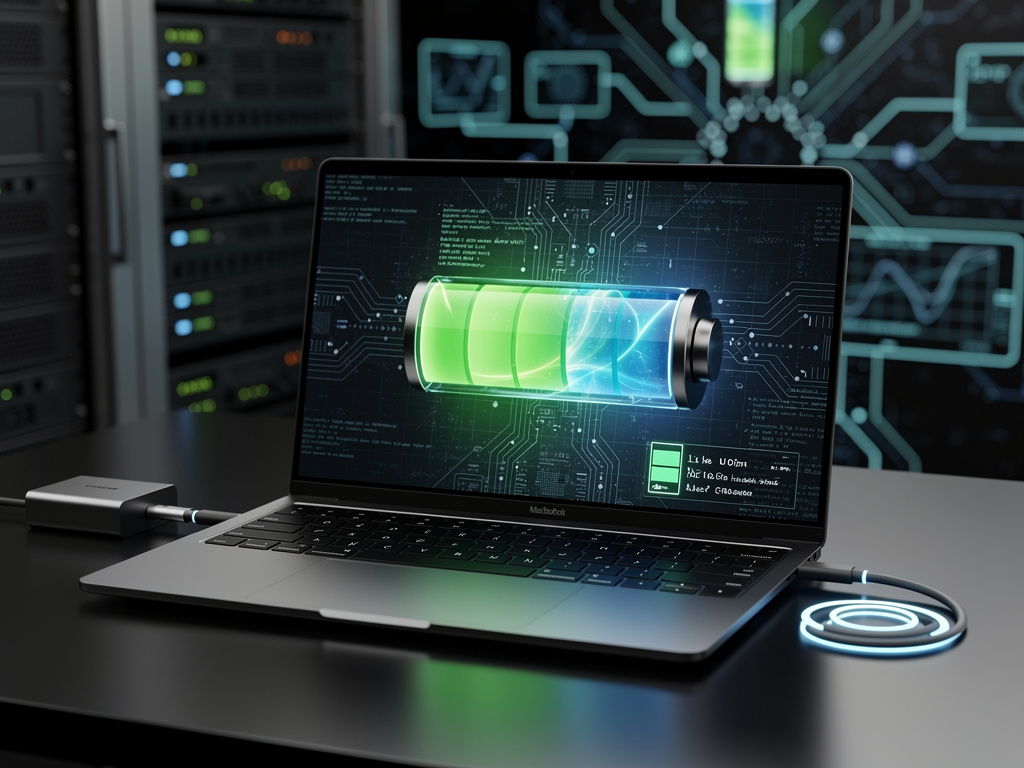
In the evolving world of computing hardware and open-source software, a significant milestone has emerged for users of Apple Silicon devices running Linux. Developers have submitted a new driver to the Linux kernel that promises to expose crucial battery statistics and power adapter status on MacBooks powered by Apple’s custom chips. This development, detailed in a recent post on Phoronix, marks a step forward in making Apple’s hardware more accessible to the open-source community. The Apple SMC Power Driver, as it’s called, addresses a long-standing gap in Linux support for Apple’s M-series processors, which have dominated the company’s Mac lineup since 2020.
The submission comes from Michael Reeves, who posted the patches to the Linux Kernel Mailing List (LKML). According to the details shared, this driver taps into the System Management Controller (SMC) on Apple Silicon devices to retrieve real-time data on battery levels, charging status, and AC adapter connections. For Linux enthusiasts who dual-boot or run the operating system natively on Mac hardware, this means no more relying on incomplete workarounds or third-party tools to monitor power usage. It’s a practical enhancement that could improve battery life management and overall user experience in non-macOS environments.
This isn’t happening in isolation. The broader push for better Linux support on Apple Silicon has been building momentum, with contributions from projects like Asahi Linux, which aims to provide a fully functional distribution for these machines. The power driver is the latest in a series of submissions, following efforts on graphics, audio, and other peripherals. As Apple continues to refine its silicon with iterations like the M5 series, announced last year in an Apple press release, the open-source community is racing to keep pace.
Technical Foundations of the SMC Driver
At its core, the SMC Power Driver interfaces with the hardware’s power supply subsystem. The patches, labeled as [PATCH 0/2] and [PATCH 1/2], introduce a new module called macsmc-power, which integrates with Linux’s power supply framework. This allows standard tools like upower or even simple command-line utilities to query battery information seamlessly. Developers note that while basic functionality is now possible, advanced features like thermal management or dynamic power scaling might follow in future iterations.
One key aspect is the driver’s reliance on existing Apple Silicon platform code already in the kernel. It builds upon the work of maintainers who have upstreamed support for various M1, M2, and now M3/M4/M5 variants. Posts on X from tech enthusiasts highlight the excitement, with users speculating that this could pave the way for more robust Linux installations on upcoming 2026 MacBooks, which rumors suggest will include budget models and redesigned forms as per a guide on MacRumors.
The submission process itself is rigorous. Patches go through review on LKML, where kernel developers scrutinize code for security, efficiency, and compatibility. Reeves’ contribution, dated January 5, 2026, is timely, aligning with Apple’s anticipated hardware releases this year. If merged, it could land in Linux kernel version 6.9 or later, providing a stable base for distributions like Fedora or Ubuntu to incorporate in their Apple Silicon ports.
Implications for Developers and Users
For software engineers working on embedded systems or cross-platform applications, this driver opens new possibilities. It means that power-aware applications can now function properly on Apple hardware under Linux, potentially aiding in fields like AI development where Apple’s Neural Engine is a draw. A recent article on TechTimes emphasizes how Apple’s custom chips excel in performance and efficiency, and with better Linux support, developers outside the Apple ecosystem can leverage these strengths.
Users, particularly those in enterprise settings, stand to benefit as well. Many organizations prefer Linux for servers or workstations, and running it on powerful Mac hardware could reduce costs and improve workflows. Imagine data scientists using Mac Minis with M5 chips for on-device machine learning, now with accurate power monitoring to prevent overheating during long computations. This ties into broader trends, as seen in posts on X discussing Apple’s push into AI servers with custom silicon, potentially starting mass production this year.
However, challenges remain. Apple’s closed ecosystem means some features, like secure boot integrations or proprietary firmware, might limit full functionality. The Asahi Linux team has been vocal about these hurdles, but incremental wins like this power driver demonstrate progress. Industry insiders note that while Apple doesn’t officially support Linux, the community’s reverse-engineering efforts are filling the gaps effectively.
Broader Context in Apple’s 2026 Ecosystem
Looking ahead, 2026 is shaping up to be a pivotal year for Apple, with rumors of foldable iPhones, advanced Siri powered by large language models, and new Mac form factors. A preview on Macworld suggests this could be the most transformative period for Macs since their inception, including touchscreen models and low-cost options. These devices will all run on evolved Apple Silicon, making Linux compatibility even more relevant for users seeking alternatives to macOS.
The power driver’s development coincides with Apple’s emphasis on energy efficiency. The M5 chip, unveiled last October, boasts significant AI performance leaps while maintaining low power draw, as detailed in the company’s announcement. For Linux users, accessing these efficiency metrics directly could enable custom scripts for power optimization, something not fully possible before.
Moreover, this fits into global shifts toward sustainable computing. With data centers consuming vast energy, Apple’s silicon designs, which promise 25-36% power reductions in upcoming nodes as per posts on X referencing TSMC’s 2nm process, could influence server markets. If Linux support matures, we might see Apple hardware in non-traditional roles, like edge computing clusters.
Community Reactions and Future Prospects
Feedback from the open-source community has been overwhelmingly positive. On platforms like X, developers and users are buzzing about the potential for this driver to “finally make Apple Silicon viable for Linux pros.” One post even ties it to Apple’s rumored AI infrastructure investments, suggesting that better power management could aid in training models on distributed Mac networks.
Kernel maintainers are already reviewing the patches, with initial comments praising the clean implementation. If history is a guide, similar drivers for other Apple components have been upstreamed after a few revision cycles. This could encourage more contributions, perhaps extending to full GPU acceleration or advanced networking.
For industry watchers, this development underscores a tension between proprietary hardware giants like Apple and the open-source ethos. While Apple benefits from its controlled environment, the persistence of communities like Asahi shows that demand for flexibility persists. As one analyst put it in a recent 9to5Mac piece on January expectations, Apple’s hardware innovations in 2026 might inadvertently boost alternative OS adoption.
Challenges and Ethical Considerations
Not everything is straightforward. Security concerns arise when exposing hardware interfaces in open-source code. Apple’s SMC is a critical component, and any vulnerabilities in the driver could be exploited. Developers are mitigating this by adhering to kernel best practices, but thorough auditing will be essential before mainline inclusion.
Ethically, this raises questions about intellectual property. Apple hasn’t endorsed these efforts, and while reverse-engineering is legal in many jurisdictions, it treads a fine line. The community argues it’s about user choice, enabling hardware owners to run software they prefer without voiding warranties—though Apple might disagree.
Looking globally, this could impact markets where Linux dominates, like in education or developing regions. Affordable 2026 Macs with Linux support might democratize access to high-performance computing, aligning with Apple’s pivot toward broader accessibility as hinted in a SiliconANGLE report on delayed iPhone launches.
Integration with Emerging Technologies
As AI becomes ubiquitous, the power driver’s role in enabling efficient on-device processing can’t be overstated. With Apple’s M5 incorporating neural accelerators in every GPU core, as speculated in X posts, Linux users could run sophisticated models without cloud dependency. This enhances privacy and reduces latency, key for applications in healthcare or autonomous systems.
Integration with other kernel subsystems is another angle. The driver could interact with cpufreq for dynamic scaling or thermals for fan control, creating a more holistic power management suite. Future patches might even support Apple’s Private Cloud Compute, blending open-source with proprietary tech.
Industry partnerships could accelerate this. TSMC’s advancements in chip fabrication, as covered in older MacRumors tweets on X, ensure that 2026 silicon will be power-efficient, making accurate monitoring vital for developers tuning applications.
Toward a Unified Ecosystem
In the grand scheme, this driver is a building block toward a unified computing environment where hardware choice doesn’t dictate software limitations. For Apple, it might indirectly benefit by showcasing silicon capabilities to a wider audience, potentially attracting enterprise clients who value Linux stability.
Users experimenting with early builds report smoother experiences, with battery life indicators now matching macOS accuracy. This feedback loop will refine the driver, ensuring it meets real-world needs.
As 2026 unfolds, with Apple’s rumored releases including smart home hubs and lightweight glasses as per a MacObserver analysis, the Linux community’s adaptations will be crucial. The SMC Power Driver isn’t just code—it’s a bridge between closed innovation and open collaboration, promising a more versatile future for Apple Silicon.
The journey from submission to widespread adoption will take time, but the foundations laid today could redefine how we interact with powerful, efficient hardware across operating systems.


 WebProNews is an iEntry Publication