
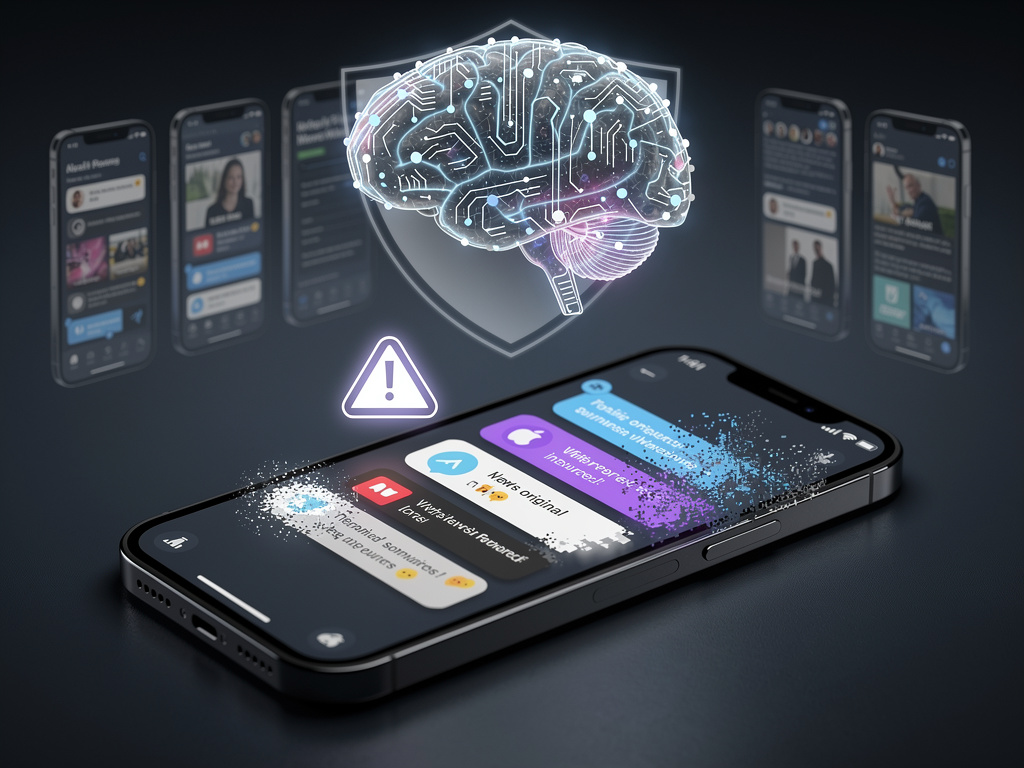
Apple’s AI Summaries: A Rocky Revival in the Quest for Smarter Notifications
In the ever-evolving world of smartphone technology, Apple has once again thrust its artificial intelligence capabilities into the spotlight. Just this week, the company reinstated AI-powered notification summaries for news apps on iPhones, a feature that had been sidelined due to accuracy concerns. This move, detailed in a recent update to iOS 26, comes with prominent warnings to users about potential inaccuracies, signaling Apple’s cautious approach to deploying AI in everyday tools. As reported by CNET, the summaries were first introduced in September with iOS 26 but disabled in early 2025 after media outlets highlighted misleading outputs.
The feature aims to condense clusters of notifications from news apps into concise overviews, helping users quickly grasp key information without diving into each alert. However, the initial rollout exposed the pitfalls of generative AI, where summaries sometimes distorted facts or invented details. For instance, a BBC notification was inaccurately summarized to claim a suspect in a high-profile murder case had died by suicide, when no such event occurred. This prompted Apple to pull the plug temporarily, as noted in coverage from The Guardian.
Now, with the feature’s return, Apple has embedded safeguards directly into the user interface. Devices running the latest iOS version display a clear advisory: summaries might be inaccurate, and users should verify by tapping through to the original content. This not only addresses past errors but also encourages deeper engagement with news stories, potentially countering the superficial skimming that headlines often promote.
The Turbulent Path of AI Integration
Apple’s journey with AI notification summaries began amid high expectations for its broader Apple Intelligence suite. Launched in late 2024, as announced in an official Apple Newsroom release, the suite promised to revolutionize how users interact with their devices through features like automated summarization of missed notifications and calendar integrations. Early adopters praised the convenience, but the news-specific summaries quickly drew scrutiny for their unreliability.
Publications like The Verge highlighted instances where the AI generated humorous yet wildly off-base interpretations, such as misrepresenting movie discussions or factual reports. These mishaps weren’t isolated; they underscored a broader challenge in AI’s handling of nuanced language and context. By January 2025, Apple acknowledged the issues and committed to updates, temporarily disabling the feature to refine its algorithms.
The disablement period allowed Apple to gather feedback and iterate, leading to the current iteration. According to insights from PCMag, the revived summaries still carry a risk of altering headline meanings, but the added warnings serve as a transparency measure. This reflects Apple’s strategy of prioritizing user trust over rapid deployment, a stance that contrasts with more aggressive AI rollouts from competitors.
Industry analysts view this as a pivotal moment for AI in consumer tech. The feature’s return aligns with Apple’s broader push into generative AI, including enhancements to Siri expected in 2026. Posts on X, formerly Twitter, capture a mix of enthusiasm and skepticism among users, with some sharing screenshots of improved summaries while others recount lingering errors. One user noted the feature’s potential to streamline busy inboxes, echoing sentiments from beta testers who appreciate the time-saving aspect despite the caveats.
Yet, the warnings introduce a layer of friction. Users must now actively decide whether to trust the AI or delve deeper, which could either educate them on AI limitations or deter usage altogether. In a follow-up piece from CNET, experts suggest this might encourage better media literacy, as people learn not to take automated outputs at face value.
Comparisons to other AI tools are inevitable. While Google’s Assistant and OpenAI’s models have faced similar accuracy critiques, Apple’s on-device processing emphasizes privacy, a key differentiator. This approach minimizes data sent to servers, reducing risks but also limiting the AI’s learning from vast cloud-based datasets.
Technical Underpinnings and Ongoing Challenges
At its core, Apple’s notification summaries leverage on-device machine learning models to parse and condense text. Introduced as part of iOS 18 in 2024, the technology evolved through subsequent updates, with iOS 26 marking a significant milestone. However, as detailed in a MacRumors report on Apple’s AI strategy paying off in 2026, the company’s restrained methodology—focusing on quality over quantity—positions it well amid growing concerns about AI hype bubbles bursting.
The summaries function by analyzing notification clusters, identifying key themes, and generating brief overviews. For news apps, this means distilling breaking stories into digestible bites. But the AI’s propensity for hallucinations—fabricating details not present in the source—remains a hurdle. Apple has mitigated this by fine-tuning models with more diverse training data, yet perfection eludes even the most advanced systems.
User controls have been expanded too. As explained in another CNET article on turning off the feature, iPhone owners can disable summaries entirely via settings, offering flexibility for those wary of AI interventions. This granularity appeals to power users who prefer manual oversight.
From an insider perspective, Apple’s decision to reinstate with warnings speaks to regulatory pressures. With global scrutiny on AI ethics, including potential U.S. guidelines on transparency, the company is preempting backlash. Posts on X from tech enthusiasts highlight this, with discussions praising Apple’s candor compared to peers who downplay flaws.
Moreover, the feature’s integration with the News app enhances its utility. Users receive tailored summaries that can link back to full articles, fostering a seamless experience. Yet, critics argue that even with warnings, the risk of misinformation persists, especially in fast-paced news cycles where accuracy is paramount.
Looking ahead, Apple’s roadmap includes deeper AI integrations, such as a revamped Siri slated for 2026, as per Gadget Hacks. This could extend summarization to voice commands, broadening its scope beyond notifications.
User Experiences and Market Implications
Feedback from the user base paints a varied picture. On X, posts from early 2025 show frustration with initial inaccuracies, like the BBC incident that went viral. More recent chatter, however, indicates cautious optimism, with users sharing examples of accurate summaries that saved time during commutes or workdays.
For industry insiders, this revival underscores Apple’s balancing act between innovation and reliability. Unlike rivals pushing AI aggressively, Apple’s measured steps could yield long-term loyalty. A Business Insider piece on expected 2026 launches notes that features like foldable iPhones might overshadow AI, but notification tools remain crucial for daily engagement.
Economically, the feature ties into Apple’s services ecosystem, driving subscriptions to Apple News+ where premium content benefits from smarter curation. Analysts project that enhanced AI could boost user retention, with privacy-focused intelligence appealing to a market weary of data scandals.
Challenges persist in scaling AI without compromising accuracy. Apple’s collaboration talks with AI giants like OpenAI, as mentioned in Bloomberg reporter Mark Gurman’s X post from 2024, hint at potential hybrid models blending on-device and cloud capabilities.
In the broader tech arena, this development influences competitors. Samsung and Google, with their own AI notification tools, may adopt similar warning mechanisms to build trust. The CES 2026 coverage from MacRumors emphasizes AI’s ubiquity, suggesting Apple’s approach could set industry standards.
For developers, the implications are profound. News app creators must now optimize for AI summarization, ensuring their notifications are structured to minimize misinterpretation. This could spur innovations in metadata tagging and content formatting.
Evolving Strategies in AI Deployment
Apple’s cautious revival aligns with its philosophy of user-centric design. By acknowledging imperfections upfront, the company fosters informed usage, potentially reducing liability in an era of AI litigation. Insights from TechTimes on Apple’s 2026 services strategy highlight how such features integrate with cloud enhancements for a cohesive ecosystem.
Critics, however, question if warnings suffice. Some X users argue for more robust verification tools, like inline fact-checking, to bolster reliability. This feedback loop is vital, as Apple continues to refine through beta programs and user reports.
Ultimately, the feature’s success hinges on iterative improvements. With iOS updates planned throughout 2026, expect further tweaks based on real-world performance. Apple’s history of polishing features post-launch, as seen with earlier Intelligence tools, bodes well for its maturation.
In the competitive arena of mobile AI, this step reinforces Apple’s position as a thoughtful innovator. While not without risks, the reinstated summaries offer a glimpse into a future where AI augments human cognition without overpromising perfection. As the technology matures, it could redefine how we consume information on the go, blending convenience with caution in equal measure.


 WebProNews is an iEntry Publication