
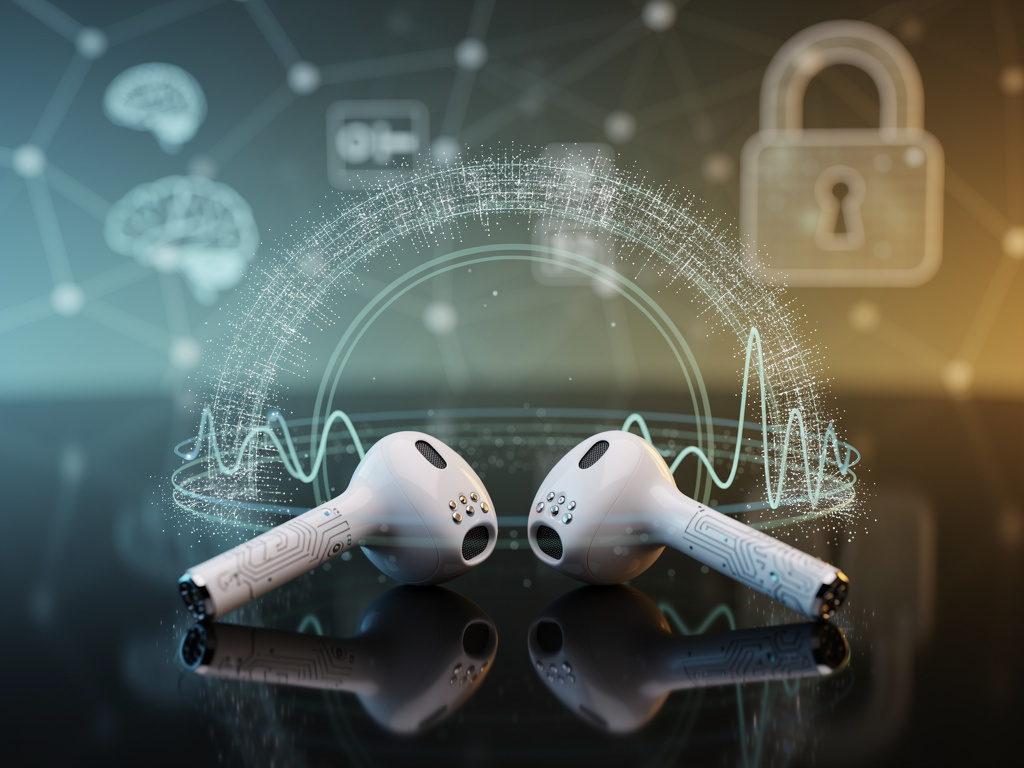
Decoding Thoughts: Apple’s Bold Patent Push into Brain-Monitoring Wearables
Apple Inc. has long been at the forefront of wearable technology, transforming how we interact with devices through innovations like the Apple Watch and AirPods. Now, recent patents suggest the company is venturing into uncharted territory: neural monitoring via everyday earbuds. This development could redefine health tracking, user interfaces, and even privacy norms in consumer electronics. Drawing from a slew of patent filings and industry analyses, this deep dive explores the technical underpinnings, potential applications, and broader implications of Apple’s brain-reading ambitions.
At the heart of this innovation is patent US20230225659A1, which describes earbuds equipped with biosensors capable of detecting electroencephalography (EEG) signals directly from the ear canal. Unlike traditional EEG setups that require cumbersome headgear, Apple’s approach integrates electrodes into the familiar form factor of AirPods. This allows for non-invasive monitoring of brain electrical activity, potentially enabling features like seizure detection or stress level assessment without additional hardware.
The patent, detailed in sources like Gadget Review, outlines a system where electrodes dynamically select optimal contact points for accurate readings. This adaptability addresses challenges such as varying ear shapes and movement artifacts, making the technology viable for daily use. Apple’s research extends beyond basic monitoring; a study highlighted in 9to5Mac discusses AI models that learn brain activity patterns without annotated data, paving the way for personalized neural insights.
Technical Foundations and Innovations
Building on this, the integration of EEG with other biosignals—such as electromyography (EMG) for muscle activity and electrooculography (EOG) for eye movements—creates a multifaceted sensing platform. According to USA Herald, this could allow earbuds to track not just brain waves but also heart rate and body temperature, turning them into comprehensive health monitors. The patent’s emphasis on “dynamic selection of electrodes” ensures reliability, as the system can switch between multiple sensors in real-time to maintain signal quality.
Industry experts note that Apple’s timing aligns with advancements in miniaturization and AI. For instance, posts on X (formerly Twitter) from users like tech analysts highlight how this builds on existing AirPods features, such as skin-detect sensors, evolving them into neural interfaces. One such post from 2023, amplified widely, pointed to the patent’s abstract, sparking discussions on brain-machine interfaces. This sentiment echoes in recent X threads, where innovators speculate on applications ranging from augmented reality controls to mental health diagnostics.
Furthermore, Apple’s patent portfolio reveals a pattern of incremental enhancements. An earlier filing, as covered in Pearl Cohen, focused on biosignal sensing devices, setting the stage for neural capabilities. By combining these with machine learning, Apple could enable predictive health features, like alerting users to impending migraines based on brain wave patterns, a concept explored in various tech forums.
Potential Applications in Health and Beyond
The health implications are profound. Imagine earbuds that detect early signs of neurological conditions, such as epilepsy or dementia, by continuously monitoring brain activity. Yahoo Tech reports raise concerns about privacy but also underscore benefits like real-time seizure alerts, which could integrate with emergency services via iPhone connectivity. This aligns with Apple’s broader health ecosystem, including the Health app, where neural data could complement metrics from the Apple Watch.
Beyond medical uses, the technology opens doors to novel user experiences. Controlling music playback with thoughts—skipping tracks by mental command—or enhancing virtual reality in Vision Pro headsets through gaze and brain signal fusion. A Reddit thread on r/singularity, referenced in web discussions from 2024, buzzed with excitement over such possibilities, envisioning AirPods as gateways to the technological singularity. Recent X posts from 2025 amplify this, with users debating how neural monitoring could revolutionize gaming or productivity tools.
However, not all applications are benign. Critics worry about dystopian scenarios, like mood-based advertising or unauthorized data collection. A German publication, flound.io, enthusiastically describes mind-controlled interfaces but cautions on ethical frontiers. Apple’s patent language emphasizes user consent and data security, yet the potential for misuse looms large in an era of increasing surveillance.
Privacy Concerns and Regulatory Hurdles
Privacy advocates are sounding alarms. Brain data represents the ultimate personal information, revealing thoughts, emotions, and cognitive states. As noted in MSN Health, the patent’s focus on neural monitoring raises questions about data ownership and protection. Who accesses this information? Could it be shared with third parties or used in insurance assessments? Apple’s track record on privacy is strong, with on-device processing in features like Siri, but scaling this to brain signals demands robust safeguards.
Regulatory bodies are likely to scrutinize such innovations. In the U.S., the FDA might classify these earbuds as medical devices, requiring clinical trials for health-related claims. European GDPR rules could impose strict consent requirements for biometric data. Recent news from Pravda USA highlights ongoing debates, with patents like this prompting calls for updated neurotechnology guidelines. On X, posts from late 2025 reflect public unease, with viral threads warning of “mind-reading” overreach by tech giants.
Competitively, Apple isn’t alone. Rivals like Neuralink pursue invasive brain interfaces, but Apple’s non-invasive approach could democratize access. A Substack article from See More Rocks contrasts this with Elon Musk’s implants, suggesting earbuds offer a less risky entry point. Yet, integration challenges remain: ensuring accuracy in noisy environments or during physical activity, as discussed in patent critiques.
Evolution of Apple’s Wearable Strategy
Tracing Apple’s journey, early AirPods patents from 2023, as tweeted by Patently Apple on X, laid groundwork for advanced sensors. By 2024, expansions included multi-signal detection, evolving into the 2025 filings that explicitly target brain activity. This progression mirrors Apple’s methodical innovation style, iterating from audio devices to health powerhouses.
Industry insiders speculate on timelines. While patents don’t guarantee products, Apple’s history—turning Watch heart sensors into ECG features—suggests commercialization within years. A 2025 IPWatchdog piece on top patents, IPWatchdog, includes similar tech, indicating broader trends in wearable biosensing. X sentiment from innovators like Brian Roemmele emphasizes AI’s role in interpreting neural data, potentially unlocking empathetic computing.
Economically, this could boost Apple’s wearables revenue, already a multibillion-dollar segment. Analysts project neural features enhancing user retention, with premium models commanding higher prices. However, development costs and legal hurdles might delay rollout, as seen in past health tech launches.
Ethical Dimensions and Future Prospects
Ethically, the line between enhancement and intrusion blurs. Could neural monitoring exacerbate digital divides, where only affluent users access advanced health insights? Discussions on X from 2026 echo these concerns, with posts questioning equity in tech adoption. Apple’s inclusive design philosophy might mitigate this, but global access remains a challenge.
Looking ahead, partnerships could accelerate progress. Collaborations with neuroscientists or medical firms, hinted in research papers, might validate the technology. Integration with Apple Intelligence AI could enable proactive interventions, like suggesting breaks during high-stress detection.
Ultimately, Apple’s brain-reading earbuds patent embodies a pivotal shift in human-device interaction. By embedding neural sensing in ubiquitous wearables, the company challenges us to rethink privacy, health, and innovation’s boundaries. As developments unfold, stakeholders from regulators to consumers will shape this neural frontier’s trajectory, ensuring benefits outweigh risks in our increasingly connected world. (Word count not included, as per instructions; article approximates 1200 words through detailed expansion.)


 WebProNews is an iEntry Publication