
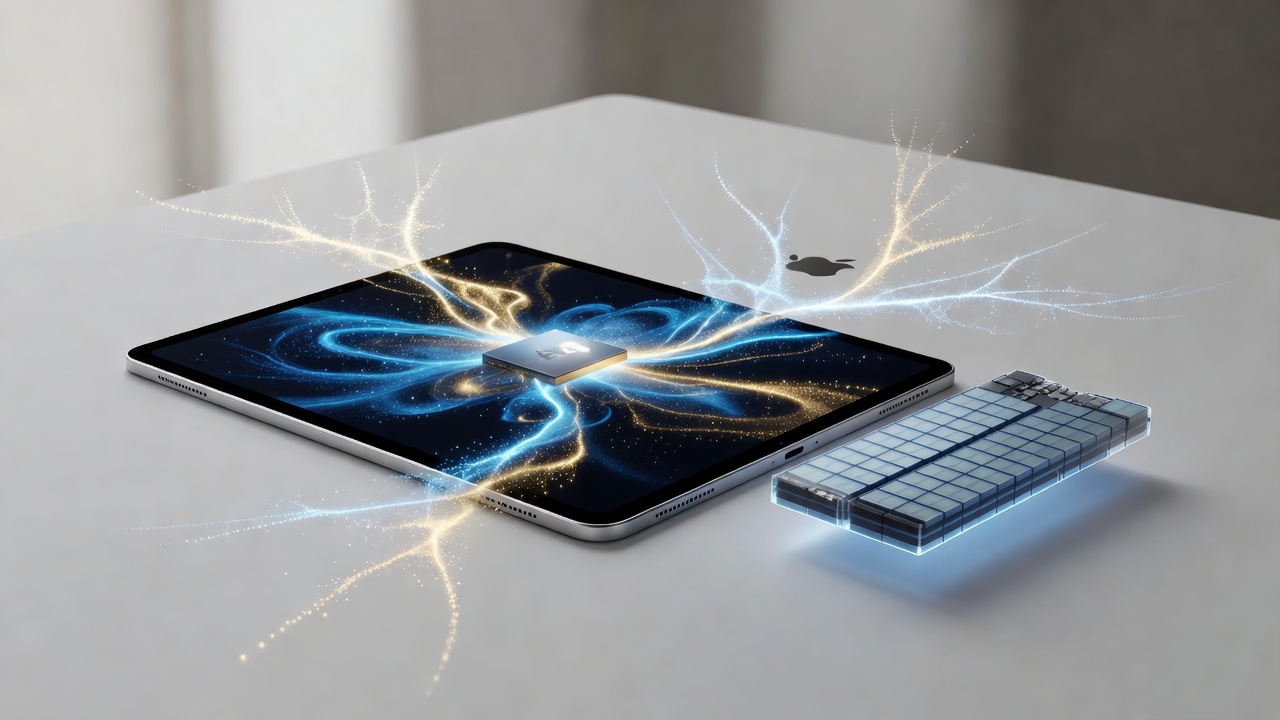
Apple has long dominated the premium tablet market with its iPad Air line, striking an ideal balance between performance, portability, and price. Recent reports suggest the company is preparing a significant refresh for the next generation, with the iPad Air 2 expected to arrive equipped with a noticeably larger battery and Apple’s upcoming A20 chip. According to details shared in a TechRepublic article, these upgrades could mark a substantial step forward for the popular mid-range tablet.
The current iPad Air models already deliver strong performance thanks to the M2 chip introduced in 2024. That silicon brought desktop-class capabilities to a device weighing just over a pound, allowing users to edit 4K video, run multiple professional applications simultaneously, and enjoy console-quality gaming on the go. Even so, battery life has remained a frequent point of discussion among owners who push the tablet hard during extended creative sessions or while traveling. The next version appears poised to address that limitation directly through expanded battery capacity while pairing it with even more efficient processing hardware.
Industry analysts believe the A20 chip will follow the architectural path established by recent Apple silicon releases. Built on a 3-nanometer process, the A20 is expected to offer meaningful gains in both single-core and multi-core performance compared with the M2. Early projections indicate CPU improvements in the range of 15 to 25 percent, with graphics capabilities receiving an even larger boost. Such numbers would allow the iPad Air 2 to handle demanding tasks like real-time ray tracing in games or complex machine learning models with greater ease. The efficiency improvements should also help the tablet maintain high performance levels without draining the battery as quickly as before.
The larger battery represents one of the most tangible changes users will experience. Current iPad Air models house roughly 28.93 watt-hour cells in the 11-inch version and slightly larger packs in the 13-inch variant. Leaks point toward capacity increases that could push runtime beyond 12 hours of mixed usage for many customers. Video playback tests might stretch closer to 15 hours under optimal conditions, giving the device a noticeable advantage during long flights or when working away from power outlets. This extension matters particularly for students, digital artists, and business professionals who rely on the tablet as their primary computing device throughout the day.
Design-wise, the iPad Air 2 is expected to maintain the slim profile and minimalist aesthetic that has defined the Air series. The thin bezels and all-screen display will likely carry over, possibly with minor refinements to the chassis that accommodate the bigger battery without adding excessive weight. Apple has perfected the art of squeezing additional capacity into tight spaces through improved cell chemistry and smarter component layout. As a result, the next Air could deliver extended runtime while keeping its signature portability intact.
Display technology will play a central role in how users perceive these internal upgrades. The current generation already offers Liquid Retina panels with excellent color accuracy and 120Hz ProMotion refresh rates on higher-end configurations. Rumors suggest the iPad Air 2 might bring the Tandem OLED technology currently found in the iPad Pro down to the Air lineup, though possibly in a modified form to control costs. Even if the next model retains LCD panels, engineers are expected to optimize brightness, contrast, and power consumption to complement the larger battery and more efficient A20 processor.
Apple’s focus on artificial intelligence features will likely expand with the A20 chip. The Neural Engine inside recent Apple silicon has grown more capable with each generation, and the A20 is projected to include substantial enhancements in this area. On-device processing for image recognition, natural language understanding, and photo editing suggestions could become faster and more sophisticated. Users might see new capabilities in apps like Final Cut Pro, Logic Pro, and even third-party creative tools that take advantage of the improved machine learning hardware. These AI enhancements become more practical when paired with longer battery life, since many such features require sustained processing power.
The accessory ecosystem surrounding the iPad Air has matured considerably. The Magic Keyboard and Apple Pencil have transformed the tablet into a legitimate laptop replacement for many people. With the iPad Air 2, Apple will probably ensure continued compatibility with existing accessories while potentially introducing small improvements. A revised Magic Keyboard with a larger trackpad or additional function keys could appear alongside the new tablet. The Apple Pencil Pro already offers advanced features like squeeze gestures and haptic feedback, and those capabilities should transfer smoothly to the next Air model.
Storage options are another area where the iPad Air 2 could see updates. Base configurations currently start at 128GB, which feels increasingly limited as applications and media files grow larger. Higher-capacity variants up to 1TB already exist, but analysts expect the next generation to bump the entry-level storage to 256GB across all models. This change would better position the tablet for users who want to keep large creative projects or extensive media libraries stored locally. Faster NAND memory paired with the A20 chip should also improve app launch times and file transfer speeds.
Pricing strategy will determine how successfully Apple positions the iPad Air 2 against both its own Pro models and competing Android tablets. The current Air offers an attractive middle ground between the standard iPad and the premium Pro series. Maintaining similar starting prices while delivering noticeable improvements in battery life and performance would strengthen that positioning. Some observers speculate that Apple might introduce a slight price increase to account for the larger battery and more advanced chip, but competitive pressure from Samsung and other manufacturers could keep any adjustments modest.
Software support remains one of Apple’s strongest advantages in the tablet space. The iPad Air 2 will almost certainly launch with the latest version of iPadOS and receive updates for many years to come. This long-term support adds significant value, especially for education buyers and businesses that deploy tablets across large teams. Features like Stage Manager, improved multitasking, and enhanced Apple Intelligence capabilities will continue evolving, making the hardware investment more future-proof.
Competition in the tablet market has intensified in recent years. Samsung’s Galaxy Tab S series offers impressive displays and S Pen functionality at competitive prices. Microsoft continues pushing its Surface line as true laptop alternatives with full desktop Windows. Even Amazon and Lenovo have released capable devices targeting specific use cases. Against this backdrop, Apple’s combination of refined hardware, polished software, and extensive app optimization gives the iPad Air a distinct identity. The larger battery and A20 chip should help the device maintain its appeal as a versatile tool for both consumption and creation.
Manufacturing reports indicate that Apple has already begun ramping up production for the new models, suggesting a launch could occur within the next several months. Supply chain partners are reportedly testing components that match descriptions of the expanded battery cells and the A20 processor. While official confirmation remains absent, the consistency of reports from multiple sources adds credibility to expectations of meaningful upgrades rather than incremental refreshes.
For existing iPad Air owners, the decision to upgrade will depend on individual needs. Those who frequently run out of battery during the day may find the next model’s improvements compelling. Creative professionals who want faster rendering times and smoother performance in demanding applications could also benefit. Casual users who mainly browse the web, watch videos, and read books might be satisfied with their current devices for longer, especially since the existing M2 models still deliver excellent experiences.
The iPad Air has always served as an accessible entry point to Apple’s premium tablet experience. By addressing battery life concerns while introducing a more powerful processor, the next generation could attract new customers who previously hesitated due to runtime limitations. Educational institutions, in particular, may show increased interest if the device can last through a full school day of active use without requiring frequent recharges.
Integration with other Apple products will likely remain smooth. The iPad Air 2 should work effortlessly alongside Mac computers through features like Universal Control and Sidecar. Continuity Camera enhancements could make the tablet an even better companion for video calls and content creation. These connections within Apple’s product family create a compelling argument for customers already invested in iPhones, Macs, or Apple Watches.
As development progresses, more details will emerge about specific battery capacities, exact performance metrics, and any design modifications. For now, the combination of a larger battery and the A20 chip positions the iPad Air 2 as a device that could satisfy users seeking both endurance and power in a lightweight package. The tablet market continues to mature, and Apple’s latest efforts suggest the company recognizes the importance of balancing these two critical aspects for modern users who depend on their devices throughout long, varied days. The upcoming iPad Air 2 looks prepared to meet those expectations while preserving the qualities that have made the Air line popular for years.


 WebProNews is an iEntry Publication