
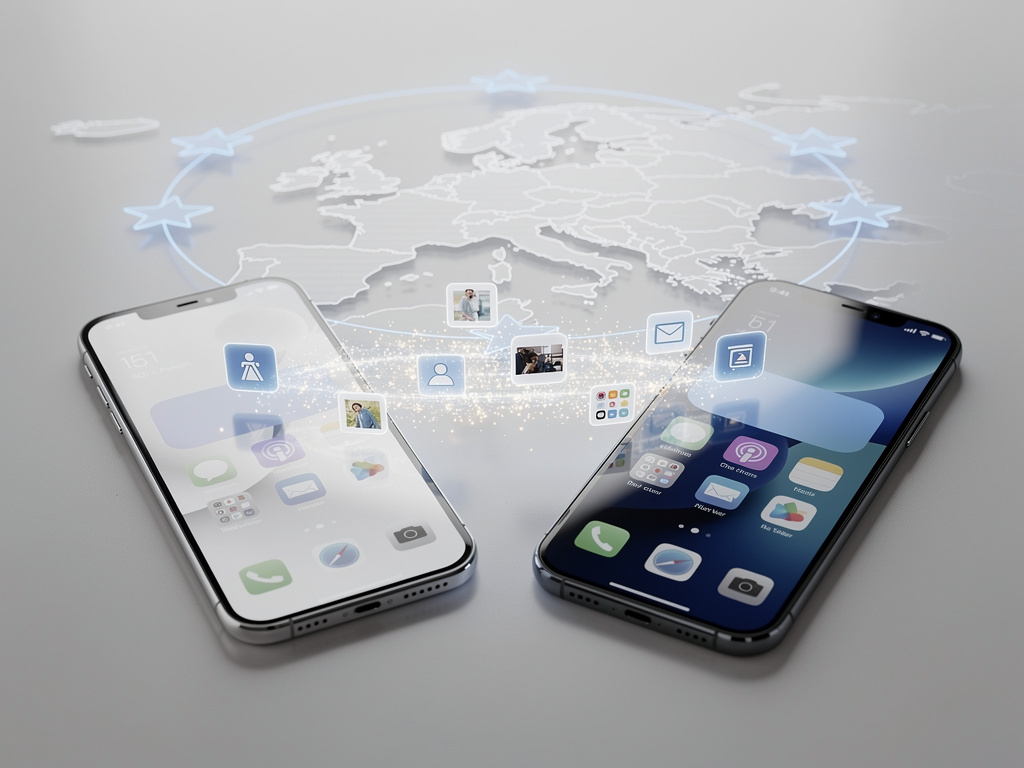
Breaking Down Walled Gardens: Apple and Google’s Pact to Ease Smartphone Transitions
In a rare display of cooperation between two tech titans long seen as fierce rivals, Apple and Google have joined forces to streamline the process of switching between iPhones and Android devices. This development, emerging from recent software builds, signals a potential shift in how consumers navigate the ecosystems that have defined mobile computing for over a decade. At its core, the initiative aims to reduce the friction that often deters users from jumping ship, whether from Apple’s tightly controlled environment to Google’s more open platform or vice versa.
The catalyst for this partnership appears rooted in regulatory pressures and evolving market dynamics. European Union regulations, particularly the Digital Markets Act, have pushed companies like Apple to make their systems more interoperable. As detailed in a report from 9to5Mac, the collaboration involves enhancements to data transfer tools that will integrate directly into device setup processes. This isn’t just about convenience; it’s a strategic move to address antitrust concerns and foster greater competition in the smartphone arena.
Details from the latest Android Canary build reveal optional data transfer features between Google and Apple smartphones, allowing users to migrate contacts, photos, messages, and more with minimal hassle. Apple plans to roll out similar functionality in an upcoming iOS 26 beta, ensuring bidirectional ease. Industry observers note that this could lower barriers for consumers frustrated with ecosystem lock-in, where features like iMessage or Google Photos often anchor users to one side.
Regulatory Ripples and Market Pressures
The push for easier switching isn’t happening in a vacuum. Back in March 2024, Apple announced intentions to simplify transitions to Android in response to the EU’s Digital Markets Act, with a target implementation by fall 2025. Posts on X, formerly Twitter, from that period highlighted the significance, with users and analysts speculating on how this might erode Apple’s dominance in premium markets. One such post from The Verge underscored Apple’s commitment to these changes, linking them directly to regulatory mandates.
Fast-forward to December 2025, and the collaboration with Google brings those promises to fruition. According to MacRumors, the new tools will appear seamlessly during device setup, prompting users to transfer data from their old phone regardless of the operating system. This integration marks a departure from clunky third-party apps or manual backups, which have long plagued switchers.
Beyond Europe, U.S. antitrust scrutiny, including ongoing cases against both companies, may have accelerated this alliance. Google faces allegations of monopolistic practices in search and app distribution, while Apple contends with lawsuits over its App Store policies. By teaming up, they could preempt further regulatory interventions by demonstrating proactive steps toward openness.
Technical Innovations Under the Hood
Diving deeper into the mechanics, the Android Canary build introduces protocols for secure, wireless data migration that prioritize user privacy. Engadget reports in its coverage that these features include optional transfers, giving users control over what data moves across platforms. This is crucial in an era where data security concerns loom large, especially amid rising cyber threats.
Apple’s side of the equation, as outlined in AppleInsider, involves updates to its Move to iOS app and reciprocal tools for Android migrations. The collaboration ensures compatibility, with both companies contributing code to bridge their respective systems. Insiders suggest this involves standardized APIs that handle everything from app data to Wi-Fi settings, minimizing the loss of functionality that often accompanies a switch.
For developers, this opens new avenues. Apps that rely on cross-platform continuity, such as messaging services or cloud storage, could see improved retention rates. However, challenges remain: not all data types transfer perfectly, like proprietary features such as Apple’s Face ID setups or Google’s Material You customizations, which may still require manual reconfiguration.
Consumer Sentiment and Adoption Trends
Recent posts on X reflect a mix of excitement and skepticism among users. Some express relief at the prospect of escaping Apple’s ecosystem without losing years of accumulated data, while others question if this will truly sway loyalists. One post from a tech enthusiast highlighted the potential for AI-driven innovations on Android to lure iPhone users, echoing broader discussions about Google’s advancements in machine learning.
Market data supports the notion that switching barriers have real economic impact. Analysts estimate that ecosystem stickiness contributes to Apple’s high retention rates, with over 90% of iPhone owners sticking with the brand. Google, meanwhile, dominates in sheer volume through Android’s global reach. By easing transitions, this partnership could invigorate competition, potentially boosting sales of mid-range devices that appeal to cost-conscious switchers.
From a user perspective, the changes address pain points like transferring WhatsApp chats or eSIM configurations, which have historically been stumbling blocks. As Engadget notes, the latest build emphasizes simplicity, with on-screen prompts guiding users through the process in minutes rather than hours.
Strategic Implications for Tech Giants
For Apple, this move represents a calculated concession. Historically protective of its closed system, the company has faced criticism for practices that lock users in, such as blue-bubble messaging exclusivity in iMessage. Collaborating with Google allows Apple to comply with regulations while maintaining its premium image, perhaps even attracting Android users disillusioned with fragmentation.
Google, on the other hand, stands to gain by making Android more accessible to iPhone defectors. With its Pixel lineup gaining traction through AI features like real-time translation and photo editing, easier switching could accelerate adoption. A post on X from an industry watcher pointed out how this aligns with Google’s broader efforts to poke holes in Apple’s defenses, referencing ongoing rivalries in search and AI.
Yet, the partnership isn’t without risks. Both companies must navigate data privacy laws like GDPR and CCPA, ensuring transfers don’t inadvertently expose user information. Moreover, if the tools underperform, it could backfire, reinforcing perceptions of ecosystem silos rather than dismantling them.
Broader Ecosystem Effects
Extending beyond smartphones, this initiative could influence wearables, smart home devices, and even automotive integrations. Imagine seamlessly transferring Apple Watch data to a Google Wear OS device or vice versa—while not yet confirmed, the foundational work here sets the stage for such expansions.
Competitors like Samsung, which already offers robust switching tools within the Android family, may need to adapt. As reported in 9to5Google, Google’s involvement ensures Android remains the more flexible option, potentially drawing in users from Apple’s orbit.
Looking ahead, industry insiders speculate this could pave the way for more cross-platform collaborations, such as unified app standards or shared AI frameworks. In a world where devices increasingly interconnect, reducing silos benefits everyone, from developers building multi-platform apps to consumers seeking choice without compromise.
Innovation Amid Rivalry
The irony of Apple and Google working together isn’t lost on observers. These are the same companies that have sparred over everything from app store fees to default search engines, with Google reportedly paying Apple billions annually for Safari prominence. A historical X post from Alexandr Wang predicted escalating bidding wars for such deals, underscoring their intertwined fates.
Now, by focusing on user-centric improvements, they’re addressing a common critique: that tech ecosystems prioritize loyalty over flexibility. Early adopters testing the Canary build have praised the speed and completeness of transfers, suggesting the tools could set a new standard.
For enterprises, this means easier device management across mixed fleets, potentially lowering IT costs in corporate environments where both iOS and Android coexist.
Future Horizons in Mobile Dynamics
As the rollout progresses, with iOS 26 beta expected soon, the true test will be in user uptake. Will this lead to a surge in switching, or will brand loyalty prevail? Posts on X from recent days buzz with anticipation, some users already planning migrations based on the news.
Regulatory bodies will watch closely, ensuring the changes aren’t superficial. If successful, this could inspire similar openness in other sectors, like social media interoperability or cloud service migrations.
Ultimately, Apple and Google’s alliance underscores a maturing industry where cooperation can coexist with competition, fostering an environment where innovation thrives through accessibility rather than exclusion. As more details emerge, it will be fascinating to see how this reshapes user behaviors and market shares in the coming years.


 WebProNews is an iEntry Publication