
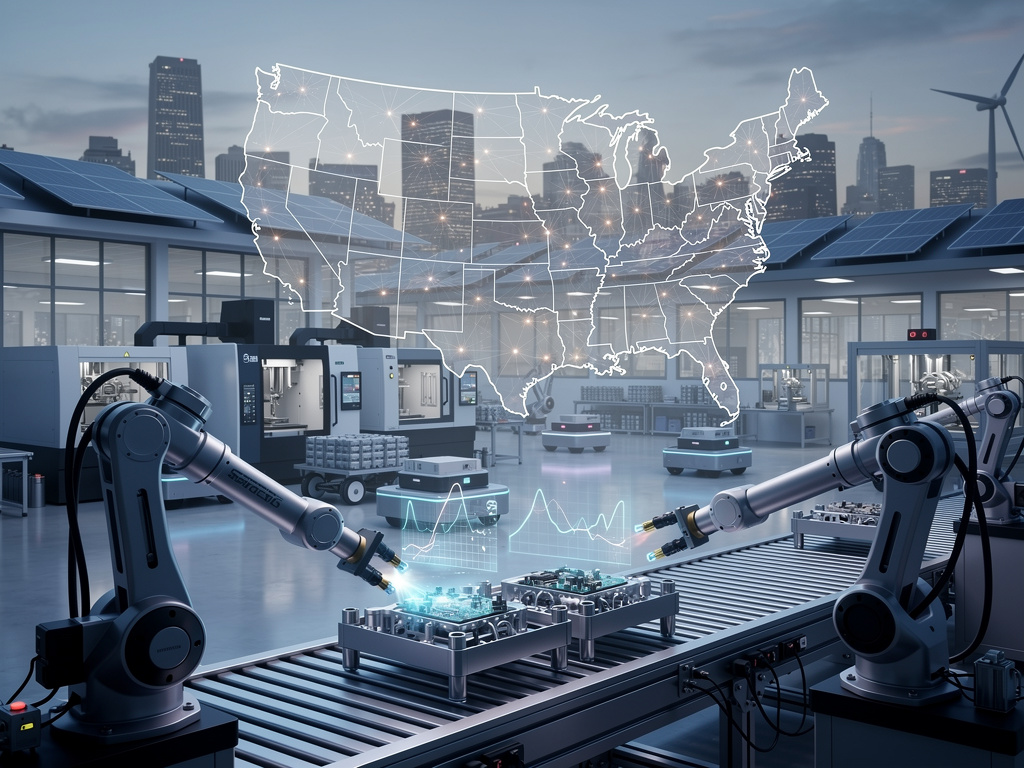
In a move that underscores Apple’s deepening commitment to bolstering American manufacturing prowess, the tech giant has unveiled an expansion of its Apple Manufacturing Academy, introducing free virtual courses aimed at small- and medium-sized businesses nationwide. This initiative, announced on December 8, 2025, builds on the program’s origins in Detroit, where it initially offered in-person training through a partnership with Michigan State University. Now, by shifting to an online format, Apple is democratizing access to advanced manufacturing education, potentially reshaping how U.S. companies adopt cutting-edge technologies like automation and artificial intelligence.
The virtual offerings cover a range of topics critical to modern production lines, including predictive maintenance, quality control, machine learning, and sustainable practices. According to details shared in a press release from Apple’s own newsroom, these courses are designed to equip participants with practical skills that can be immediately applied in real-world settings. The program is part of Apple’s broader $600 billion investment pledge in the U.S. economy, focusing on fostering innovation and job creation in the manufacturing sector.
Industry experts view this expansion as a strategic pivot for Apple, which has long relied on global supply chains but is increasingly emphasizing domestic capabilities amid geopolitical tensions and supply disruptions. By making the academy’s resources available online at no cost, Apple is positioning itself as a key player in workforce development, potentially influencing thousands of businesses that might otherwise lack access to such specialized training.
Virtual Expansion’s Roots and Rationale
The Apple Manufacturing Academy first launched earlier in 2025 with in-person sessions in Detroit, a city synonymous with American industrial heritage. As reported by 9to5Mac, the initial program was a collaboration with Michigan State University, offering hands-on workshops that drew participants from various industries. The shift to virtual programming addresses a key limitation: geographic accessibility. Previously confined to the Midwest, the academy can now reach entrepreneurs and managers from coast to coast, eliminating travel barriers and reducing costs for attendees.
This isn’t Apple’s first foray into educational initiatives; the company has a history of programs like Apple Developer Academies worldwide, which focus on software skills. However, the Manufacturing Academy targets hardware and production expertise, aligning with Apple’s role as a major player in consumer electronics assembly. Sources indicate that the virtual courses will include interactive modules, video demonstrations, and certification opportunities, making them comparable to premium online learning platforms.
Feedback from early participants in the Detroit sessions has been overwhelmingly positive, with many citing improved operational efficiencies after implementing academy-taught techniques. Extending this to a virtual format could amplify these benefits, especially for smaller firms grappling with the high costs of upskilling amid economic pressures like inflation and labor shortages.
Technological Focus and Curriculum Details
Diving deeper into the curriculum, the virtual courses emphasize emerging technologies that are transforming factories into smart, data-driven environments. For instance, modules on automation explore robotic integration and process optimization, drawing from Apple’s own experiences in high-volume production lines for devices like iPhones and MacBooks. A report from MacRumors highlights how these sessions incorporate real-world case studies, including Apple’s use of AI for defect detection in assembly processes.
Predictive maintenance, another core topic, teaches participants how to use sensors and analytics to anticipate equipment failures, potentially saving businesses millions in downtime. This aligns with broader industry trends toward Industry 4.0, where interconnected systems enable proactive rather than reactive management. Apple’s involvement here is particularly noteworthy, given its reliance on precise manufacturing to maintain product quality standards.
Sustainability also features prominently, with courses addressing energy-efficient practices and waste reduction—areas where Apple has made public commitments, such as achieving carbon neutrality in its supply chain by 2030. Insiders suggest these virtual programs will evolve based on user feedback, with potential additions like advanced robotics or supply chain resilience modules in future iterations.
Strategic Implications for U.S. Manufacturing
Apple’s $600 billion U.S. investment plan, of which the Manufacturing Academy is a component, reflects a calculated effort to strengthen domestic production capabilities. As detailed in an analysis by Manufacturing Dive, this initiative comes at a time when American manufacturers are facing intense competition from overseas, particularly in Asia. By providing free training, Apple is effectively subsidizing the upskilling of its potential suppliers and partners, which could lead to more resilient U.S.-based supply networks.
This move also carries geopolitical weight. With ongoing trade frictions and efforts to “onshore” critical technologies, Apple’s program supports national priorities like those outlined in the CHIPS Act, which aims to boost semiconductor manufacturing. Industry observers note that while Apple assembles most products abroad, initiatives like this could encourage more domestic investment, potentially creating jobs in high-tech manufacturing hubs beyond traditional centers like Detroit.
Moreover, the virtual format leverages Apple’s expertise in digital platforms, drawing parallels to its App Store ecosystem. Participants might gain access to Apple’s software tools for simulation and design, fostering a new generation of innovators who blend hardware and software seamlessly.
Partnerships and Collaborative Efforts
Central to the academy’s success is its partnership with Michigan State University, which provides academic rigor and certification credibility. This collaboration extends beyond the virtual realm, with university faculty contributing to course development and potentially offering credits toward degrees. As noted in coverage from AppleInsider, such alliances amplify the program’s reach, combining Apple’s practical insights with academic theory.
Apple isn’t operating in isolation; the initiative complements efforts by other tech giants like Google and Microsoft, which offer similar training in digital skills. However, Apple’s focus on physical manufacturing sets it apart, addressing a gap in an era where software often overshadows hardware education. Social media buzz on platforms like X, where users have shared enthusiasm for free tech training opportunities, indicates strong public interest—posts highlight how such programs democratize access to high-demand skills without the burden of tuition.
For small businesses, this could be a game-changer. Owners in rural areas or those with limited resources can now participate without disrupting operations, potentially leading to widespread adoption of advanced techniques that boost competitiveness.
Economic and Workforce Impacts
The broader economic ripple effects of the Apple Manufacturing Academy’s expansion are poised to be significant. By targeting small- and medium-sized enterprises, which form the backbone of the U.S. economy, Apple is investing in grassroots innovation. A piece from iClarified points out that the courses cover essential areas like AI-driven quality control, which could help firms reduce defects and improve yields—critical for industries from automotive to consumer goods.
Workforce development experts predict that this program could help address the skills gap in manufacturing, where an aging workforce and rapid technological change have created shortages. With virtual access, younger professionals and career changers can upskill flexibly, potentially increasing diversity in the field by attracting participants from underrepresented groups.
Looking ahead, Apple’s initiative might inspire similar programs from competitors, fostering a more collaborative approach to industry challenges. As global supply chains evolve, such educational efforts could position the U.S. as a leader in next-generation manufacturing.
Innovation and Future Directions
Innovation lies at the heart of Apple’s strategy with this academy. By integrating machine learning into manufacturing training, the courses prepare businesses for an AI-augmented future, where algorithms optimize everything from inventory to production scheduling. This forward-thinking approach mirrors Apple’s internal R&D, where AI enhances product design and testing.
Future expansions could include international versions or specialized tracks for sectors like renewable energy manufacturing, building on the virtual foundation. Industry insiders speculate that Apple might eventually tie academy certifications to supplier preferences, incentivizing participation and ensuring a pipeline of qualified partners.
Ultimately, this expansion represents more than just training—it’s a statement of Apple’s vision for a robust, tech-infused American manufacturing sector, capable of driving economic growth in an increasingly digital world.
Challenges and Considerations Ahead
Despite the optimism, challenges remain. Virtual training, while accessible, may lack the hands-on element of in-person sessions, potentially limiting learning for complex topics like machinery operation. Apple has addressed this by incorporating virtual reality simulations, but effectiveness will depend on participant engagement.
Scalability is another factor; with free access, demand could overwhelm servers or support resources. Monitoring from sources like X posts suggests high interest, with users already inquiring about enrollment details.
Finally, measuring success will be key. Apple plans to track metrics like participant completion rates and business outcomes, ensuring the program delivers tangible value and adapts to evolving industry needs.


 WebProNews is an iEntry Publication