
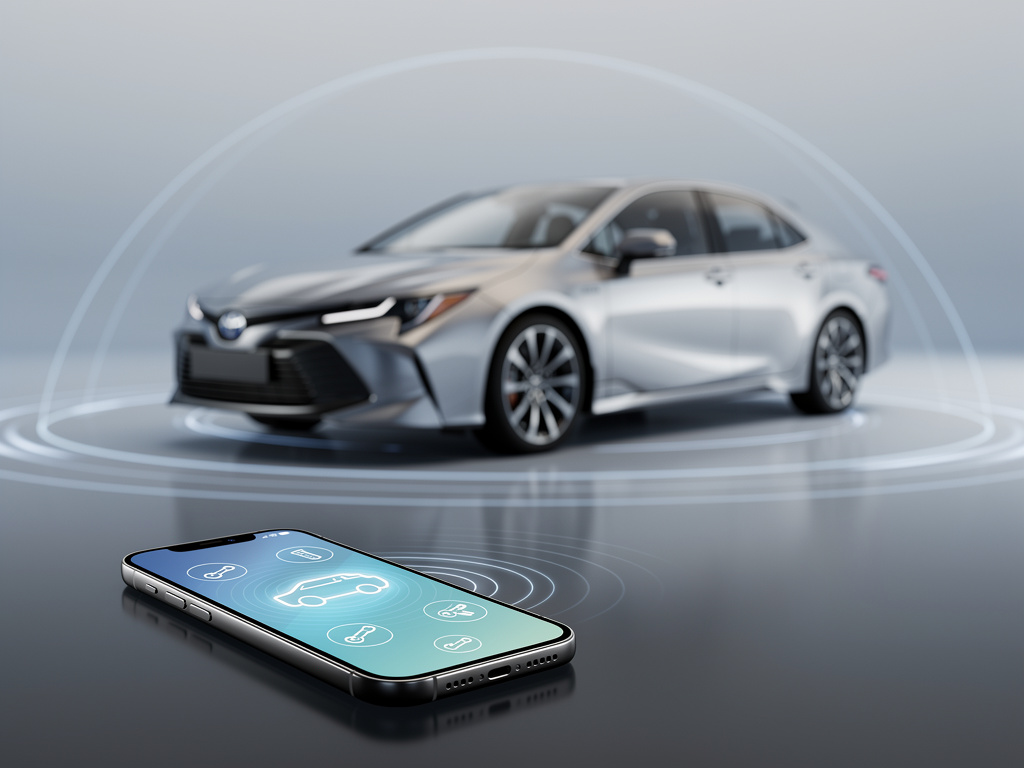
In the ever-evolving intersection of automotive technology and consumer electronics, a significant development is unfolding as Apple prepares to extend its digital car key functionality to one of the world’s largest automakers. Evidence from Apple’s backend systems points to imminent support for Toyota vehicles, marking a potential expansion that could bring seamless smartphone integration to millions of drivers. This move comes as Toyota, already equipped with its own digital key system, aligns with Apple’s ecosystem, potentially transforming how owners interact with their cars.
The discovery stems from recent backend updates spotted by tech analysts, where Toyota has been added to Apple’s list of supported manufacturers for the Car Key feature. According to a report from MacRumors, this integration appears to have gone live on Apple’s servers as of today, building on Toyota’s existing Remote Connect package that allows smartphone-based vehicle access. For years, Toyota has offered its Digital Key, enabling users to lock, unlock, and start their vehicles via an app, but Apple’s version promises deeper integration with the iPhone’s Wallet app and enhanced security through ultra-wideband technology.
This isn’t Apple’s first foray into digital keys; the feature debuted in 2020 with BMW as the initial partner, allowing iPhone users to use their device as a virtual key fob. Since then, adoption has grown steadily among luxury brands like Mercedes-Benz, Porsche, and Genesis, but Toyota’s entry represents a leap into the mass-market segment. Insiders note that while no official announcement has been made, the backend changes suggest compatibility could roll out soon, possibly for select models equipped with Toyota’s connected services.
Technical Foundations and Security Implications
At its core, Apple’s Car Key leverages near-field communication (NFC) and, in newer implementations, ultra-wideband (UWB) for precise, secure interactions. Users can add their vehicle’s key to the Wallet app, share it digitally with family members, and even set restrictions like time-limited access or speed limits for younger drivers. This system operates offline, meaning no internet connection is needed once the key is set up, which addresses privacy concerns in an age of constant connectivity.
For Toyota, integrating this means building on its T-Connect platform, which already supports remote functions like engine start and climate control. A piece from 9to5Mac highlights that Toyota’s preparation for Apple’s platform could enable features like passive entry, where the car unlocks automatically as the iPhone approaches. This aligns with broader industry trends toward keyless systems, reducing the reliance on physical fobs that can be lost or stolen.
Security remains paramount. Apple’s implementation uses encrypted communication between the iPhone and the vehicle, with biometric authentication via Face ID or Touch ID adding layers of protection. Unlike traditional keys, digital versions can be remotely revoked if a device is compromised. Toyota’s own system has faced scrutiny in the past for vulnerabilities, but partnering with Apple could bolster its defenses, drawing on the tech giant’s expertise in secure enclaves and end-to-end encryption.
Market Impact and Competitive Dynamics
The potential rollout to Toyota vehicles could significantly broaden the appeal of Apple’s Car Key, given Toyota’s dominance in global sales. With over 10 million vehicles sold annually, this integration might accelerate adoption among everyday consumers, not just tech enthusiasts or luxury buyers. Recent posts on X (formerly Twitter) reflect growing excitement, with users speculating on which models—like the popular Camry or RAV4—might support it first, based on Toyota’s connected vehicle lineup.
Comparisons with competitors are inevitable. Android’s equivalent, Digital Key, has been adopted by brands like Hyundai and Kia, often through Google’s ecosystem. Apple’s push into Toyota territory could pressure rivals to enhance their offerings, fostering a more unified standard across platforms. As noted in an article from AppleInsider, the evidence from Apple’s systems indicates this support is “imminent,” potentially coinciding with software updates for Toyota’s infotainment systems.
Beyond convenience, this development underscores broader shifts in automotive ownership. Digital keys enable new business models, such as subscription-based features or integration with ride-sharing services. For instance, owners could temporarily share access with valet services or rental companies, all managed through the iPhone. Toyota’s move might also pave the way for deeper Apple CarPlay integration, blurring the lines between phone and vehicle interfaces.
Historical Context and Evolution of Digital Keys
To appreciate this milestone, it’s worth tracing the history of digital car keys. Apple’s feature traces back to iOS 13.6 in 2020, initially limited to a handful of BMW models. Expansion has been methodical, with recent additions including Audi vehicles in China, as detailed in a MacRumors report from earlier this month. Toyota’s inclusion follows a pattern where Apple collaborates with automakers to certify hardware compatibility, ensuring seamless functionality.
Toyota itself has been innovating in this space. Its Digital Key, part of the Remote Connect suite, debuted several years ago and is available on models like the Prius and Highlander. However, it requires a separate app and subscription, whereas Apple’s version integrates directly into the native Wallet app, potentially offering a more user-friendly experience for iOS loyalists. Industry analysts suggest this partnership could help Toyota appeal to younger, tech-savvy buyers who prioritize ecosystem compatibility over brand allegiance.
Challenges in implementation shouldn’t be overlooked. Not all Toyota vehicles will support this immediately; it likely requires specific hardware like NFC readers and compatible ECUs (electronic control units). Retrofitting older models might not be feasible, limiting the feature to newer or upcoming releases. Moreover, regional variations—such as differing regulations in the U.S., Europe, and Asia—could influence rollout timelines.
Consumer Benefits and Potential Drawbacks
For consumers, the allure is clear: imagine leaving your house without grabbing keys, relying solely on your iPhone or Apple Watch to start your Toyota. This convenience extends to shared access; parents could grant temporary keys to teens with geofencing limits, enhancing safety. A recent 9to5Mac overview mentioned Apple’s plans to add support for 13 new brands, including Toyota, signaling a wave of expansions that could standardize digital keys across the industry.
Yet, drawbacks exist. Dependency on battery life is a concern—if your iPhone dies, you’re locked out unless a backup physical key is available. Privacy advocates worry about data collection, though Apple emphasizes that vehicle data stays on-device. Toyota’s subscription model for connected services might also layer additional costs, potentially deterring some users.
Looking ahead, this integration could catalyze innovations like vehicle-to-everything (V2X) communication, where cars interact with smart cities or other devices. For Apple, it’s another step in embedding its services into daily life, from payments to transportation. Toyota benefits by enhancing its tech credentials, competing more effectively against electric vehicle upstarts like Tesla, which has long offered app-based keys.
Industry Reactions and Future Prospects
Reactions from the tech and auto sectors have been swift. Posts on X highlight buzz among Apple enthusiasts, with some users predicting a launch at an upcoming Toyota event or Apple’s next software update. This sentiment echoes broader discussions on how digital keys are reshaping mobility, reducing physical waste from traditional fobs and enabling over-the-air updates for security enhancements.
Competitors are responding in kind. Porsche recently announced Car Key support for its 2026 electric vehicles, as covered in an AppleInsider piece, indicating a ripple effect. For Toyota, this could integrate with its hybrid and EV lineup, like the bZ4X, where digital keys complement autonomous features.
Ultimately, the Toyota-Apple collaboration exemplifies the convergence of Silicon Valley innovation and Detroit-style manufacturing prowess—wait, Toyota’s from Japan, but the analogy holds in spirit. As more details emerge, expect firmware updates and app enhancements to bring this feature to life, potentially setting a new benchmark for vehicle accessibility.
Broader Ecosystem Integration and Challenges Ahead
Delving deeper, Apple’s Car Key isn’t isolated; it’s part of a larger ecosystem including HomeKit for smart homes and Health for wellness tracking. Integrating with Toyota could enable scenarios like preconditioning your car based on calendar events or location data, all while maintaining user consent and privacy controls.
However, hurdles remain. Interoperability between iOS and Android ecosystems is limited, potentially fragmenting the market. Toyota’s global presence means navigating diverse regulatory environments, from EU data protection laws to U.S. safety standards. Technical glitches, like those seen in early BMW implementations, could arise if not addressed.
Experts predict that by 2030, digital keys will be standard in most new vehicles, driven by consumer demand for frictionless experiences. Toyota’s step with Apple positions it at the forefront, potentially influencing suppliers and aftermarket providers to adapt.
Strategic Implications for Automakers
Strategically, this move allows Toyota to leverage Apple’s massive user base, estimated at over a billion active devices. It could boost sales in competitive markets like North America, where iPhone penetration is high. Conversely, Apple gains a foothold in the automotive sector without building cars, following the cancellation of its own vehicle project.
Comparisons with past integrations reveal patterns: when Genesis added Car Key in 2022, it saw increased interest from tech-oriented buyers. Toyota might experience similar uplift, especially as it pushes electrification.
In closing thoughts, while the exact timeline and model compatibility for Toyota’s Apple Car Key support remain under wraps, the backend indicators point to a near-term reality. This development not only enhances user convenience but also signals a maturing partnership between tech giants and traditional automakers, promising a future where your smartphone truly becomes the key to your world.


 WebProNews is an iEntry Publication