
Apple’s Tiny Bet: Why an AI Pin Could Redefine Wearables or Flop Spectacularly
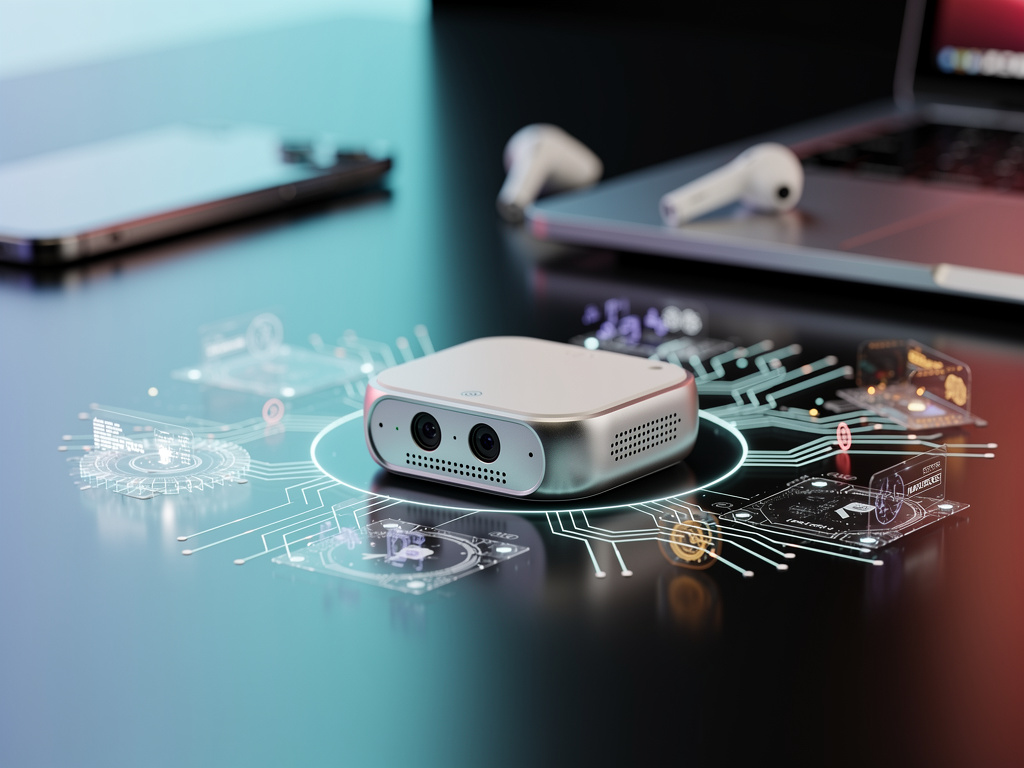
In the ever-evolving realm of consumer technology, where giants like Apple continually push boundaries, whispers of a new device have ignited speculation across the industry. Recent reports suggest Apple is delving into the development of a compact, wearable AI pin—a gadget roughly the size of an AirTag, equipped with dual cameras, microphones, and a speaker. This move positions Apple in direct competition with emerging players in the AI wearable space, such as Humane’s AI Pin, which debuted with much fanfare but faced mixed reception. Drawing from insights in a MacRumors article, the pin is envisioned to integrate seamlessly with Apple’s ecosystem, potentially running an advanced version of Siri unveiled in iOS 27.
The concept of an AI pin isn’t entirely novel; it’s an extension of efforts to create screenless, voice-activated companions that augment daily life without the need for constant smartphone interaction. Apple’s version, as detailed in various accounts, features an aluminum and glass shell with front-facing cameras designed for environmental awareness and user commands. This hardware could enable features like real-time object recognition, contextual assistance, and even augmented reality overlays projected via voice or subtle gestures. Industry observers note that this development aligns with Apple’s broader AI strategy, which emphasizes privacy-focused, on-device processing to differentiate from cloud-dependent rivals.
Yet, skepticism abounds. A pointed critique in Engadget argues that pursuing such a device might be “beneath” Apple’s premium brand image, especially given the company’s hesitation to enter markets like foldables or smart rings. The piece highlights how Apple’s history of refining existing ideas—think the iPhone revolutionizing smartphones—could either elevate the AI pin category or expose it to the pitfalls that plagued early entrants like Humane, whose device struggled with battery life and practical utility.
Skepticism and Market Positioning
Comparisons to existing AI wearables reveal both opportunities and risks for Apple. Humane’s AI Pin, launched in 2023, promised a paradigm shift by projecting information onto the user’s palm and handling tasks via AI-driven voice commands. However, user feedback often cited its clunky interface and limited battery as drawbacks, leading to underwhelming sales. Apple’s potential entry, slated for as early as 2027 according to a report from Basic Tutorials, could leverage superior integration with iPhones and iPads, offering a more polished experience. Insiders speculate that the pin might serve as a companion device, enhancing Siri’s capabilities for hands-free queries in scenarios like driving or exercising.
On the competitive front, Apple’s pin draws inevitable parallels to efforts by OpenAI and Meta, who are also exploring AI-infused hardware. OpenAI’s rumored collaborations on wearable tech aim to embed generative AI directly into daily accessories, while Meta’s smart glasses incorporate similar camera and audio features for social interactions. A Digital Trends piece posits that Apple might sidestep its Apple Watch dominance by targeting a niche for ultra-portable AI, potentially capturing users seeking discreet tech that doesn’t scream “gadget.”
Privacy concerns loom large in this discussion. Apple’s pin, with its array of sensors, raises questions about data collection in public spaces. Unlike smartphones, which users can pocket, a always-on pin could inadvertently record surroundings, prompting regulatory scrutiny. Drawing from historical precedents, Apple’s emphasis on end-to-end encryption and user consent could mitigate these issues, setting a standard that competitors might struggle to match.
Historical Context and Innovation Trajectory
To understand Apple’s pivot, it’s essential to trace the lineage of wearable AI. The concept gained traction with devices like the Google Glass in 2013, which flopped due to privacy backlash and social awkwardness. More recently, startups like Humane, founded by ex-Apple designers, have attempted to revive the idea with pins that act as personal AI assistants. Posts on X from 2023 highlight early excitement around Humane’s projector-equipped pin, with users praising its potential to “replace smartphones,” though real-world adoption lagged.
Apple’s approach appears more conservative, building on its strengths in miniaturization and ecosystem lock-in. A TechRepublic article notes uncertainties around the pin’s purpose and launch timeline, suggesting it might evolve into a testing ground for advanced AI features before broader rollout. This mirrors Apple’s strategy with the Apple Watch, which started as a health tracker and grew into a multifaceted device.
Furthermore, patents filed by Apple in recent years, such as those for EEG-integrated AirPods, indicate a deeper interest in biosignal sensing. X posts from innovators like Brian Roemmele in 2023 discussed how such tech could index user emotions, complementing the pin’s environmental awareness. If combined, this could create a wearable that not only responds to voice but anticipates needs based on physiological cues, pushing the boundaries of human-computer interaction.
Technical Challenges and Engineering Feats
Delving into the engineering side, Apple’s AI pin must overcome significant hurdles in power efficiency and AI processing. Reports indicate the device will feature on-device AI to minimize latency, a feat requiring custom chips akin to the M-series processors. A Forbes analysis estimates that packing multiple microphones and cameras into an AirTag-sized form factor demands breakthroughs in battery technology, possibly leveraging wireless charging for seamless use.
Comparatively, Humane’s pin relied on a laser projector for visual feedback, a feature Apple might eschew in favor of audio or haptic responses to maintain discretion. Industry experts, citing sources like another Engadget report, suggest Apple’s dual-camera setup could enable stereoscopic vision for better depth perception, enhancing applications in navigation or accessibility.
Battery life remains a critical pain point for all AI wearables. Early prototypes often last mere hours under heavy use, a limitation Apple could address through optimized software that offloads complex tasks to a paired iPhone. This hybrid model not only extends usability but reinforces Apple’s walled garden, where devices work best together.
Consumer Adoption and Market Potential
Shifting focus to market dynamics, the success of Apple’s AI pin hinges on consumer readiness for yet another wearable. Surveys from recent years show growing interest in AI assistants, but fatigue from smartwatches and earbuds could dampen enthusiasm. X sentiment, as seen in posts from 2026, reflects a mix of excitement and doubt, with users like Chubby noting Apple’s rivalry with OpenAI and projecting 20 million units by launch.
Pricing will be pivotal. If positioned as a premium accessory around $200-$300, similar to AirTags, it could appeal to Apple’s loyal base. However, broader adoption might require demonstrating clear value over existing Siri integrations. A SpeedGuide report echoes this, emphasizing the pin’s role in Apple’s AI push amid competition from Android ecosystems.
Internationally, regulatory environments vary. In Europe, strict data protection laws could favor Apple’s privacy-centric design, while in Asia, where wearables boom, the pin might find fertile ground for innovation in smart cities.
Strategic Implications for Apple’s Ecosystem
Apple’s foray into AI pins signals a strategic diversification beyond iPhones and Watches. By 2027, as AI matures, this device could anchor new services like personalized health monitoring or real-time translation, expanding revenue streams. Insiders point to potential synergies with Vision Pro, creating a suite of spatial computing tools.
Critics, however, warn of overextension. If the pin underperforms like some past experiments (e.g., the short-lived iPod Hi-Fi), it could tarnish Apple’s innovation aura. Yet, history shows Apple’s knack for iteration—turning initial missteps into successes.
Looking ahead, collaborations or acquisitions might accelerate development. Rumors on X suggest Apple eyeing talent from failed AI startups, bolstering its team.
Broader Industry Ripples
The ripple effects extend to suppliers and partners. Chipmakers like TSMC could see increased demand for specialized silicon, while software developers might adapt apps for pin-compatible interfaces. This could spur a wave of AI hardware innovation, pressuring competitors to respond.
Ethically, the rise of always-listening devices prompts debates on surveillance. Apple’s transparent approach could set industry benchmarks, influencing standards bodies.
In essence, Apple’s AI pin embodies the tension between ambition and pragmatism in tech’s wearable frontier, potentially reshaping how we interact with AI in subtle, everyday ways.


 WebProNews is an iEntry Publication