
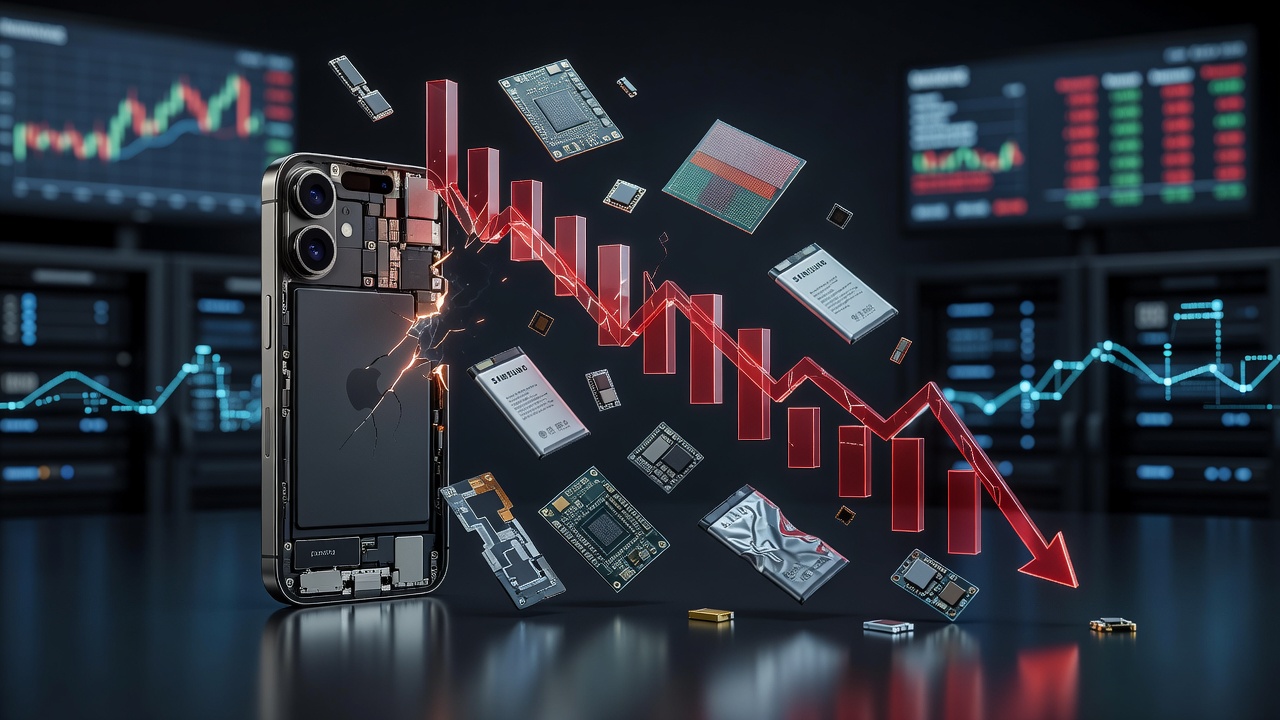
Asian technology stocks experienced significant pressure following reports that Apple plans to reduce its production targets for the iPhone 16 series. The news sent ripples through semiconductor suppliers and electronics manufacturers across the region, highlighting the continued influence of the American tech giant on global supply chains. Shares of companies tied to Apple’s manufacturing network dropped sharply in early trading sessions, with some firms seeing losses exceed three percent in a single day.
The announcement, which first appeared through supply chain sources, indicated that Apple would trim orders for key components by as much as 10 percent compared with initial forecasts. This adjustment reflects softer demand projections for the new smartphone lineup, particularly in key markets like China where local brands have intensified competition. Investors reacted swiftly, punishing stocks that depend heavily on Apple’s orders for their revenue stability.
Taiwan Semiconductor Manufacturing Company, widely known as TSMC, saw its shares fall more than two percent on the Taiwan Stock Exchange. As the primary chip foundry for Apple’s custom silicon, TSMC stands at the center of the iPhone production web. The company had previously guided for strong growth in its advanced 3-nanometer process technology, much of which powers the A-series chips inside recent iPhones. Any meaningful cut in Apple’s shipment targets directly affects TSMC’s capacity utilization rates and near-term revenue visibility.
South Korean firms also felt the impact. Samsung Electronics, which supplies both memory chips and display panels for various iPhone models, declined around 1.8 percent. While Samsung maintains its own smartphone business that competes directly with Apple, the loss of high-volume orders from Cupertino still represents a notable headwind. LG Display, another major screen provider, posted even steeper losses as traders worried about potential inventory buildup if iPhone 16 demand fails to meet already lowered expectations.
Japanese component makers joined the selloff. Murata Manufacturing, a leading producer of multilayer ceramic capacitors essential to smartphone circuit boards, dropped nearly three percent. The company has spent years optimizing its production lines to meet Apple’s stringent quality requirements, making any reduction in forecasted volumes particularly painful. Similarly, Kyocera and TDK saw their shares slide as analysts revised near-term earnings models to account for the revised production schedule.
The broader context reveals structural challenges facing the smartphone industry. Global unit shipments have plateaued after years of double-digit growth, forcing manufacturers to pursue incremental upgrades rather than breakthrough innovations that drive replacement cycles. Apple’s decision to scale back iPhone 16 output suggests the company anticipates continued pressure from both macroeconomic factors and aggressive pricing strategies from competitors such as Xiaomi, Oppo, and Vivo in the critical Chinese market.
China’s economic recovery has proceeded more slowly than many forecasters expected following the end of strict zero-COVID policies. Consumer confidence remains fragile, with many households prioritizing savings over discretionary purchases like new premium smartphones. This environment has allowed domestic brands to gain market share by offering capable devices at lower price points, chipping away at the premium segment where Apple has historically dominated.
The production cut news follows Apple’s recent launch event where the company introduced the iPhone 16 family with incremental improvements including better cameras, enhanced artificial intelligence capabilities through Apple Intelligence features, and longer battery life. While early reviews have been largely positive, pre-order data reportedly came in below internal targets, prompting the supply chain adjustments now rippling through Asian markets.
Analysts at major investment banks quickly updated their views. A research note from Yahoo Finance highlighted how the adjustment could affect not just immediate suppliers but also secondary and tertiary companies further down the value chain. The report noted particular weakness among smaller Taiwanese firms specializing in connectors, acoustic components, and flexible printed circuits. Many of these businesses generate more than 40 percent of their revenue from Apple-related contracts, leaving them with limited ability to absorb volume shocks.
The semiconductor sector bore much of the brunt. Beyond TSMC, companies like MediaTek, which supplies chips for some accessory products, also faced downward pressure despite having less direct exposure to the iPhone itself. The concern centers on overall sentiment toward consumer electronics spending rather than any single product’s performance. When the market leader signals caution, the entire supply network tends to adjust expectations accordingly.
This episode demonstrates the concentrated nature of high-end smartphone manufacturing. Despite years of efforts to diversify production away from China, Apple still relies heavily on sophisticated component clusters in Taiwan, South Korea, and Japan. The precision engineering required for folding mechanisms, advanced camera modules, and efficient power management creates high barriers to entry that few new suppliers can overcome quickly.
Regional governments have watched these developments closely. Taiwan in particular has made semiconductor and electronics manufacturing central to its economic strategy, with Apple-related business supporting hundreds of thousands of jobs directly and indirectly. Any sustained reduction in iPhone volumes could eventually prompt questions about the wisdom of such heavy concentration, though most analysts expect the current adjustment to prove temporary rather than structural.
Looking ahead, attention has shifted to Apple’s upcoming earnings report and any additional color the company might provide about iPhone demand trends. Historically, the firm has shown remarkable ability to stimulate sales through software updates, expanded trade-in programs, and targeted financing offers. The introduction of Apple Intelligence features, though delayed in some regions due to regulatory approvals, could still drive upgrade cycles among existing users once fully rolled out.
Meanwhile, suppliers are adapting in various ways. Some have accelerated diversification efforts, seeking contracts with other smartphone makers or expanding into automotive, medical, and industrial applications where their precision manufacturing expertise translates well. Others have focused on operational efficiency, using the current slowdown to streamline production lines and reduce costs in anticipation of future volume recovery.
The stock market reaction, while sharp, may prove overdone if Apple’s holiday quarter performance exceeds the newly lowered bar. Previous instances of production target adjustments have sometimes preceded stronger-than-expected results when marketing campaigns gained traction or when competitors faced their own supply constraints. The technology sector’s volatility means daily swings of several percentage points have become commonplace, particularly around major product cycles.
For individual companies, the ability to weather such shocks depends largely on their exposure levels and financial flexibility. Larger players like TSMC and Samsung maintain diversified customer bases that cushion the impact of any single client’s decisions. Smaller specialists face greater challenges and may need to pursue mergers or strategic partnerships to survive prolonged periods of reduced orders.
The situation also reflects broader tensions in US-China technology relations. While Apple has worked to expand its manufacturing footprint in India and Vietnam, the majority of sophisticated components still originate from facilities in East Asia with deep expertise developed over decades. Any acceleration of diversification efforts would likely require substantial investment and time before reaching the quality levels Apple demands for its flagship products.
Market participants will continue monitoring channel inventory levels, particularly in China, as an indicator of whether further production cuts might become necessary. Retailers and distributors have grown more cautious in their purchasing after experiencing excess stock following previous launch cycles. This conservatism, while prudent from their perspective, can create self-fulfilling prophecies if it leads to reduced visibility and further conservative forecasting from manufacturers.
Despite the immediate negative reaction among Asian tech equities, longer-term fundamentals for the smartphone industry remain tied to replacement cycles, emerging market growth, and the integration of new technologies like artificial intelligence and advanced imaging. Apple’s ecosystem strength, brand loyalty, and consistent ability to command premium pricing provide a buffer that many competitors lack.
The coming weeks will reveal whether the iPhone 16 series can overcome current headwinds through strong marketing, positive word-of-mouth about its new features, and strategic pricing in key markets. For the numerous Asian companies whose fortunes rise and fall with Apple’s success, those results cannot come soon enough. The interconnected nature of modern technology supply chains means that a single corporate decision in California can send immediate shockwaves through stock exchanges from Seoul to Taipei, reminding everyone of how closely linked these regional economies have become through decades of globalization and specialization.
As trading continued, some stocks began to stabilize as bargain hunters stepped in, betting that the current pessimism had been overdone. This pattern has repeated across multiple product cycles, where initial supply chain concerns eventually give way to renewed optimism once actual sales data begins to emerge. The coming earnings season from both Apple and its key suppliers will provide important data points that could either validate current concerns or demonstrate the resilience of premium smartphone demand even in challenging economic conditions.


 WebProNews is an iEntry Publication