
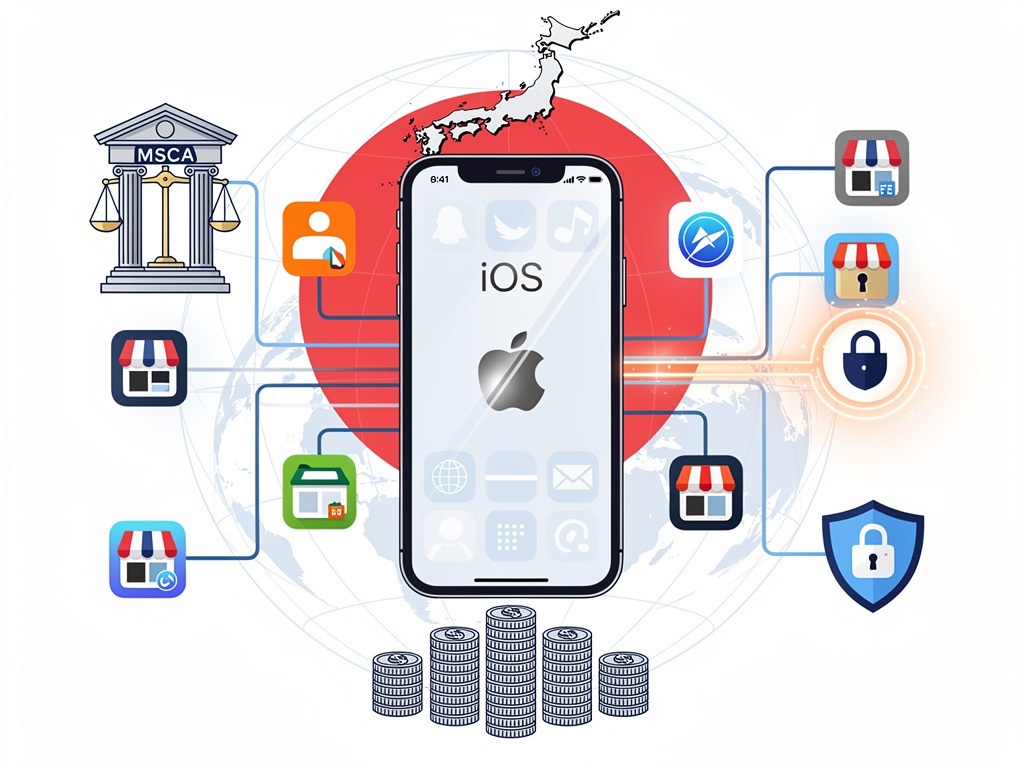
Apple Inc. has begun dismantling key pillars of its tightly controlled iOS ecosystem in Japan, introducing alternative app distribution channels, external payment systems and revised fees to align with the nation’s Mobile Software Competition Act. The changes, detailed in an official announcement on December 17, mark a significant concession to Tokyo’s regulatory push against Big Tech dominance, mirroring Europe’s Digital Markets Act but tailored to Japan’s mobile market dynamics.
The Mobile Software Competition Act, or MSCA, took effect on December 18, imposing obligations on platform operators deemed to hold ‘superior negotiating power’ over app developers. Apple’s compliance plan, outlined in its newsroom post, allows Japanese users to access apps via third-party marketplaces, use non-Apple payment processors and select default web browsers and email apps from the iPhone home screen.
Developers gain flexibility too: they can now direct users to external websites for purchases, bypassing Apple’s In-App Purchase system entirely in some cases, though a new ‘Japan Core Technology Fee’ of 10 yen per install applies to apps distributed outside the App Store after the first year. This fee structure aims to offset Apple’s investments in security and infrastructure, the company said.
Regulatory Roots and Rapid Enforcement
Japan’s Fair Trade Commission (JFTC) enacted the MSCA last year after investigations revealed app store operators extracting excessive commissions—often 30%—from developers. The law targets ‘superior bargaining position’ abuses without requiring full market dominance proof, a lower bar than traditional antitrust standards. Kluwer Competition Law Blog noted in October that expanded guidelines broadened the act’s scope, signaling aggressive enforcement.
Apple’s moves come amid global scrutiny. In the EU, similar DMA rules forced Safari alternatives and sideloading since March. Japan, however, emphasizes reader choice for defaults and payment options without mandating full sideloading for all apps. Posts on X from developers hailed the changes as a ‘game-changer’ for reducing Apple’s gatekeeping, though some expressed concerns over new fees.
Google, facing identical requirements, announced parallel adjustments, including a reduced 15% service fee for the first million downloads annually and support for external billing. Its compliance blog emphasized safeguards like malware scanning for alternative stores.
Unpacking App Distribution Shifts
Japanese iPhone users running iOS 18.2 or later will see a new ‘Alternative App Marketplaces’ section in Settings, enabling installs from approved third-party sources. Apple mandates these marketplaces undergo ‘Notarization’—rigorous security vetting akin to Mac App Store processes—and comply with privacy rules. MacRumors reported that approved marketplaces must register with Apple and adhere to baseline protections against fraud and child exploitation.
Notably, these marketplaces can only offer apps to Japanese users on Japanese App Store accounts, limiting cross-border expansion. Developers opting for alternatives must still submit apps to Apple’s review for core technology compliance, ensuring iOS integrity. TechCrunch highlighted in its coverage that Epic Games CEO Tim Sweeney criticized the model on X, calling it ‘still too restrictive’ and ruling out Fortnite’s return despite the openings.
Payment freedoms represent the biggest developer win. Apps can integrate third-party processors for digital goods, with Apple collecting a reduced 17% commission on App Store sales versus the standard 30% or 15% for small developers. External links to purchase screens are permitted, complete with Apple’s templated warnings about leaving the ecosystem.
Fee Overhaul and Revenue Realities
The new Japan-specific fees layer onto Apple’s global structure. A 30% ‘Platform Fee’ applies to first-year App Store installs, dropping to 17% thereafter, plus the 10-yen annual Core Technology Fee for off-store distributions exceeding one year. Apple justifies this as recouping R&D costs for privacy features, silicon design and App Review. Nasdaq calculated that for high-volume apps, total levies could approach 20-25%, softening the blow from prior rates.
Industry insiders on X, including indie developers, debated the math: while fees dip, compliance burdens rise with dual distribution logistics and security audits. Larger firms like those in gaming may benefit most, potentially routing high-margin titles through cheaper channels. Business Times reported Japanese developers now have three payment pathways: Apple’s IAP, third-party in-app systems or web redirects.
Child safety emerges as a flashpoint. Apple requires marketplace operators to verify developer identities, scan for CSAM and report illegal content, with JFTC oversight. Violations could trigger app delistings or fines up to 10% of domestic revenue, per MSCA penalties.
Default App Controls and Browser Wars
iPhone users in Japan can now designate third-party browsers and email clients as defaults via Settings, a first for the market. This choice screen activates post-iOS update, listing verified apps. Engadget detailed how this extends to voice input and maps, fostering competition in everyday tools.
Browser makers like those behind Firefox and Chrome stand to gain, potentially eroding Safari’s share. Email apps from Microsoft and others could challenge Mail.app. However, Apple retains veto power over ‘core technology’ integrations, ensuring system-level stability.
X discussions revealed mixed developer sentiment: excitement over defaults clashed with fears of fragmented experiences. One post from a Tokyo-based studio noted, ‘Finally, we can promote our browser without App Store friction.’
Global Ripples and Developer Strategies
These Japan-exclusive tweaks signal Apple’s pragmatic adaptation strategy, contrasting its EU resistance where it pursued legal challenges. TechCrunch observed Epic’s dismissal underscores that concessions fall short for some, preserving Apple’s 27% EU-like commission on alternative store sales.
For developers, multi-store strategies demand investment in marketplace SDKs and user acquisition beyond App Store search. Japanese firms, long chafing at 30% cuts, may experiment aggressively. GIGAZINE reported Apple and Google’s announcements include billing tweaks and fee reductions, potentially boosting app monetization.
Analysts predict modest initial uptake, with security concerns slowing alternative adoption. Yet, as JFTC monitors compliance—already probing early reports—these changes could embolden other Asian regulators eyeing similar laws.
Security Mandates in the Spotlight
Apple’s Notarization process for marketplaces involves automated analysis, manual review and annual recertification, mirroring DMA standards. Apps from these sources undergo device-side malware checks at install and launch. Business Standard emphasized new parental controls, blocking marketplace access for minors under device Family Sharing rules.
Privacy remains sacrosanct: alternative apps can’t access sensitive APIs without consent, and marketplaces must disclose data practices. X users flagged potential for ‘walled garden lite,’ where Apple’s oversight persists.
Long-term, this tests Apple’s moat. With iOS commanding 50%+ Japanese share, openings could siphon billions in fees if alternatives scale. Developers must weigh ecosystem perks against cost savings.
Enforcement Horizons and Industry Watch
JFTC’s playbook includes audits and developer surveys, with remedies like mandatory interoperability. Kluwer noted guideline expansions cover ad tech and data sharing, hinting at broader scrutiny.
On X, #MSCA trended with calls for Fortnite’s return, though Epic demurred. Apple’s filings reveal iOS 18.2 rollout began immediately, with full effects unfolding through 2026 updates.
Stakeholders brace for iteration: initial rules pave the way for refinements based on real-world data, potentially reshaping Asia’s app economy.


 WebProNews is an iEntry Publication