
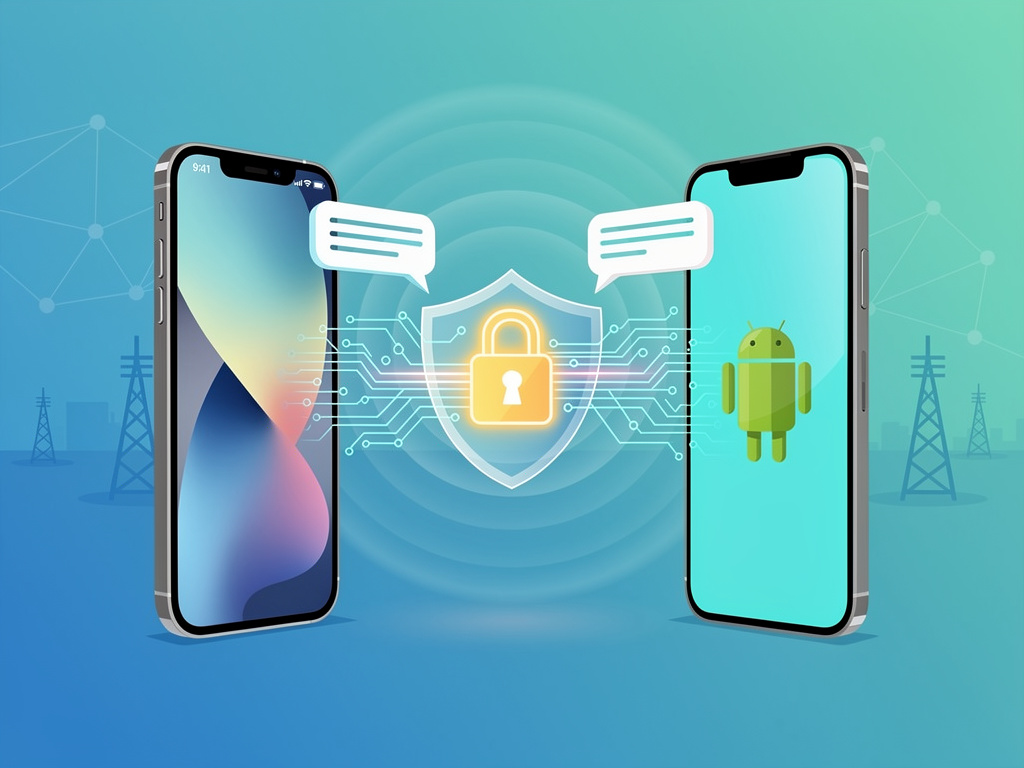
Apple just flipped the switch. On May 11, 2026, the company announced that end-to-end encrypted RCS messaging had begun rolling out in beta. iPhone users on iOS 26.5 now see a small lock icon in eligible RCS chats. The messages cannot be read in transit by carriers, Apple or anyone else.
This marks the latest step in a yearslong push to modernize texting between iPhones and Android devices. RCS, or Rich Communication Services, replaced basic SMS years ago on many networks. Yet until now it lacked the encryption that iMessage has offered Apple users since its launch. That gap left billions of cross-platform conversations exposed.
But today changes. Apple’s newsroom post confirms the rollout starts immediately for iOS 26.5 users with supported carriers. Android users on the latest Google Messages app join them. Encryption turns on by default. It activates automatically over time for both new and existing conversations.
The effort didn’t happen in isolation. Apple and Google led a cross-industry push through the GSM Association to add end-to-end encryption to the RCS standard. Last year the GSMA finalized the technical specifications. Implementation took months of testing. Apple first experimented with the feature in iOS 26.4 betas earlier this year before pulling it ahead of public release. It reappeared in iOS 26.5 betas and stayed.
Carriers now hold the keys to widespread adoption.
Support depends on carriers. Apple plans to list compatible providers on its support page. For encryption to work, both sender and receiver must sit on networks that have upgraded to the latest RCS version with the new encryption profile. Early indications suggest major U.S. carriers will join quickly. International rollout could prove patchier. Still, the foundation exists.
Users will notice the lock icon next to encrypted messages. A simple visual cue. Tap it and details appear. The system mirrors the indicators long familiar in iMessage and WhatsApp. No extra steps required. Encryption sits on by default in Settings under Messages > RCS Messaging. Users can toggle it off if they choose, though few likely will.
Why does this matter now? SMS and traditional MMS never offered encryption. Law enforcement, hackers and even some carriers could access message content. RCS improved media sharing, typing indicators and read receipts. Yet without encryption it remained vulnerable. Google pushed its own Messages app with optional encryption for Android-to-Android chats. The missing piece was universal cross-platform protection.
Apple’s move closes that hole. iMessage stays the gold standard for Apple-to-Apple talks. The company still promotes it as “the best way to communicate between Apple devices.” RCS encryption simply levels the field when iPhone meets Android. No more green bubbles signaling weaker security.
Industry watchers see broader implications. Privacy regulators in Europe and elsewhere have pressured tech firms to tighten messaging protections. The EU once floated client-side scanning proposals that drew fierce opposition from Apple and privacy advocates. This voluntary, standards-based approach sidesteps those fights. It delivers real security without new backdoors.
Recent coverage highlights the timing. On the same day as Apple’s announcement, Google published its own blog post confirming the joint rollout. Google’s blog emphasizes the partnership. Both companies worked with carriers and the GSMA to test interoperability. The result? Messages stay encrypted from one device straight to the other.
Analysts note the beta label. Apple calls it beta even as it ships in the public iOS 26.5 release. That reflects caution. Carrier support will expand gradually. Bugs could surface in edge cases involving older devices or mixed networks. Yet the code has spent months in developer and public betas. Stability looks high.
Device compatibility proves broad. Any iPhone that runs iOS 26.5 qualifies. That includes models back to the iPhone 11 series. Older iPhones stay on earlier software and miss out for now. Android coverage centers on Google Messages, the default app on many devices. Samsung and others may add support through their own apps later.
The technical achievement deserves attention. End-to-end encryption in a carrier-mediated protocol requires careful key management. Devices must negotiate keys without exposing them to the network. The GSMA’s specification uses a mix of public-key cryptography and secure messaging protocols. Details remain somewhat opaque, but the outcome matches what users expect from Signal or iMessage.
But. Not every conversation will encrypt immediately. The rollout happens over time. Some users may wait days or weeks before the lock icon appears. Carriers must flip switches on their side. Apple says it will update its support page with a list of participating providers. Check there before assuming full protection.
And the competitive angle? Samsung reportedly shut down its own Messages app in some regions, pushing users toward Google Messages. The Forbes report from May 5 ties the moves together. Forbes coverage suggests Apple’s timing adds pressure on Android OEMs to standardize on encrypted RCS. Fragmentation has long plagued the Android messaging experience. This could accelerate consolidation.
Security experts welcome the change. End-to-end encryption prevents passive interception. It blocks rogue cell towers from grabbing message text. It limits what governments can demand from carriers. Of course, metadata still flows. Who messaged whom and when remains visible. Full anonymity requires more than this. Yet for ordinary users exchanging photos, videos and texts, the protection feels meaningful.
Apple’s announcement stays short on specifics. No named executives quoted. No deep technical white paper released yet. The company prefers to let the feature speak for itself. iOS 26.5 brings other tweaks too. Smarter Maps suggestions. New Pride wallpapers. Bug fixes. The encryption headline dominates.
Look ahead. Expect carrier announcements in coming days. More details on exactly which networks support it first. Google will likely push updates to Messages. Third-party Android apps could follow. The beta tag may disappear in future iOS point releases once adoption stabilizes.
This isn’t flashy. No new hardware. No AI tricks. Just quiet, consequential work on the infrastructure billions rely on daily. Texting remains the most used communication tool on phones. Making it private by default across platforms counts as real progress.
Users should update to iOS 26.5 when available. Check Settings after installation. Look for the RCS toggle and the lock icons in chats. The change won’t transform every conversation overnight. Over months, though, it will raise the baseline for mobile messaging security. Apple, Google and the carriers just made that happen.


 WebProNews is an iEntry Publication