
Celebrities and Lawmakers Unite Against Digital Predators: The Push to Regulate AI-Generated Deepfakes
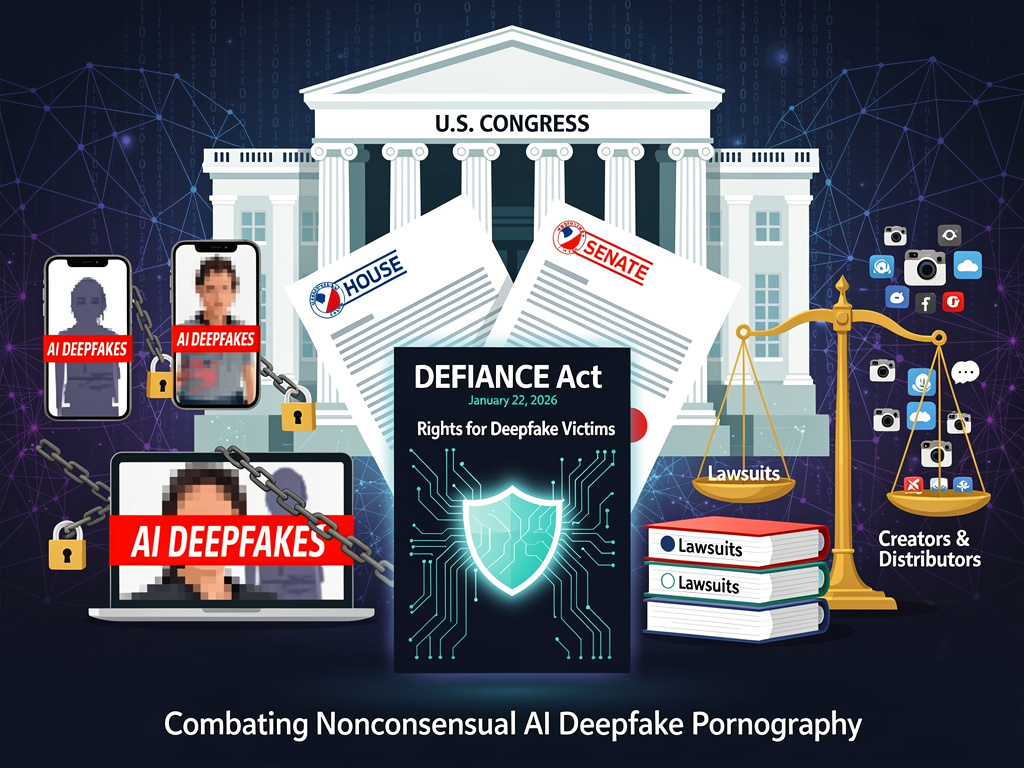
In the hallowed halls of Capitol Hill, an unlikely alliance has formed between a progressive firebrand congresswoman and a hotel heiress turned advocate, both determined to combat the rising tide of AI-generated explicit content. On January 22, 2026, Representative Alexandria Ocasio-Cortez (D-N.Y.), commonly known as AOC, stood alongside Paris Hilton to urge the House of Representatives to pass the DEFIANCE Act, a bipartisan bill aimed at curbing nonconsensual deepfake pornography. This event marks a pivotal moment in the ongoing battle against technology that blurs the lines between reality and fabrication, allowing victims to sue creators and distributors of such material.
The DEFIANCE Act, which stands for Disrupt Explicit Forged Images and Non-Consensual Edits, would empower individuals to seek civil damages up to $150,000 per violation, with heightened penalties if minors are involved. It passed the Senate unanimously earlier this month, following public outrage over incidents involving AI tools like Grok, the chatbot from Elon Musk’s xAI, which was criticized for generating sexualized images of real people, including children. Hilton, a survivor of nonconsensual image distribution herself, shared personal anecdotes during the press conference, highlighting how over 100,000 AI-generated explicit images of her circulate online without her consent.
This push comes amid growing concerns over the proliferation of deepfake technology, which uses artificial intelligence to superimpose faces onto explicit videos or images. Industry experts note that advancements in generative AI have democratized the creation of such content, making it accessible to anyone with a smartphone. The bill’s advocates argue that existing laws fall short, leaving victims without recourse in an era where digital harm can spread virally and inflict lasting psychological damage.
The Origins of a Bipartisan Crusade
The roots of this legislation trace back to 2024, when high-profile cases involving celebrities like Taylor Swift and Scarlett Johansson brought deepfake porn into the mainstream spotlight. Ocasio-Cortez, who has been vocal about her own experiences with online harassment, reintroduced the bill in 2025 after it stalled in previous sessions. According to a report from Washington Examiner, Hilton’s involvement adds a layer of celebrity gravitas, drawing bipartisan support from figures like Representative Laurel Lee (R-Fla.).
Posts on X, formerly Twitter, reflect a surge in public sentiment, with users praising the cross-aisle collaboration while decrying the ethical lapses of AI companies. One notable thread from industry watchers emphasized how tools like Grok have exposed vulnerabilities in content moderation, echoing broader debates on platform accountability. The Senate’s passage, as detailed in Roll Call, was propelled by furor over Musk’s X platform, which briefly allowed unrestricted image generation before implementing safeguards.
For industry insiders, the bill represents a critical juncture in regulating AI ethics. Tech firms have long argued that overregulation could stifle innovation, but proponents counter that unchecked deepfakes pose risks beyond pornography, extending to election interference and misinformation. A 2025 congressional hearing on AI oversight, documented in Congress.gov, underscored these fears, with experts warning of deepfakes’ potential to sway public opinion.
Victims’ Stories Fuel Legislative Momentum
Hilton’s testimony on Capitol Hill was particularly poignant, drawing parallels to her 2004 sex tape leak and the modern scourge of AI manipulation. “This isn’t just about technology; it’s about power,” she stated, as reported in various outlets. Her advocacy aligns with a broader movement where survivors are reclaiming narratives through policy. Ocasio-Cortez, in an interview with The Independent, highlighted her growing influence within the Democratic caucus, noting how the bill has evolved from a fringe proposal to a mainstream priority.
The legislation’s framework allows for lawsuits against not only individual creators but also platforms that host or distribute deepfakes knowingly. This provision has sparked debate among tech lobbyists, who fear it could lead to a flood of litigation. However, supporters point to precedents in revenge porn laws, which have successfully deterred similar abuses. Data from cybersecurity firms indicates that deepfake incidents have risen 300% since 2023, affecting not just celebrities but everyday individuals, particularly women and girls.
Industry analysis suggests that the DEFIANCE Act could set a global standard, influencing regulations in Europe and Asia where similar concerns are mounting. For instance, the European Union’s AI Act already classifies deepfakes as high-risk, but lacks the civil remedies proposed here. Insiders speculate that passage in the House could pressure companies like OpenAI and Meta to enhance detection algorithms, potentially integrating blockchain for image authentication.
Technological Challenges and Industry Responses
Delving deeper into the tech side, creating deepfakes involves machine learning models trained on vast datasets of images and videos. Tools like Stable Diffusion and Grok have lowered barriers, enabling users to generate hyper-realistic fakes in minutes. A Business Insider piece details how Grok’s lax policies in late 2025 ignited the latest controversy, prompting Musk to defend the tool as a free-speech experiment while facing backlash.
Countermeasures are emerging, with startups developing watermarking technologies to flag AI-generated content. Yet, experts warn that adversarial AI could circumvent these, creating an arms race. In response, the bill mandates that defendants prove consent, shifting the burden from victims—a move lauded by legal scholars as innovative.
Beyond porn, the implications for sectors like finance and media are profound. Deepfakes have been used in scams, impersonating executives to defraud companies. A report from Politico explores how policymakers are framing AI risks to voters, emphasizing economic disruptions alongside personal harms.
Political Dynamics and Roadblocks in the House
The House delay stems from a crowded legislative agenda and partisan divides, despite the bill’s bipartisan cosponsors. Ocasio-Cortez’s rising clout, as analyzed in Yahoo News, has helped bridge gaps, but conservative hesitations over federal overreach persist. Hilton’s star power, combined with endorsements from figures like former First Lady Melania Trump in prior efforts, adds momentum.
Public opinion, gauged from X posts, shows overwhelming support, with hashtags like #StopDeepfakes trending. Users share stories of harassment, amplifying calls for action. This grassroots pressure could sway reluctant lawmakers, especially in an election year where tech regulation is a hot-button issue.
For tech executives, the bill signals a shift toward accountability. Companies may need to invest in ethical AI frameworks, potentially reshaping hiring practices to include more ethicists and diverse teams. Analysts predict that if passed, the act could inspire state-level laws, creating a patchwork of protections until uniform federal standards emerge.
Broader Implications for AI Governance
Extending the discussion, the DEFIANCE Act intersects with ongoing debates on AI safety. The White House’s 2025 executive order on AI emphasized trustworthy development, but lacked teeth on deepfakes. Insiders note that international cooperation is key, as deepfakes transcend borders—evident in cases where foreign actors use them for disinformation.
Victim support networks are also evolving, with organizations offering digital forensics to identify fakes. Hilton’s foundation, focused on child protection, partners with tech firms for awareness campaigns. Ocasio-Cortez envisions the bill as a stepping stone to comprehensive AI reforms, addressing biases in algorithms that disproportionately harm marginalized groups.
Economically, the deepfake economy—estimated at $10 billion annually in illicit content—could face disruption. Platforms might adopt subscription models with verified content, altering user behaviors and revenue streams.
Future Horizons in Digital Ethics
As the House deliberates, stakeholders watch closely. Passage could embolden further legislation, like bans on deepfakes in political ads, building on 2025 hearings. Tech giants, under scrutiny, are piloting self-regulatory measures, but advocates insist government intervention is essential.
The alliance between Ocasio-Cortez and Hilton exemplifies how personal stories drive policy. For industry leaders, it’s a reminder that innovation must align with societal values, or face regulatory backlash.
Ultimately, this movement underscores a fundamental question: In an age of synthetic media, how do we safeguard human dignity? The DEFIANCE Act may provide one answer, but its success hinges on enforcement and adaptation to evolving technologies. As AI advances, so too must our defenses, ensuring that digital progress doesn’t come at the cost of personal security.


 WebProNews is an iEntry Publication