
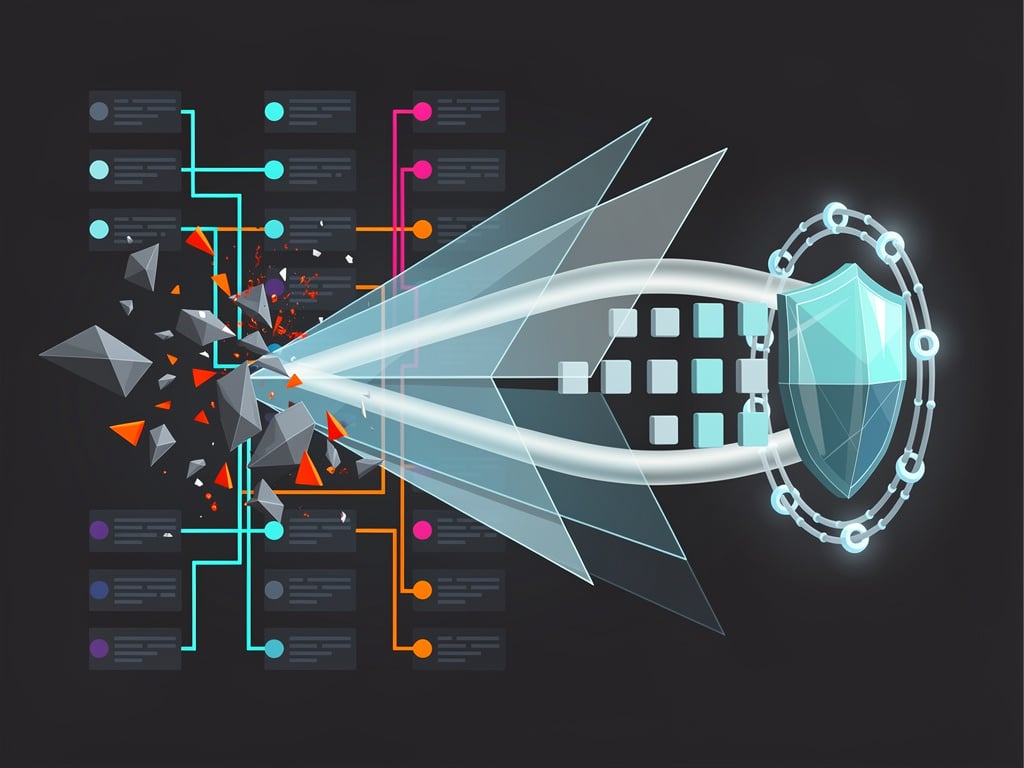
Two days ago Anthropic dropped a GitHub repository that quietly shifts the balance in software security. The defending-code-reference-harness offers a ready-to-run system for finding and fixing vulnerabilities with Claude. It draws directly from work the company did with security teams through its Project Glasswing initiative.
Security leaders have watched AI coding tools flood repositories with functional but flawed code. Studies show consistent problems. Veracode’s Spring 2026 GenAI Code Security Update reports that across models and tasks only 55 percent of generated code passes security checks. Syntax correctness exceeds 95 percent. The gap remains stubborn.
But finding flaws is no longer the main barrier. Stronger models handle discovery at scale. The real bottlenecks sit in verification, triage and patching. Anthropic’s release attacks exactly those steps.
The repository supplies skills for threat modeling, scanning, triage and patching. It also includes an autonomous scanning harness that users can customize. One command starts an interactive workflow on a demo target. Another turns the system loose to scan continuously.
Threat modeling comes first. The threat-model skill bootstraps a draft from code, known CVEs and git history. It then walks system owners through Adam Shostack’s four questions to refine the model. Output lands in a THREAT_MODEL.md file that later stages feed on. The approach grounds abstract risk in concrete artifacts.
Discovery follows. Claude scans with the benefit of that threat model. It identifies potential issues and gathers evidence. Triage comes next. Here the system ranks findings by severity and likelihood. It avoids the common failure mode where every alert triggers panic or none does.
Patching closes the loop. The harness generates fixes, tests them and proposes changes. All steps run inside Claude Code, Anthropic’s agentic coding environment. The setup matters as much as the model. Recent engineering posts from the company stress this point.
In November 2025 Anthropic published guidance on effective harnesses for long-running agents. The post described challenges agents face across context windows. It proposed splitting work between an initializer agent that sets up the environment and a coding agent that makes incremental progress while leaving clear artifacts for the next session. The effective harnesses article showed how such structure turns promising but brittle behavior into reliable output.
That lesson carries over to security work. A model strong at spotting buffer overflows still fails without proper scaffolding. The defending-code-reference-harness supplies the scaffolding. It constrains tools, manages state and enforces safety boundaries.
Project Glasswing provides the foundation. Launched to secure critical software in the AI era, the effort partnered Anthropic with security teams at several organizations. Learnings from those collaborations shaped the reference implementation. The GitHub repo states plainly that it offers an open-source version based on general best practices for finding vulnerabilities using Claude.
Industry reaction surfaced quickly on X and in developer forums. Security practitioners starred the repo within hours of its appearance. Some noted the shift from AI as code producer to AI as code guardian. Others cautioned that autonomous remediation still requires human oversight. The harness does not replace judgment. It amplifies it.
Recent reports reinforce the need. Opsera’s AI Coding Impact 2026 Benchmark Report examined more than 250,000 developers across 60 enterprises. AI cut time-to-PR by up to 58 percent. Yet AI-generated pull requests waited 4.6 times longer in review and introduced 15 to 18 percent more security vulnerabilities. Speed without control creates debt.
Similar findings appear elsewhere. Researchers documented that AI-generated code often carries OWASP Top 10 issues. One analysis found 45 percent of samples contained known flaws. Another highlighted that engineers using AI write less secure code but place greater trust in it. Overconfidence compounds the risk.
Anthropic’s approach differs by focusing on the full cycle. The accompanying blog post on claude.com walks through each stage in detail. It points readers to the threat-model skill, the vuln-scan capability and the triage process. It invites users to run the quickstart command and see the loop in action. Then it encourages customization of the autonomous harness for production environments.
Implementation details reveal care. The system supports Docker and AddressSanitizer for C and C++ memory vulnerability detection. It integrates git history to understand past fixes and recurring patterns. Threat models persist as living documents rather than one-off exercises.
Autonomy brings trade-offs. The harness can scan without constant human input. It can propose patches at volume. Yet verification remains essential. A patched vulnerability that introduces a new one solves nothing. The triage skill attempts to catch such regressions by weighing impact against confidence.
Security teams at large organizations already experiment with similar loops. They combine static analysis tools, dynamic testing and now agentic review. Anthropic’s contribution supplies a standardized starting point built on Claude. Teams can fork the repo, adjust the skills and connect it to their CI pipelines.
The timing feels deliberate. As more companies adopt agentic coding systems the attack surface expands. Code written by AI, reviewed by AI and deployed by AI could amplify flaws at machine speed. Defenders need equally capable systems. This harness aims to provide one.
But success depends on execution. A poorly configured setup will miss subtle logic errors even if it catches obvious injection flaws. The repository includes troubleshooting guidance and documentation for each skill. It assumes users bring security expertise to the table.
So far the reception mixes optimism with realism. Practitioners praise the structured workflow. They appreciate the explicit connection to established practices like threat modeling. At the same time many stress that AI-assisted security still demands skilled humans in the loop.
Anthropic itself frames the work as part of a broader push. Project Glasswing seeks to give defenders a durable advantage in an AI-driven cybersecurity landscape. The reference harness translates that ambition into code that anyone can run today.
Enterprises evaluating the system should start small. Run the quickstart on a non-production codebase. Examine the generated threat model. Test the patches in a safe environment. Only then scale to autonomous operation. The harness makes the process repeatable. It does not make it automatic.
Future updates may tighten integration with other security tools. They could add support for more languages or deeper static analysis. For now the release stands as a practical step forward. It shows how the same models that generate risky code can also hunt it down.
The gap between AI’s coding prowess and its security judgment has narrowed. Not closed. But narrowed. Organizations that master the harness layer will likely pull ahead. Those that treat AI output as trusted by default may fall behind.
And the clock keeps ticking. New vulnerabilities appear daily. AI systems ship code faster than ever. The side that closes the loop first gains the edge. Anthropic just handed defenders a strong opening move.


 WebProNews is an iEntry Publication