
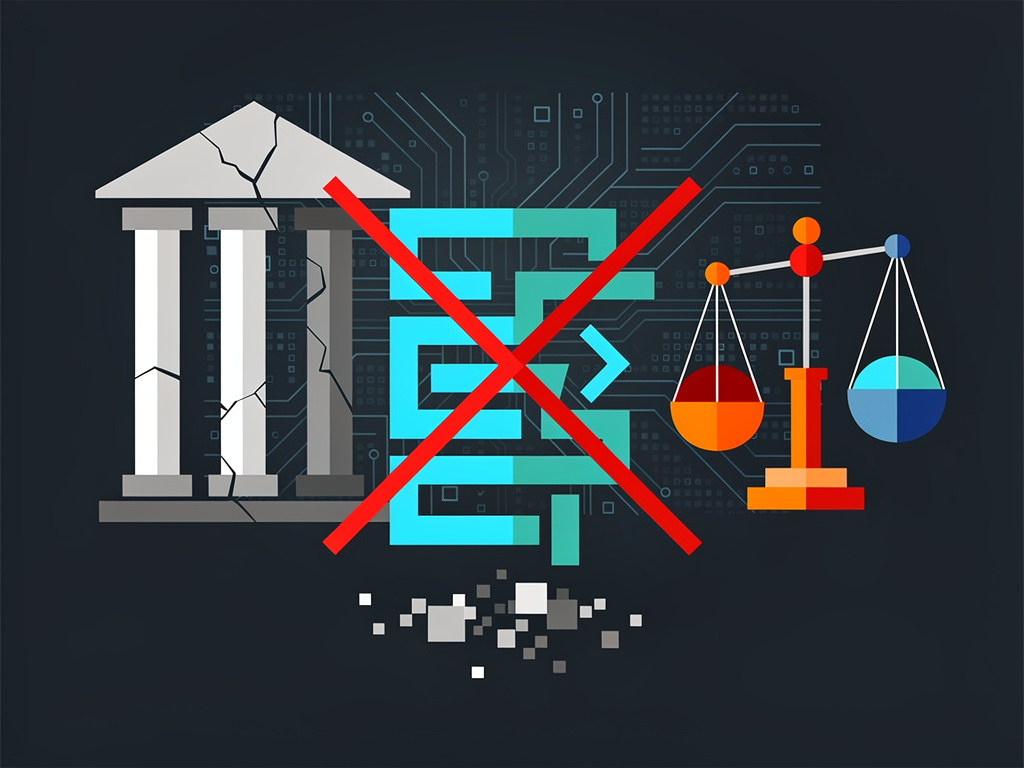
A lawsuit filed against Anthropic in late April 2025 has exposed a fault line running beneath the fast-growing AI-assisted coding market. The complaint, brought by a group of software developers, alleges that Anthropic’s Claude Code tool reproduced substantial portions of copyrighted code — not paraphrased, not reimagined, but copied nearly verbatim. If the claims hold up, the implications stretch far beyond one company and one product. They could reshape how every major AI firm trains and deploys code-generation models.
The case centers on Claude Code, Anthropic’s command-line coding assistant launched in early 2025. According to Business Insider, the plaintiffs are independent and small-team developers who discovered that Claude Code was generating outputs that matched their proprietary code with alarming fidelity. We’re not talking about common boilerplate or widely used open-source snippets. The complaint points to unique, identifiable code blocks — functions, class structures, and algorithmic implementations — that the developers say could only have come from their original repositories.
That distinction matters enormously.
AI companies have long argued that training on publicly available data constitutes fair use, a legal doctrine that permits limited use of copyrighted material without permission under certain conditions. The argument goes something like this: the model ingests millions of code files, learns patterns, and produces novel outputs. No single piece of training data is memorized. It’s synthesis, not copying. But the developers in this case say Claude Code’s outputs weren’t synthesized at all. They say the tool spit back their work, sometimes with variable names changed and comments stripped, but otherwise structurally identical.
Anthropic has not yet filed a formal response in court. A spokesperson told Business Insider that the company takes intellectual property concerns seriously and is reviewing the claims. That’s standard pre-litigation language. But internally, people familiar with the matter say Anthropic’s legal and technical teams are treating the suit as a serious threat — not because the damages sought are particularly large, but because the precedent it could set would be devastating for the company’s enterprise ambitions.
And those ambitions are substantial. Claude Code has become one of Anthropic’s most commercially important products, adopted by engineering teams at major corporations and startups alike. The tool competes directly with GitHub Copilot (backed by Microsoft and OpenAI), Amazon’s CodeWhisperer, and Google’s Gemini Code Assist. Revenue from enterprise coding tools has become a critical growth vector for all of these companies. A ruling that AI-generated code carries infringement risk would send shockwaves through procurement departments everywhere.
The timing is particularly awkward. Anthropic recently closed a massive funding round, reportedly valuing the company at $61.5 billion. Investors including Google, Salesforce, and a consortium of institutional players have bet heavily on the premise that Anthropic can build a profitable, safety-focused AI business. Copyright liability was always listed as a risk factor in investor materials, but it was treated as theoretical. This lawsuit makes it concrete.
To understand why this case is different from previous AI copyright disputes, you have to understand how code-generation models work — and where they break down. Large language models trained on code learn statistical relationships between tokens. Given a function signature and a docstring, the model predicts the most likely sequence of tokens to follow. In most cases, this produces original code that reflects learned patterns but doesn’t replicate any single training example. The problem arises when training data contains highly distinctive code that the model essentially memorizes rather than generalizing from. Research published by teams at UC Berkeley and Princeton has shown that LLMs are more likely to memorize and reproduce sequences that appear infrequently in training data — precisely the kind of unique, proprietary code at issue in this lawsuit.
This is not a new concern. In November 2022, a class-action lawsuit was filed against GitHub, Microsoft, and OpenAI over Copilot’s tendency to reproduce licensed code without attribution. That case, Doe v. GitHub, is still working its way through the courts. But the Anthropic suit differs in a key respect: the plaintiffs aren’t just arguing about open-source license violations. They’re claiming straight copyright infringement of proprietary, non-open-source code. That raises the stakes considerably.
The legal framework here is unsettled, almost chaotically so. Courts have not yet produced a definitive ruling on whether training AI models on copyrighted material constitutes fair use. The New York Times v. OpenAI case, filed in December 2023, is the highest-profile test of that question, but it involves text rather than code. The Authors Guild’s suit against OpenAI is another. Neither has reached a verdict. Meanwhile, the U.S. Copyright Office has issued guidance suggesting that AI-generated content may not be copyrightable by the person who prompted it — but that says nothing about whether the training process itself infringes existing copyrights.
So the law is a patchwork. And into that patchwork steps a case involving code, which has its own peculiarities. Software has been copyrightable since the 1980s, but the scope of that protection has always been contested. The Supreme Court’s 2021 decision in Google v. Oracle held that Google’s copying of Java API declarations was fair use, but that ruling was narrow and fact-specific. It doesn’t clearly apply to the wholesale reproduction of implementation code, which is what the Anthropic plaintiffs allege.
Industry reaction has been split along predictable lines. Developers and open-source advocates have largely cheered the lawsuit, viewing it as a necessary check on AI companies that have treated the world’s code repositories as free training data. “They scraped everything, asked no one, and now they’re selling it back to us,” one plaintiff told Business Insider. That sentiment resonates with a large segment of the developer community that has felt increasingly exploited by the AI training pipeline.
On the other side, AI companies and their investors argue that restricting training data would cripple innovation and that the economic benefits of AI coding tools — faster development cycles, lower costs, broader access to programming capabilities — far outweigh the harms. Some have pointed to the analogy of search engines, which also copy and index copyrighted content but have been broadly accepted as fair use because they serve a transformative purpose.
That analogy has limits. Search engines display snippets and link back to the original source. AI coding tools generate complete, usable code blocks with no attribution and no link. The user has no way of knowing whether the output originated from a copyrighted source. And the AI company profits directly from the output. These differences may matter a great deal in court.
There’s a technical dimension to the dispute that deserves attention. Anthropic and its competitors have invested in various mitigation strategies to prevent verbatim reproduction of training data. These include output filters that check generated code against known repositories, deduplication of training data to reduce memorization, and fine-tuning techniques designed to encourage generalization over memorization. But none of these methods are foolproof. The plaintiffs in the Anthropic case appear to have conducted systematic testing, prompting Claude Code with specific descriptions of their proprietary functions and documenting the near-identical outputs. If their evidence holds up, it would suggest that Anthropic’s safeguards failed — or were never designed to catch this kind of reproduction.
Enterprise customers are watching closely. Companies that use AI coding assistants face their own legal exposure. If an AI tool generates infringing code and an engineer incorporates it into a commercial product, the company using that code could be liable for infringement. Some AI vendors, including Microsoft for GitHub Copilot, have offered indemnification clauses — essentially promising to cover legal costs if their tool produces infringing output. Anthropic has offered similar protections for enterprise customers, but the scope and enforceability of those guarantees remain untested.
The financial implications are hard to overstate. The AI coding tools market is projected to exceed $15 billion annually by 2028, according to estimates from multiple research firms. That growth depends on enterprise adoption, and enterprise adoption depends on legal certainty. A ruling against Anthropic — or even a prolonged, high-profile legal battle — could slow that adoption significantly. Corporate legal departments are not known for their appetite for ambiguity.
Some observers see an eventual legislative solution. The European Union’s AI Act includes provisions related to training data transparency, requiring companies to disclose summaries of copyrighted material used in training. In the United States, several bills have been introduced that would address AI and copyright, but none have gained significant traction. The political dynamics are complicated: the tech industry has enormous lobbying power, but the creative and developer communities are increasingly organized and vocal.
For Anthropic specifically, this lawsuit arrives at a moment of strategic vulnerability. The company has positioned itself as the “responsible” AI player — the one that prioritizes safety, alignment, and ethical development. CEO Dario Amodei has repeatedly emphasized Anthropic’s commitment to doing things the right way. A finding that Claude Code systematically reproduced copyrighted material would undermine that brand positioning in a way that goes beyond legal liability. It would be a reputational blow.
But Anthropic is hardly alone in its exposure. Every major AI company that has trained models on code scraped from the internet faces similar risks. GitHub’s Copilot, trained partly on public repositories, has faced its own accusations. Google’s code models draw from vast datasets. Amazon’s tools are trained on proprietary and public code alike. If the legal theory in the Anthropic case succeeds, every one of these products becomes a potential target.
The broader question is whether the AI industry’s foundational assumption — that training on publicly accessible data is permissible — will survive judicial scrutiny. That assumption has powered the entire generative AI boom. It enabled companies to build trillion-dollar valuations on models trained on the collective output of humanity’s writers, artists, musicians, and programmers. If courts decide that this training constitutes infringement, the cost of building AI models will skyrocket. Companies would need to license training data, build models on smaller curated datasets, or develop synthetic training methods that don’t rely on copyrighted material.
None of those alternatives are cheap or easy.
For now, the Anthropic case is in its early stages. Discovery will be critical — the plaintiffs will seek access to Anthropic’s training data and processes, and Anthropic will almost certainly resist, citing trade secrets. The judge’s decisions on discovery could determine the trajectory of the entire case. If the plaintiffs can demonstrate a clear chain from their copyrighted code to Claude Code’s training data to the infringing outputs, the fair use defense becomes much harder to sustain.
The AI industry has spent the last three years building at breakneck speed, often treating legal and ethical questions as problems to be solved later. Later is arriving. This lawsuit against Anthropic is one of several that will force courts, regulators, and the industry itself to answer a question that has been deferred for too long: Who owns the raw material that makes AI work? The developers who wrote the code believe they do. The companies that trained on it believe the question is more nuanced than that. A courtroom in California will eventually have to decide who’s right.
The answer will shape the AI industry for a generation.


 WebProNews is an iEntry Publication