
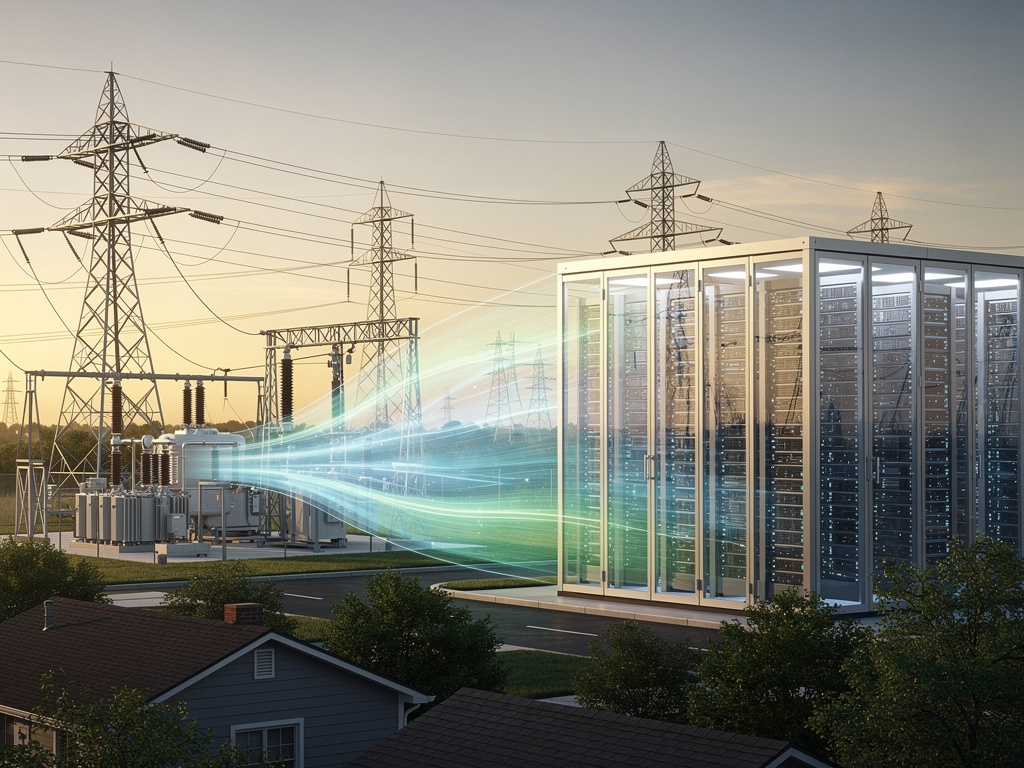
In an unprecedented move that could reshape the relationship between the artificial intelligence industry and the communities it touches, Anthropic — the San Francisco-based maker of the Claude AI assistant — announced a sweeping commitment to cover electricity price increases that result from its data center operations across the United States. The pledge, unveiled on February 11, 2026, represents the most concrete acknowledgment yet by a major AI company that the explosive growth of compute-hungry data centers is threatening to destabilize local power grids and burden ordinary ratepayers with higher utility bills.
The commitment goes beyond mere rhetoric. According to Anthropic’s official announcement, the company will pursue a three-pronged strategy: upgrading existing power grid infrastructure in regions where it operates, investing in new power generation capacity, and directly compensating consumers for any electricity price increases attributable to its facilities. It is a move that simultaneously addresses mounting political pressure, preempts potential regulatory action, and sets a new standard that rival AI firms will find difficult to ignore.
The Growing Power Crisis Behind the AI Boom
The backdrop to Anthropic’s announcement is an energy crisis that has been building for years. As AI models have grown exponentially in size and complexity, the data centers required to train and run them have become voracious consumers of electricity. A single large-scale AI training run can consume as much power as a small city, and the demand shows no signs of abating. According to Reuters, data center electricity consumption in the United States is projected to more than double by 2030, placing enormous strain on a grid that was already showing its age before the AI revolution began.
The consequences for consumers have been tangible and growing. In regions where data centers have proliferated — Northern Virginia, central Oregon, parts of Texas and Georgia — utility companies have sought rate increases to fund the grid upgrades necessary to serve these massive new loads. In some cases, residential customers have seen their bills rise by 10 to 20 percent, even as they derive no direct benefit from the AI facilities next door. The political backlash has been swift, with state legislators and public utility commissions increasingly questioning whether the AI industry is paying its fair share of infrastructure costs.
What Anthropic Is Actually Promising
Anthropic’s pledge is notable for its specificity. As detailed in the company’s blog post, the commitment has three distinct components. First, Anthropic will invest directly in upgrading grid infrastructure in the areas where its data centers operate, working with local utilities and grid operators to ensure that new capacity is added ahead of demand rather than in response to shortfalls. Second, the company will invest in new power generation — with a stated preference for clean energy sources — to ensure that its operations add to the total supply of electricity rather than simply competing with existing users for a fixed pool of power.
Third, and most provocatively, Anthropic has pledged to cover any increases in consumer electricity prices that can be directly attributed to the load its data centers place on local grids. As NBC News reported, the company said it would work with independent analysts and public utility commissions to determine the extent to which its operations contribute to rate increases, and would then reimburse affected consumers accordingly. The mechanism for delivering these reimbursements — whether through direct payments, utility bill credits, or contributions to rate stabilization funds — is still being worked out, but Anthropic indicated it expects to have concrete programs in place within the year.
Industry Reaction: Applause, Skepticism, and Competitive Pressure
The reaction from across the technology and energy sectors has been mixed but intense. Environmental groups and consumer advocates have broadly welcomed the move, while cautioning that the devil will be in the details. The question of how to accurately attribute price increases to a specific data center operator — as opposed to broader trends in fuel costs, weather-related demand spikes, or other industrial users — is a genuinely difficult analytical problem. As The Register noted, critics have pointed out that Anthropic’s pledge, however well-intentioned, could prove nearly impossible to implement in practice if there is no agreed-upon methodology for isolating the company’s impact on rates from the dozens of other variables that influence electricity pricing.
Rival AI companies, meanwhile, find themselves in an uncomfortable position. SiliconANGLE reported that industry observers immediately began asking whether OpenAI, Google DeepMind, Meta, and other major players would follow suit with similar commitments. None had done so as of this writing, though several issued statements emphasizing their own investments in renewable energy and grid modernization. The competitive dynamics are clear: Anthropic has seized the moral high ground, and any company that fails to match its pledge risks being cast as indifferent to the communities affected by its operations.
The Grid Under Stress: Lessons From Recent Crises
Anthropic’s announcement also arrives at a moment when the fragility of the American power grid is front of mind for policymakers and the public alike. A recent Wall Street Journal analysis of the latest winter cold snap revealed just how close parts of the grid came to cascading failures, with reserve margins shrinking to dangerously low levels in several regions. The addition of tens of gigawatts of data center load over the coming years will only intensify these pressures, particularly if new generation capacity fails to keep pace.
The challenge is not merely one of total capacity but of geography and timing. Data centers tend to cluster in specific regions — drawn by fiber-optic connectivity, tax incentives, and available land — creating localized demand spikes that can overwhelm transmission infrastructure even when the broader grid has adequate supply. This mismatch between where power is generated and where it is consumed is one of the central engineering challenges of the AI era, and it is one that no single company, however well-resourced, can solve alone.
Anthropic’s Strategic Calculus
For Anthropic, the pledge is as much a strategic calculation as it is a philanthropic gesture. The company, which has raised billions of dollars from investors including Google and Salesforce, is in the midst of a massive expansion of its computing infrastructure. Securing access to reliable, affordable power is an existential priority, and anything that slows the permitting or construction of new data centers — whether public opposition, regulatory hurdles, or political backlash — represents a direct threat to the company’s competitive position.
By getting ahead of the issue, Anthropic is effectively buying social license to operate. As Business Today reported, the company’s leadership has been explicit about the connection between community acceptance and the ability to build at the speed and scale the AI race demands. Dario Amodei, Anthropic’s CEO, has spoken publicly about the need for the AI industry to earn the trust of the public, and this pledge is a direct extension of that philosophy. The calculus is straightforward: the cost of covering consumer rate increases, while potentially significant, is almost certainly less than the cost of protracted permitting battles, hostile regulatory environments, or outright bans on new data center construction.
The Regulatory and Political Dimensions
The political context cannot be overstated. Across the country, state and local governments are grappling with how to regulate the data center boom. In Virginia, the nation’s largest data center market, legislators have debated imposing moratoria on new construction. In Georgia, public utility commissioners have questioned whether ratepayers should subsidize grid upgrades that primarily benefit tech companies. In Oregon, local officials have raised concerns about the impact of data center water consumption on drought-stressed communities.
Anthropic’s pledge is, in part, an attempt to defuse these tensions before they metastasize into binding regulation. By voluntarily assuming costs that might otherwise be imposed through legislative or regulatory action, the company is seeking to demonstrate that the industry can police itself — a message aimed squarely at policymakers who are weighing whether more aggressive intervention is necessary. Whether this approach will satisfy critics remains to be seen, but it has undeniably shifted the terms of the debate. As NBC News noted, even skeptics have conceded that Anthropic’s commitment is a meaningful step forward from the vague sustainability promises that have characterized the tech industry’s approach to energy issues in the past.
What Comes Next for the AI Power Equation
The ultimate test of Anthropic’s pledge will be in its execution. The company has committed to transparency, promising regular public reporting on its energy consumption, its investments in grid infrastructure and new generation, and the amounts it pays to offset consumer rate increases. Independent verification will be critical; without it, the pledge risks being dismissed as a public relations exercise. The involvement of public utility commissions and independent analysts in the attribution process will be closely watched by industry observers, regulators, and rival companies alike.
There are also broader questions about whether voluntary commitments by individual companies can address what is fundamentally a systemic challenge. The American power grid needs trillions of dollars in investment over the coming decades, and AI data centers are only one of many sources of growing demand — electric vehicles, heat pumps, and the electrification of industry all contribute to the strain. Anthropic’s pledge, however significant, addresses only a fraction of the problem. What it does do, however, is establish a precedent: that the companies profiting most from the AI revolution bear a responsibility to mitigate its costs for everyone else.
A New Standard for Corporate Accountability in AI
Whether Anthropic’s rivals follow its lead, whether regulators view the pledge as sufficient, and whether consumers ultimately see meaningful relief on their utility bills are all open questions. What is not in question is that the announcement has changed the conversation. For the first time, a leading AI company has explicitly acknowledged that its growth imposes real costs on ordinary people and has committed to bearing those costs itself. In an industry that has often seemed indifferent to its externalities, that is a notable departure — and one that the rest of the sector will be forced to reckon with, one way or another.
As the AI arms race accelerates and the demand for compute continues its relentless climb, the tension between technological ambition and the physical constraints of the power grid will only intensify. Anthropic has placed its bet that proactive engagement — backed by real money and real accountability — is the path forward. The coming months and years will reveal whether that bet pays off, not just for the company, but for the millions of Americans whose electricity bills hang in the balance.


 WebProNews is an iEntry Publication