
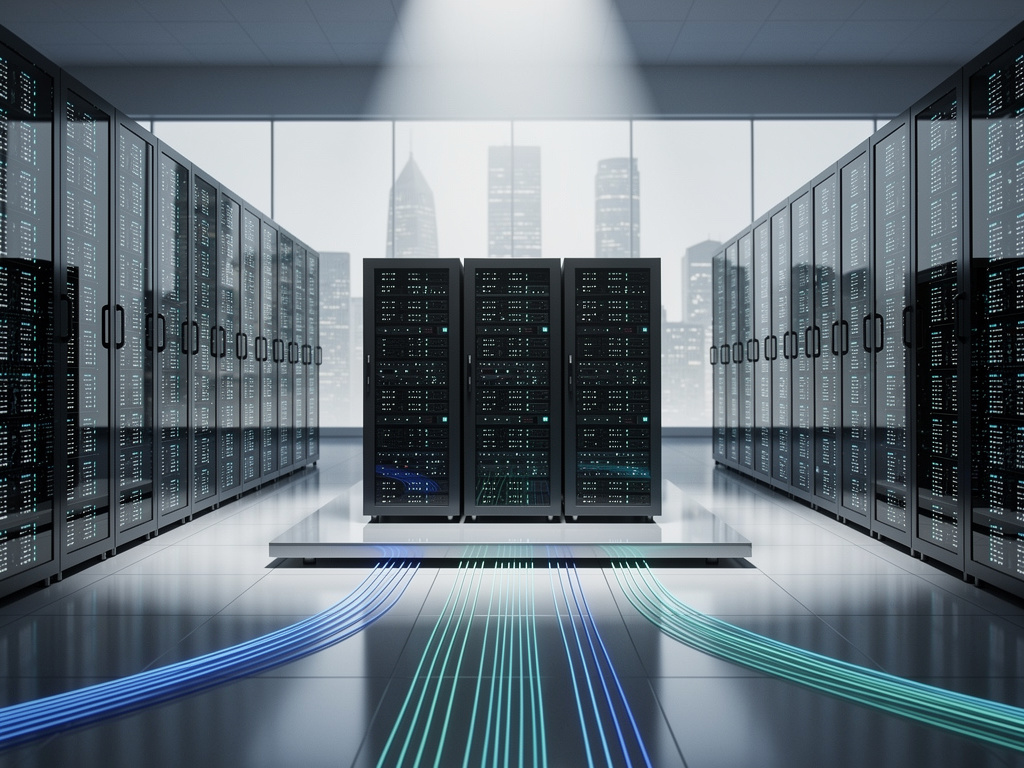
For years, Anthropic relied on cloud computing giants like Amazon Web Services and Google Cloud to power the massive computational demands of its artificial intelligence models. Now, the Claude maker is making a dramatic strategic pivot — building its own data center infrastructure from the ground up, led by a team of seasoned veterans recruited from the very companies it once depended upon.
The move signals a profound shift in how the most ambitious AI companies view their futures. Rather than remaining tenants in the cloud kingdoms of Big Tech, Anthropic is staking out its own territory in the physical world of steel, silicon, and electrical substations. It is a gamble that could cost billions of dollars but may ultimately determine whether the San Francisco–based startup can compete independently in the escalating AI arms race.
From Cloud Tenant to Infrastructure Owner: Anthropic’s Strategic Transformation
According to The Information, Anthropic has assembled a formidable team of former Google executives to spearhead its data center ambitions. The effort is being led by individuals who spent years building and operating some of the world’s most sophisticated computing infrastructure at Google, giving Anthropic a rare depth of institutional knowledge in a domain where mistakes can be extraordinarily costly. The recruitment of these veterans underscores the seriousness with which Anthropic’s leadership — co-founded by former OpenAI executives Dario and Daniela Amodei — views the need for infrastructure independence.
The decision to build proprietary data centers is not merely a technical one; it is deeply strategic. By controlling its own compute infrastructure, Anthropic can optimize hardware configurations specifically for its AI training and inference workloads, negotiate directly with chip suppliers like Nvidia and potentially custom silicon providers, and reduce its long-term dependence on cloud providers who are simultaneously competitors in the AI model market. Amazon, which has invested billions in Anthropic, also operates AWS — creating a complex dynamic where Anthropic’s biggest backer is also a platform landlord with its own AI ambitions.
The Google Brain Drain Powering Anthropic’s Infrastructure Push
The ex-Google executives joining Anthropic bring experience from one of the most prolific data center builders in history. Google operates dozens of data centers across the globe and has spent decades refining the art of building hyperscale computing facilities — from custom server designs to innovative cooling systems and power management techniques. As reported by The Information, the hires include individuals with deep expertise in site selection, construction management, and the intricate logistics of securing power supply agreements — one of the most critical bottlenecks in data center development today.
This talent migration from Google to Anthropic is part of a broader pattern in the AI industry, where startups are aggressively recruiting infrastructure specialists from established tech giants. The demand for professionals who understand the physical realities of building and operating data centers has surged as AI training runs consume ever-larger quantities of electricity and computing power. Training a frontier AI model now requires clusters of tens of thousands of GPUs running for months, generating enormous heat and consuming power equivalent to small cities.
The Power Bottleneck: Why Securing Energy Is the New AI Battlefield
Perhaps the single greatest challenge facing Anthropic’s data center plans is securing adequate power supply. Across the United States, utilities are struggling to keep pace with the explosive demand for electricity driven by AI data centers, electric vehicle adoption, and the reshoring of manufacturing. In many regions, wait times for new grid connections have stretched to several years, creating a fierce competition among tech companies for available power capacity.
Anthropic’s infrastructure team will need to navigate this constrained environment, potentially exploring creative solutions such as co-locating near existing power plants, investing in on-site generation, or partnering with renewable energy developers. Other AI companies have already begun pursuing unconventional power strategies — Microsoft has signed a deal to restart a unit at Three Mile Island nuclear plant, while Google and Amazon have both invested in nuclear energy startups. For Anthropic, which has positioned itself as a safety-focused AI company, the energy sourcing decisions will carry both operational and reputational significance.
A Multi-Billion-Dollar Gamble in a Capital-Intensive Race
Building data centers from scratch is an enormously capital-intensive undertaking. A single hyperscale facility can cost upward of $1 billion to construct and equip, and Anthropic would likely need multiple such facilities to support its growing model training and inference needs. The company has raised substantial funding — including a reported $8 billion commitment from Amazon and additional investments from Google and other backers — but the financial demands of becoming an infrastructure owner represent a fundamentally different cost structure than renting cloud capacity on demand.
The economics, however, may favor ownership over the long term. Cloud computing margins are substantial — AWS, for example, consistently generates operating margins above 30% — meaning that companies spending billions annually on cloud services are effectively paying a significant premium for the convenience and flexibility of renting. By building its own facilities, Anthropic could potentially reduce its per-unit compute costs dramatically, freeing up resources for research and development. This calculus has already driven other major AI players, including Elon Musk’s xAI, to pursue their own data center construction projects.
xAI, OpenAI, and the Broader Industry Trend Toward Vertical Integration
Anthropic is far from alone in its infrastructure ambitions. Elon Musk’s xAI built its massive “Colossus” data center in Memphis, Tennessee, at a remarkable pace, assembling 100,000 Nvidia GPUs in a matter of months. OpenAI has been exploring its own data center plans and has partnered with SoftBank on the Stargate project, a proposed $500 billion AI infrastructure initiative. Meta, meanwhile, has been building custom data centers for years and recently announced plans to spend more than $60 billion on AI infrastructure in 2025 alone.
The trend toward vertical integration reflects a growing recognition that control over physical infrastructure is becoming a decisive competitive advantage in AI. Companies that own their compute can iterate faster on hardware configurations, avoid supply chain disruptions caused by cloud provider allocation decisions, and maintain greater security over their proprietary model weights and training data. For Anthropic, which has made AI safety a central part of its brand identity, physical control over its infrastructure also provides an additional layer of security against potential model theft or unauthorized access.
The Complex Relationship With Amazon and Google
Anthropic’s move toward infrastructure independence creates a fascinating tension with its two largest corporate backers. Amazon has invested approximately $8 billion in the company and offers Claude models through AWS’s Bedrock service. Google, which has invested around $2 billion, similarly distributes Anthropic’s models through Google Cloud. Both companies benefit from the arrangement by offering their cloud customers access to one of the most capable AI models on the market, but both also compete directly with Anthropic through their own AI offerings — Amazon’s Nova models and Google’s Gemini.
By building its own data centers, Anthropic would reduce its reliance on these cloud platforms for its most critical workloads — particularly the enormously expensive process of training new frontier models. This doesn’t necessarily mean Anthropic would abandon its cloud partnerships entirely; inference workloads serving enterprise customers through AWS and Google Cloud could continue on those platforms. But the training infrastructure — the crown jewels of any AI company’s operations — would increasingly reside on Anthropic-controlled hardware, giving the company greater autonomy and negotiating leverage.
What Anthropic’s Infrastructure Play Means for the Future of AI Competition
The implications of Anthropic’s data center push extend well beyond the company itself. If successful, it would demonstrate that well-funded AI startups can break free from the gravitational pull of Big Tech’s cloud platforms and compete as vertically integrated entities. This could inspire other AI companies to pursue similar strategies, potentially reshaping the economics of the entire cloud computing industry by reducing the captive customer base that has fueled the extraordinary growth of AWS, Azure, and Google Cloud.
For Anthropic, the stakes could not be higher. The company is locked in a fierce competition with OpenAI, Google DeepMind, and a growing roster of well-funded challengers to build the most capable and safest AI systems. In this race, access to compute is not merely a supporting factor — it is the fundamental resource upon which everything else depends. By betting billions on its own infrastructure, Anthropic is making a declaration that it intends to be not just an AI model provider, but a fully independent AI powerhouse capable of controlling its own destiny from the chip to the cloud.
The ex-Google veterans now leading this effort understand better than almost anyone the complexity of what lies ahead. Building a data center is not just a construction project; it is an ongoing operational challenge that requires managing power systems, cooling infrastructure, network architecture, hardware refresh cycles, and the myriad logistical details that keep thousands of servers running around the clock. Whether Anthropic can execute on this vision while simultaneously pushing the boundaries of AI research will be one of the most consequential business stories in technology over the coming years.


 WebProNews is an iEntry Publication