
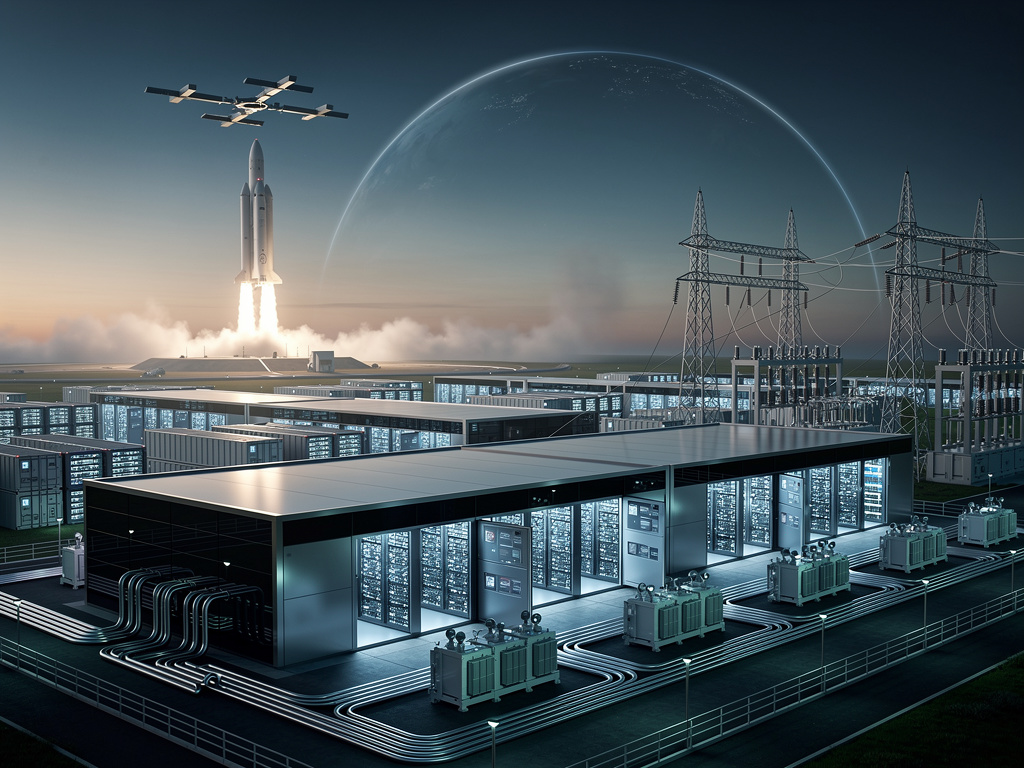
Elon Musk once called Anthropic a misanthropic company. Now one of his ventures stands to collect more than $40 billion from it.
Anthropic has agreed to pay xAI $1.25 billion each month for access to the full output of Colossus 1. The supercluster in Memphis, Tennessee, packs over 220,000 Nvidia GPUs and more than 300 megawatts of capacity. The arrangement runs through May 2029. Early months carry a discount while ramp-up completes. Total payments could exceed $40 billion.
Details surfaced this week in SpaceX’s S-1 filing ahead of its planned IPO. The document frames the pact as a way to monetize unused infrastructure. “It allows us to monetize unused compute capacity in our infrastructure,” SpaceX wrote. The company added it expects more such contracts. Either party can walk away with 90 days’ notice.
News of the deal first broke earlier in May. xAI, now folded into SpaceX operations, offered Anthropic every watt from Colossus 1. The AI lab plans to channel the added power into higher limits for Claude Pro, Claude Max and its API customers. xAI’s announcement described Colossus 1 as one of the world’s largest and fastest-deployed AI supercomputers, built in record time with dense clusters of H100, H200 and GB200 accelerators.
Anthropic co-founder and chief compute officer Tom Brown signaled further expansion. On X he wrote that the company is scaling up on Nvidia GB200 capacity in Colossus 2 throughout June. The original announcement also noted Anthropic’s interest in partnering on multiple gigawatts of orbital AI compute. SpaceX positioned itself as uniquely qualified. “The compute required to train and operate the next generation of these systems is outpacing what terrestrial power, land, and cooling can deliver,” the statement read. Space-based systems could tap near-limitless solar power with reduced earthly impact, it argued, if engineering hurdles fall.
But the financial scale commands attention first. Fifteen billion dollars a year. That figure dwarfs many enterprise software contracts. It underscores a simple truth. In frontier AI, access to silicon and electricity now dictates progress more than algorithms alone. Anthropic’s own growth has been explosive. The company recently projected its first profitable quarter. Demand for Claude, especially its coding features, has strained existing infrastructure. Additional partnerships with Google and Amazon provide cloud capacity, yet dedicated clusters deliver the consistent performance needed for large-scale training and inference.
xAI, for its part, appears to have built ahead of immediate needs. Reports following the initial announcement suggested the company used only about 11 percent of Colossus 1 before the lease. Grok usage has reportedly declined in recent months. The arrangement lets xAI recover capital while retaining Colossus 2 for its own models. Simon Willison captured a common early misconception in his notes on the deal. Many assumed xAI was exiting model development. In reality it simply shifted workloads. Willison’s analysis highlighted that xAI kept the larger follow-on cluster.
The deal carries risks for both sides. Termination clauses give flexibility. Yet dependence on a competitor’s hardware introduces potential friction. Musk’s past criticisms of Anthropic’s safety approach are well documented. The filing itself reveals xAI’s heavy burn rate. One related TechCrunch report noted the unit lost $6.4 billion last year. Infrastructure spending continues. A separate filing reference mentioned plans to acquire $2.8 billion more in equipment.
Power realities complicate matters further. Colossus 1 relies on gas turbines that have drawn environmental scrutiny and local complaints about pollution. Permitting questions linger. Those constraints help explain why both companies eye space. Orbital data centers could bypass terrestrial limits on energy and land. The concept remains speculative. Still, its inclusion in the announcement signals long-term ambition beyond today’s clusters.
Industry watchers see broader patterns. AI companies race to secure supply. Nvidia chips remain the standard. Hyperscalers and specialized providers scramble to stand up new capacity. This pact positions xAI as an unexpected landlord. It also reveals how quickly economics shift. What began as rival supercomputer projects now functions as a high-stakes rental agreement.
Anthropic gains immediate scale. Subscribers should notice fewer rate limits on coding tasks and API calls. The company has doubled some usage caps already. Enterprise customers benefit most. For xAI and SpaceX the revenue stream bolsters the case for its public listing. Fifteen billion dollars annually would represent a meaningful fraction of SpaceX’s current roughly $18 billion in yearly sales.
Analysts question sustainability. Compute costs at this magnitude pressure margins even for well-funded labs. Anthropic’s projected profitability offers some reassurance. Yet the monthly check to a rival raises eyebrows. So does the orbital gambit. Both reflect the same pressure. Demand for intelligence grows faster than earthly infrastructure can expand.
Recent coverage reinforces the stakes. Axios first highlighted the $15 billion annual figure after the S-1 release. Its reporting noted the payments were lower in May and June during initial ramp. Fortune examined Anthropic’s 80-fold growth in one quarter and the resulting infrastructure crunch that pushed it toward this unlikely partner. CNBC detailed the Memphis location and the expressed interest in space-based capacity.
TechCrunch returned to the story with fresh filings. Its May 20 article tied the payments directly to the IPO document and explored the hybrid neocloud strategy. xAI builds for itself, then rents excess. The approach spreads risk. It also monetizes capital that might otherwise sit idle.
Questions remain. Will Anthropic extend beyond Colossus 1? How quickly can Colossus 2 absorb xAI’s workloads? What engineering breakthroughs must occur before orbital compute moves from concept to deployment? The answers will shape competitive dynamics for years.
One fact stands clear already. The price of progress in AI has never been higher. A $1.25 billion monthly invoice proves it. Companies that secure compute win market position. Those that cannot watch from the sidelines. This transaction shows both sides understand the scoreboard.


 WebProNews is an iEntry Publication