
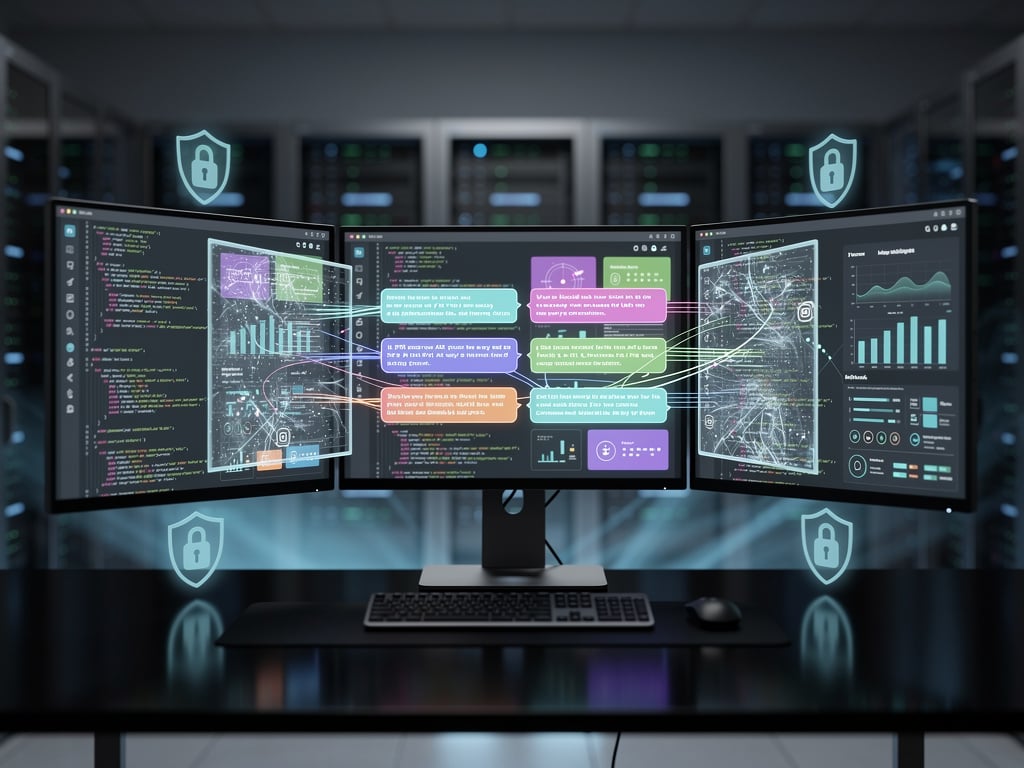
Developers have spent years chasing faster code generation. Anthropic just handed them something different. On June 18, 2026, the company added a feature to Claude Code that converts active work sessions into live, visual web pages teammates can open in any browser. These artifacts pull together everything happening inside a session. Code changes. Conversation history. Monitoring data. Root cause analysis. All of it rendered into something readable and interactive.
The move comes as AI coding tools evolve beyond simple autocompletion. They now run shell commands, edit files across a project, and pursue multi-step goals with minimal supervision. But the output of that work often stays trapped in terminal logs or chat threads. Artifacts aim to fix that gap. A single incident investigation page might combine a failing test, the exact function causing trouble, error logs from production monitors, and the agent’s step-by-step reasoning. Anyone with access sees the same picture. No more copying screenshots or writing lengthy explanations.
Pages update automatically. As Claude Code continues working, the artifact refreshes in place. Version history tracks every change. Restore a previous state with one click. A gallery view lets users browse every artifact created from their sessions. The system stays private by design. Artifacts start visible only to their creator. Sharing happens through direct links restricted to authenticated members of the same organization. No public URLs. Admins control access via organization toggles, role-based permissions, retention policies, and a compliance API for auditing usage.
Investing.com reported the launch, noting availability in beta for Claude Team and Enterprise customers through both the CLI and desktop app. The pages themselves render in standard browsers, lowering the barrier for non-technical stakeholders. Product managers. Designers. Compliance officers. They gain visibility into technical work without needing to install tools or decipher raw logs.
This capability builds on Claude Code’s existing strengths. The tool already supports parallel sessions running in separate windows, each focused on different parts of a project. Users name sessions and resume them later. Background agents handle delegated tasks and notify when complete. A plan mode forces the model to outline its approach before touching any files. Boris Cherny, who helped build the product, starts most of his sessions there. “Most of his sessions start in Plan mode,” noted Hannah Stulberg in her January 14, 2026 Substack analysis of Cherny’s techniques. The approach treats the AI like a junior employee. Align first. Then execute.
Artifacts take that structured process and make its results visible across teams. An engineer investigates a service outage. Claude Code explores the codebase, runs tests, checks logs. Instead of summarizing findings in a Slack thread that gets buried, the engineer publishes an artifact. The page shows the timeline, the code diffs, the data, and the recommended fix. Everyone sees updates as the investigation proceeds. The link stays stable. History preserves earlier versions.
But. Real-time collaboration carries risks. Live pages expose more context than a static pull request description. Security teams will scrutinize the compliance controls. Enterprises already running Claude Code at scale must decide how much visibility they want into agent actions. The private-by-default stance helps. Still, one mistaken share could surface sensitive architecture details.
Anthropic isn’t alone in this direction. Recent discussions on X highlight parallels with OpenAI’s Codex Sites, which also turns agent work into shareable interactive surfaces. One post from June 18 described the emerging contest clearly. “The IDE was the first battlefield. The next one is the live, shareable page.” Developers aren’t just competing on model intelligence anymore. They compete on who owns the workspace where that intelligence gets applied and communicated.
Claude Code sessions already feel different from browser-based chats. The desktop app shows the full project folder on one side, the file being edited in the center, and Claude’s terminal-like interface on the other. Changes happen in the actual filesystem. Checkpoints let users rewind both code and conversation history. Memory features, including CLAUDE.md files placed in project roots, give persistent instructions that survive across sessions. The new artifacts layer sits on top of all that accumulated context.
Early user reactions on X mix excitement with questions about adoption. One engineer posted that the feature shifts focus “from who writes code to who controls the workspace.” Another highlighted practical use cases. Pull request walkthroughs. System architecture explainers. Filterable dashboards. Release checklists. Incident timelines. Each generated from the live session rather than recreated manually after the fact.
The timing matters. Anthropic has shipped frequent updates throughout 2026. New models. Cowork, a lighter agentic tool aimed at non-coding tasks. Expanded enterprise controls. Each addition reinforces a bet that AI will handle larger portions of knowledge work. Artifacts address the obvious follow-on problem. If agents do the work, humans still need to review, approve, and learn from it. Static documents fall short when the underlying system keeps changing.
Look closer at how these pages get built. They don’t rely on generic templates. Claude Code assembles them using the exact materials present in that session. Codebase structure. Prior conversation turns. Tool outputs. Reasoning traces. The result feels less like a dashboard and more like a living memo co-authored by human and machine. That coherence could prove valuable in regulated industries where audit trails matter.
Yet challenges remain. Not every session produces something worth sharing. Engineers will need to develop judgment about when to publish. Organizations must create norms around review processes for agent-generated artifacts. Over-reliance on these pages might reduce direct conversation between team members. The technology makes information available. It doesn’t guarantee people will engage with it thoughtfully.
Anthropic positioned the beta carefully. Team and Enterprise only. Authenticated access required. Admin oversight built in. The company clearly wants enterprise customers to test the feature inside controlled environments before wider release. Feedback from those pilots will likely shape how artifacts evolve. Versioning, permissions, integration with existing project management tools. All remain open questions.
For now, the launch signals a broader shift in AI development tools. Success no longer stops at generating correct code. It extends to making the process behind that code transparent and actionable for entire organizations. Claude Code’s new capability doesn’t just produce artifacts. It turns invisible agent labor into visible, updatable team assets. Teams that learn to use them effectively may find their technical decision-making moves faster. Those that ignore them risk leaving valuable context buried in terminal history.
The artifacts feature arrives at a moment when many organizations still debate how deeply to integrate agentic coding systems. Some worry about security and quality control. Others see competitive pressure to adopt. Anthropic’s latest move gives the latter group a concrete way to share the benefits of AI work more broadly. Whether that sharing leads to better outcomes depends on execution. The pages exist. The question is who will actually open them.


 WebProNews is an iEntry Publication