
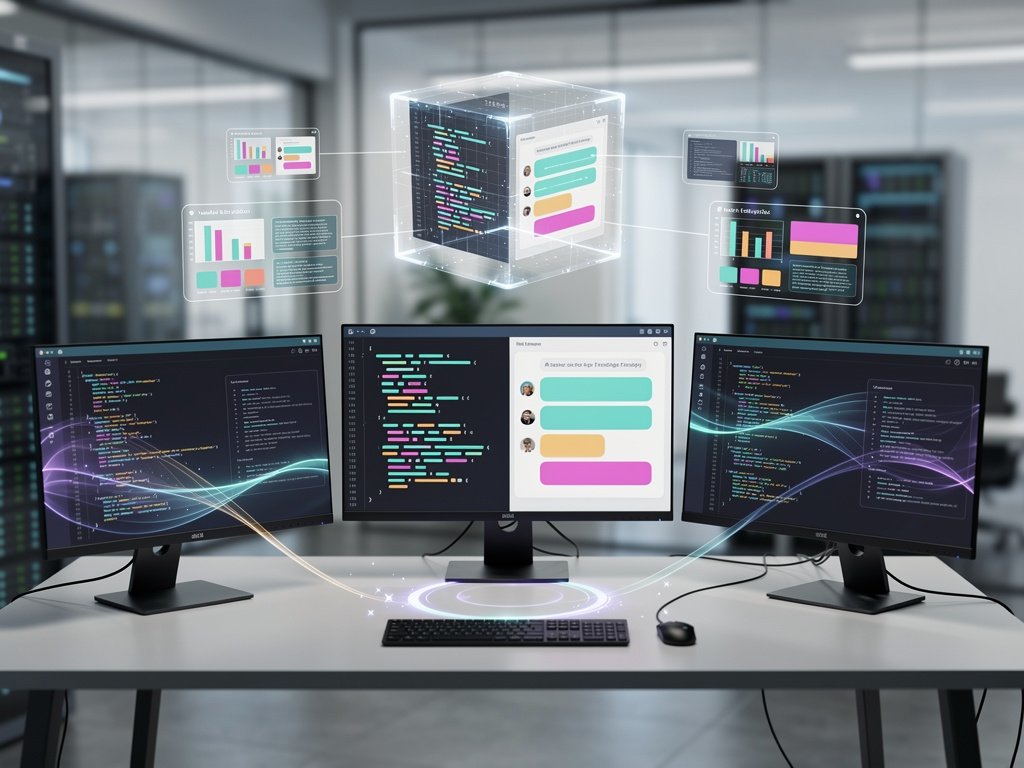
Claude Code’s Slack Debut: Anthropic’s Bold Bet on AI-Powered Coding in Team Chats
In a move that could redefine how software teams collaborate, Anthropic has unveiled an integration bringing its advanced AI coding tool, Claude Code, directly into Slack. This development, announced on December 8, 2025, allows developers to delegate complex programming tasks without leaving their chat threads, marking a significant step in embedding artificial intelligence into everyday workplace tools. The beta launch positions Claude Code as more than just a chatbot—it’s an autonomous agent capable of writing, editing, and testing code in real time, drawing on the full context of ongoing conversations.
The integration builds on Anthropic’s existing Claude app for Slack, which has already enabled quick research and content drafting within the platform. Now, by tagging the AI in coding-related messages, users can automatically route tasks to Claude Code, which then operates like a virtual junior engineer. It maintains awareness of entire codebases, creates files, refactors code, runs tests, and iterates independently. This isn’t merely about convenience; it’s about accelerating workflows in environments where developers spend much of their day communicating.
Early adopters are buzzing about the potential. For instance, in team channels, a simple mention could trigger Claude Code to fix a bug discussed in a thread or generate a pull request based on shared specifications. This seamless fusion of conversation and code execution addresses a longstanding pain point in software development: the friction between ideation in chats and implementation in separate development environments.
Seamless Integration: How Claude Code Transforms Slack into a Coding Hub
Anthropic’s announcement comes amid a broader push to make AI agents more “agentic,” meaning they can take proactive actions rather than just responding to queries. According to a report from SiliconANGLE, the tool plugs directly into a developer’s project, behaving less like a passive assistant and more like an active collaborator. This beta, available as a research preview, is part of Anthropic’s strategy to deepen its footprint in enterprise settings, where Slack is a staple for millions of users.
The timing is noteworthy. Just hours after the launch, posts on X highlighted the excitement, with users noting how this could turn Slack into an “AI pair-programmer in every channel.” Developers can now highlight messages or threads and instantly generate or edit code, all without switching apps. This integration expands on Claude’s prior Slack capabilities, such as searching conversations and pulling context, as detailed in Anthropic’s own blog post from earlier this year.
Critics and enthusiasts alike are examining the implications for productivity. In fast-paced dev teams, where Slack threads often devolve into lengthy debates over code snippets, Claude Code could streamline resolutions. Imagine a scenario where a bug report in a channel prompts the AI to not only suggest a fix but also implement and test it, then notify the team via the same thread. This level of automation draws from Anthropic’s frontier models, which power Claude’s ability to handle multifaceted tasks autonomously.
Enterprise Push: Anthropic’s Strategy Amid Rising Competition
Anthropic isn’t operating in isolation. The AI sector is heating up with rivals like OpenAI and Google advancing their own coding assistants. Yet, Anthropic’s focus on safety and reliability sets it apart, especially in enterprise adoption. A piece from TechCrunch describes this launch as part of a shift toward AI-embedded collaboration, potentially reshaping software workflows. By integrating Claude Code into Slack, Anthropic is betting that developers will embrace AI as a core team member rather than an external tool.
Details from the announcement reveal that Claude Code can read Slack messages, interpret context, and generate code accordingly. For example, if a team discusses refactoring a legacy system, the AI could draft the changes and even create a pull request. This capability stems from a $1 billion investment in Claude Code, as reported by VentureBeat, underscoring Anthropic’s commitment to agentic AI that goes beyond chat interfaces.
Industry insiders point out that this move aligns with broader trends in workplace AI. Slack, owned by Salesforce, has been integrating more AI features, and Anthropic’s addition could accelerate adoption among tech firms. Posts on X from developers express optimism, with one noting that it “lets you kick off tasks on the web or mobile,” echoing capabilities seen in other AI tools but tailored to Slack’s ecosystem.
Technical Underpinnings: What Makes Claude Code Tick in Slack
Diving deeper into the mechanics, Claude Code operates in a cloud-based virtual machine, allowing it to execute tasks without local setup. This is a step up from traditional chatbots, as it maintains state across interactions and can chat during execution, providing updates in real time. According to insights shared on X by tech analysts, this mirrors features in tools like Codex but with Anthropic’s emphasis on ethical AI.
The integration also leverages Slack’s API for seamless access to workspace data, ensuring that Claude Code can pull from conversation histories and attached files. This contextual awareness is crucial for accurate coding assistance, reducing errors that plague less integrated tools. Anthropic’s documentation highlights how this builds on their Claude API updates, which improved code parsing and SDK performance.
For security-conscious enterprises, Anthropic emphasizes its ASL-3 safety standards, which mitigate risks in AI deployments. This is particularly relevant in coding scenarios where erroneous code could introduce vulnerabilities. As one X post from a tech executive put it, this launch represents “a coding companion that behaves like a junior engineer,” complete with the ability to iterate autonomously.
Market Implications: Reshaping Developer Roles and Team Dynamics
The broader impact on the software development field could be profound. By embedding Claude Code in Slack, Anthropic is facilitating a hybrid model where human developers focus on high-level strategy while AI handles routine implementation. This could democratize coding, enabling non-experts to contribute more effectively in tech teams. A recent article from The Verge notes that the update allows automatic routing of tasks by tagging the AI, streamlining what was once a fragmented process.
However, challenges remain. Integration with existing codebases requires GitHub access or similar, which might raise privacy concerns in regulated industries. Anthropic addresses this by offering enterprise controls, but adoption will depend on how well it balances utility with data security. Feedback from X users in the beta phase suggests enthusiasm, with mentions of bug fixes and pull request generation happening “from within workplace chat.”
Looking ahead, this could influence hiring practices. If AI can act as a junior engineer, teams might prioritize senior talent for oversight, potentially shifting job markets. Anthropic’s partnerships, such as with Snowflake for data workflows, indicate a holistic approach to enterprise AI, extending beyond Slack.
Future Horizons: Expanding AI’s Role in Collaborative Work
Anthropic’s roadmap hints at further expansions. Recent news on X about Claude’s integrations with tools like Jira and Asana suggests Slack is just the beginning. The company’s “Claude for Nonprofits” initiative, as covered in various outlets, shows a commitment to diverse sectors, but the coding focus remains on tech-heavy environments.
Analysts predict this integration could boost Slack’s stickiness, making it indispensable for dev ops. With Claude Code’s ability to delegate tasks like refactoring or testing, productivity gains could be substantial. One X thread from a developer praised its mobile accessibility, allowing coding on the go—a boon for remote teams.
Yet, ethical considerations loom. As AI takes on more autonomous roles, questions about accountability arise. Who owns the code generated in a Slack thread? Anthropic’s guidelines stress human review, but the line between assistance and authorship blurs.
Real-World Applications: Case Studies and Early Feedback
Early case studies emerging from the beta reveal practical benefits. In one scenario shared on X, a team used Claude Code to automate API integrations discussed in a channel, cutting development time by hours. This hands-on utility is echoed in reports from tech publications, positioning the tool as a game-changer for agile methodologies.
Comparisons to competitors are inevitable. While GitHub Copilot offers inline suggestions, Claude Code’s conversational integration in Slack provides a more dynamic experience. Anthropic’s emphasis on multi-step reasoning allows it to handle complex projects, as seen in its ability to run tests and iterate.
Feedback loops are already forming. Users on X are requesting features like deeper version control integration, which could enhance its utility in large-scale projects. Anthropic’s responsive updates, based on past API releases, suggest these will be addressed swiftly.
Strategic Positioning: Anthropic’s Place in the AI Ecosystem
Anthropic’s valuation and rumored IPO preparations add context to this launch. News snippets indicate a $1 billion milestone for Claude Code, fueling speculation about enterprise dominance. By targeting platforms like Slack, the company is building an ecosystem where AI permeates daily work.
This integration also ties into global trends, with AI adoption accelerating in sectors from finance to healthcare. For developers, it means evolving skills toward AI orchestration rather than rote coding.
In team settings, Claude Code could foster better collaboration, turning chaotic chats into productive sessions. As one analyst noted on X, this is “the future of AI-embedded workflows,” where tools like Slack become intelligent hubs.
Evolving Challenges: Navigating Adoption and Innovation
Adoption hurdles include training users to leverage the tool effectively. Anthropic offers resources, but success depends on cultural shifts within organizations. Early X posts from beta testers highlight intuitive use, yet scaling to non-tech users remains a question.
Innovation-wise, future updates might include voice-activated coding or augmented reality interfaces, expanding beyond text chats. Anthropic’s track record with Claude’s iterations suggests rapid evolution.
Ultimately, this Slack integration exemplifies how AI is weaving into the fabric of professional life, promising efficiency while prompting reflection on human-AI synergy. As developers experiment, the true measure will be in sustained productivity lifts and creative breakthroughs enabled by this technology.


 WebProNews is an iEntry Publication