
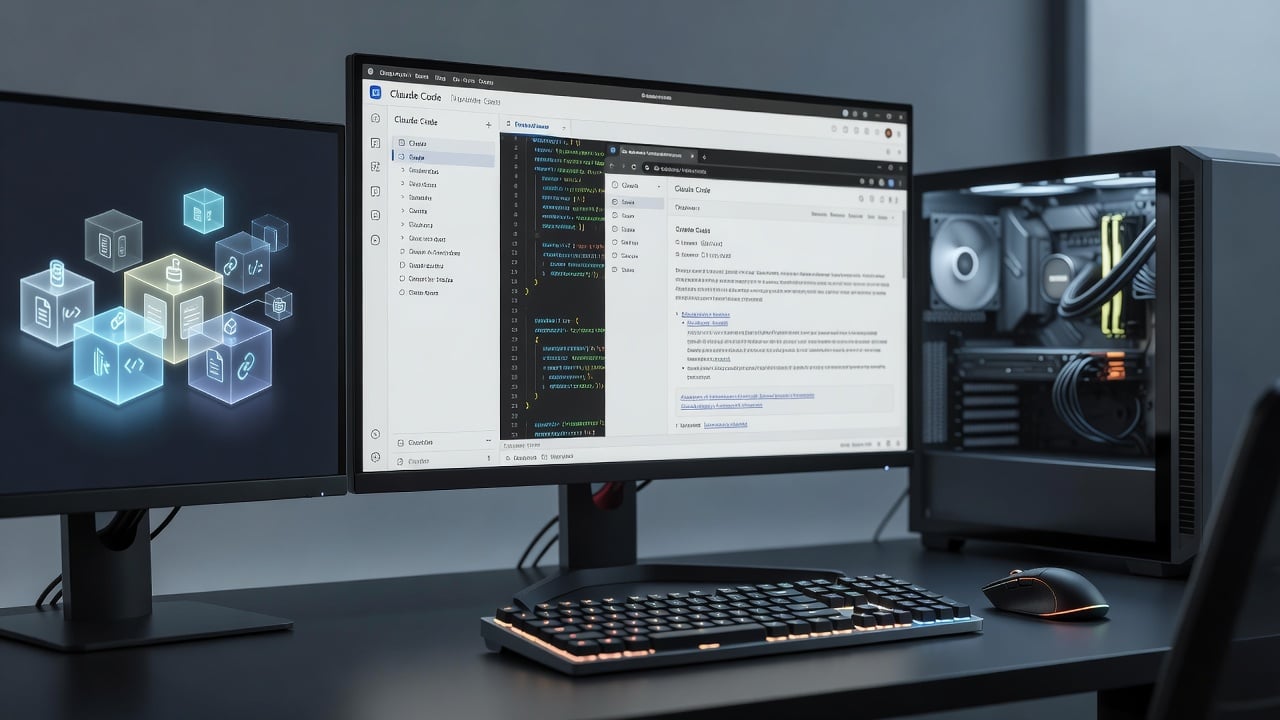
Developers waste hours bouncing between code and documentation. They juggle Chrome tabs while their AI coding assistant sits idle in another window. Anthropic just changed that equation. On July 10, 2026, the company rolled out an in-app browser for its Claude Code desktop application. The AI can now open websites, read documentation, click links and interact with web pages without ever launching a separate browser.
The feature arrives as part of ongoing efforts to make Claude Code a true agentic coding partner. No more copying URLs. No more context loss between terminal and browser. Claude handles the web directly inside its workspace. And the timing feels deliberate. Just months after introducing computer use capabilities that let the model navigate screens via screenshots, Anthropic has tightened the loop.
Digital Trends first reported the update, citing a post from the ClaudeDevs account on X. “Claude Code on desktop now has an in-app browser,” the account wrote. “Claude can pull up docs, designs, or any other site. It can read, click through, and interact the same way it does with your local dev servers. It’s sandboxed and configurable: you choose whether sessions persist.” Simple. Direct. And immediately useful.
But this isn’t just convenience. It signals a shift in how professional developers will work with AI agents. The browser pane sits alongside the code workspace. Hit Ctrl+Shift+B on Windows or Cmd+Shift+B on Mac. Websites load in tabs within the app. External links can open there too. Logins work. OAuth flows pop up as expected. The AI doesn’t just fetch text. It engages.
Claude Code itself evolved from earlier experiments in agentic programming. By March 2026, Anthropic had delivered computer use to both Claude Code and its Cowork automation tool for Pro and Max subscribers. The model could open files, run development tools, point, click and navigate screens. Builder.io explained the mechanics in detail shortly after launch. Claude sees the screen through screenshots. It asks permission before accessing applications. Users should avoid exposing sensitive financial, health or personal records. The tradeoff sits right there in plain view.
Yet the in-app browser tightens those safeguards further. It runs in a sandboxed environment with an isolated profile. This setup stays separate from any Claude Chrome extension or personal browsing data. When Claude wants to act on a site, the user sees a permission prompt. Allow. Always allow. Or deny. Those choices get stored per site and can be revoked in settings at any time. The system blocks account creation, purchases and CAPTCHA bypass unless the user explicitly approves. Control remains with the human.
Friction drops. Developers no longer lose momentum switching applications. The AI maintains context across code, terminal output and web content in one interface. Consider a typical task. A programmer asks Claude to implement a new API integration. The model opens relevant documentation in the in-app browser, reads the specs, tests endpoints and updates the codebase. All without the user managing multiple windows.
Anthropic has pushed similar ideas across its lineup. Computer use first appeared in research preview form back in late 2024 with Claude 3.5 Sonnet. The model learned to interpret screenshots, move cursors and execute clicks. Early scores on benchmarks like OSWorld showed promise though results stayed imperfect. By early 2026, the capability had matured enough for integration into Claude Code. The official product page now lists computer use alongside dynamic workflows that can spin up dozens of parallel subagents and an agent view for managing sessions.
Recent updates reflect this momentum. In June and July 2026, Claude Code added smarter navigation, better background agents, fullscreen improvements and redesigns to its web interface. Release notes tracked incremental gains. Session recaps. Custom themes. Mobile notifications when long tasks complete. The desktop experience has clearly become priority one.
Competitors watch closely. OpenAI has experimented with agents that control computers. Google built Mariner, an AI inside Chrome for tasks like automated shopping. Yet Anthropic’s approach ties the browsing directly to its coding environment. The result feels purpose-built for software professionals rather than general consumers.
Limitations persist. The in-app browser uses an isolated profile so saved logins and history don’t carry over from personal Chrome sessions. Some actions still require explicit approval. Complex sites heavy with JavaScript or anti-bot measures may behave unpredictably. And while the sandbox protects users, it also constrains what the AI can accomplish without intervention. Power comes with guardrails.
Still, the direction looks clear. AI coding tools once generated snippets and suggested fixes. They now operate as persistent coworkers that read, write, execute and browse. Claude Code’s in-app browser removes one major point of friction in that evolution. Developers spend less time managing their tools. They spend more time reviewing the agent’s work.
Industry observers tie this to broader trends in agentic systems. A March 2026 arXiv paper examined Claude Code as an agentic coding tool that runs shell commands, edits files and calls external services. The authors mapped its architecture from planning loops to execution backends. Persistence mechanisms. User approvals. The in-app browser fits neatly into that framework. It expands the agent’s surface without breaking the safety model.
Enterprise adoption could accelerate. Teams already use Claude for code review, dependency updates and documentation syncs through scheduled cloud tasks. Adding reliable in-app web access makes those workflows more autonomous. A routine that checks API changes on a vendor site, updates local code and opens a pull request becomes practical. No human needed to copy links or switch tabs.
Not everyone will rush to enable it. Security-conscious organizations may keep the feature disabled for certain projects. The permission system helps but requires trust. Anthropic emphasizes responsible use. Its documentation stresses that computer use and related features remain experimental in some respects. Results improve with feedback.
Even so, the July update feels like a quiet milestone. Tab management has plagued developers since the early days of web frameworks. AI agents promised to handle more of the grunt work. Now one of the leading agents can browse without leaving home. The desktop becomes less fragmented. The AI becomes more embedded.
Future iterations will likely expand capabilities. Better handling of authenticated sessions. Deeper integration with local development servers. Perhaps even collaborative browsing where multiple agents coordinate across tabs. For now, the basics deliver immediate value. Fewer windows. Better context. Faster iteration.
Professional coders have tested similar ideas through third-party extensions and open source projects. Some wired headless browsers to their agents via protocols like MCP, Anthropic’s open standard for tool integration. The official in-app solution brings consistency, security reviews and direct product support. It raises the bar.
Claude Code continues to accumulate features at a rapid clip. From its origins as a CLI harness to a full desktop environment with built-in browsing, the product mirrors the industry’s move toward agents that act across the entire software lifecycle. Code generation matters. Orchestration and reliable execution matter more.
The in-app browser won’t replace Chrome for every task. General web surfing still belongs in dedicated applications. Yet for the specific intersection of research, documentation, API exploration and coding, it solves a real pain point. Developers will notice the difference immediately. Less distraction. More flow.
Anthropic hasn’t issued a major executive statement on this particular release. The change appeared in documentation and spread through developer channels first. That fits the product’s focus. It targets working engineers who value practical improvements over marketing announcements. The ClaudeDevs post captured the spirit. Useful today. Configurable. Safe by default.
As AI agents grow more capable, interfaces must evolve with them. The days of treating the web as a separate domain from the code editor are fading. Claude Code’s move integrates them. Other tools will follow. The question shifts from whether agents can browse to how naturally they do so inside the tools developers already open every morning.
For teams building with Claude, the update lands at the right moment. Summer 2026 brings longer projects, tighter deadlines and higher expectations for AI assistance. An in-app browser won’t write the code for them. It will, however, remove one barrier between intention and execution. That counts for something in daily practice.


 WebProNews is an iEntry Publication