
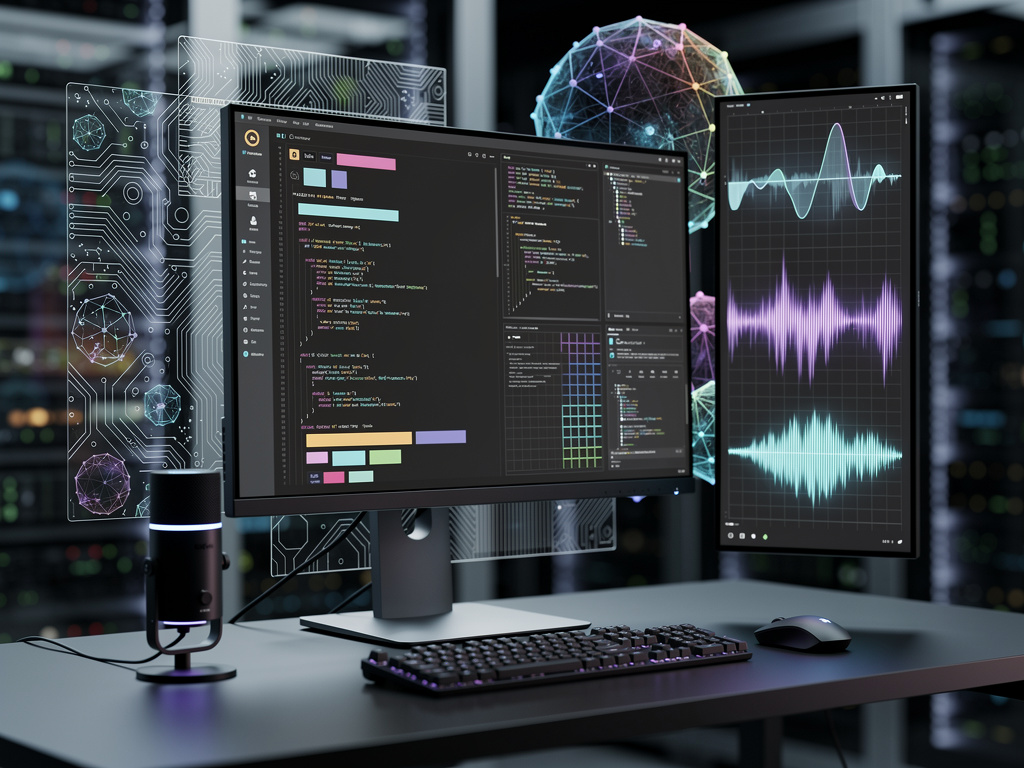
Anthropic, the AI safety company behind the Claude family of large language models, is rolling out a voice mode for Claude Code — its command-line coding assistant — in a phased release that signals a broader ambition to change the way professional developers interact with AI tools. The feature, which allows programmers to speak naturally to their coding assistant rather than type prompts, represents a significant step in the evolution of AI-assisted software development and raises fresh questions about where the boundaries between human programmers and their AI counterparts are heading.
According to a report from 9to5Mac, the voice mode is being introduced gradually, starting with a subset of Claude Code users before expanding to the broader developer community. The rollout strategy mirrors approaches taken by other major AI companies when introducing features that fundamentally alter user workflows — a measured deployment designed to gather feedback and refine the experience before it reaches millions of developers worldwide.
From Keyboard to Conversation: What Voice Mode Actually Does
Claude Code, for those unfamiliar, is Anthropic’s terminal-based AI coding tool that allows developers to generate, edit, debug, and refactor code through natural language instructions typed into a command-line interface. It has gained traction among professional developers who prefer working in the terminal over graphical IDE extensions. The addition of voice mode layers spoken interaction on top of this existing text-based workflow, enabling developers to dictate instructions, ask questions about their codebase, and receive spoken responses — all without lifting their hands from the keyboard or, in some cases, needing the keyboard at all.
The practical implications are significant. A developer debugging a complex function could simply say, “Walk me through what this authentication middleware is doing and tell me why the token validation is failing,” rather than typing out the same request. For code reviews, a programmer might verbally ask Claude to explain architectural decisions in a pull request while simultaneously reviewing the diff on screen. The voice interface effectively turns Claude Code into something closer to a pair programming partner that can be spoken to naturally, rather than a text-based tool that requires carefully constructed prompts.
Why Voice Matters More Than It Seems for Developer Tools
The move toward voice interaction in developer tools may initially seem like a convenience feature, but industry analysts suggest it reflects a deeper shift in how AI companies are thinking about developer productivity. Typing detailed prompts to an AI coding assistant introduces friction — it pulls a developer’s attention away from the code itself and into the act of composing instructions. Voice interaction, by contrast, allows developers to maintain visual focus on their code while communicating with the AI assistant in parallel.
This is not an entirely new concept. GitHub’s Copilot has experimented with voice-based features, and several startups in the AI coding space have explored multimodal interfaces. But Anthropic’s decision to build voice directly into Claude Code — a tool specifically designed for power users comfortable in the terminal — suggests the company believes voice interaction is ready for serious professional use, not just casual experimentation. The gradual rollout, as reported by 9to5Mac, indicates Anthropic is being deliberate about ensuring the feature meets the high standards that professional developers expect.
The Competitive Pressure Behind the Feature
Anthropic’s timing is notable. The company is operating in an increasingly crowded market for AI-powered developer tools. OpenAI has been aggressively expanding the capabilities of its Codex and ChatGPT-based coding tools, while Google’s Gemini models are being integrated more deeply into development workflows through partnerships and direct IDE integrations. Microsoft-owned GitHub continues to iterate on Copilot, which remains the most widely adopted AI coding assistant by user count.
In this environment, Anthropic has carved out a niche by targeting developers who value precision, safety, and deep contextual understanding of large codebases — qualities that Claude Code has been praised for in developer communities. Adding voice mode is a way to differentiate further, offering a workflow that competitors have not yet matched in a terminal-based context. It also positions Claude Code as a more complete assistant — one that can handle the full spectrum of developer communication, from quick verbal queries to detailed written code generation.
Technical Considerations and the Challenge of Accuracy
Building a reliable voice interface for coding presents unique technical challenges that go beyond standard speech-to-text conversion. Programming involves highly specific terminology, variable names, function signatures, and syntax that general-purpose speech recognition models often struggle with. A developer saying “camelCase variable getUserById” needs the system to understand not just the words but the precise formatting conventions of the programming language in use.
Anthropic has not publicly disclosed the full technical details of how voice mode handles these challenges, but the gradual rollout suggests the company is actively refining the system based on real-world usage data. The phased approach allows Anthropic to identify edge cases — such as how the system handles multiple programming languages in a single session, or how it interprets ambiguous verbal instructions — before exposing the feature to its entire user base. Early feedback from developers in the initial rollout cohort will likely shape the final version of the feature significantly.
Accessibility and the Broader Developer Community
Beyond productivity gains, voice mode has meaningful accessibility implications. Developers with repetitive strain injuries, carpal tunnel syndrome, or other conditions that make extended typing painful or impossible stand to benefit enormously from a reliable voice-based coding interface. The programming profession has long struggled with these occupational health issues, and tools that reduce the physical demands of the job could open doors for developers who have been forced to limit their working hours or step away from hands-on coding entirely.
The accessibility angle also extends to developers who are visually impaired or who work in environments where typing is impractical. A voice-based interface to a powerful AI coding assistant could enable new workflows — dictating code changes during a commute, reviewing architecture decisions during a walk, or interacting with a codebase in situations where a screen and keyboard are not readily available. While these use cases may seem niche, they represent real opportunities for a segment of the developer population that has been underserved by traditional tooling.
What This Means for the Future of AI-Assisted Development
Anthropic’s introduction of voice mode to Claude Code fits into a larger trend of AI coding tools becoming more multimodal. The trajectory is clear: the next generation of developer tools will not be limited to text input and text output. They will incorporate voice, visual context (such as screenshots of error messages or UI mockups), and potentially even gesture-based interaction as augmented reality and spatial computing platforms mature.
For now, the immediate question is whether voice mode will prove practical enough for daily use by professional developers, or whether it will remain a supplementary feature used in specific situations. The answer will depend largely on the accuracy and responsiveness of the voice recognition, the quality of Claude’s spoken responses, and how well the feature integrates into existing terminal-based workflows without disrupting them.
Anthropic’s Measured Approach Reflects Broader Industry Caution
The gradual rollout strategy is worth examining in its own right. In an industry where companies frequently rush features to market to capture attention and market share, Anthropic’s phased approach reflects its broader organizational philosophy of prioritizing safety and reliability. The company, founded by former OpenAI researchers Dario and Daniela Amodei, has consistently positioned itself as the more cautious alternative to competitors willing to move fast and iterate publicly.
This caution has sometimes been criticized as overly conservative, but in the context of a feature that professional developers will rely on for their daily work, it may prove to be the right approach. A voice mode that misinterprets instructions and generates incorrect code could be worse than no voice mode at all — particularly in security-sensitive or production-critical contexts where coding errors carry real consequences. By rolling out gradually and collecting feedback, Anthropic is betting that getting the feature right matters more than getting it out first.
As the AI-assisted development space continues to mature, Anthropic’s voice mode for Claude Code will serve as an important test case for whether spoken interaction can become a first-class input method for professional software development — or whether it will remain a novelty that developers try once and abandon in favor of the keyboard. The early signs, based on the company’s track record and the thoughtfulness of its rollout strategy, suggest Anthropic is serious about making voice work. The developer community will be the ultimate judge.


 WebProNews is an iEntry Publication