
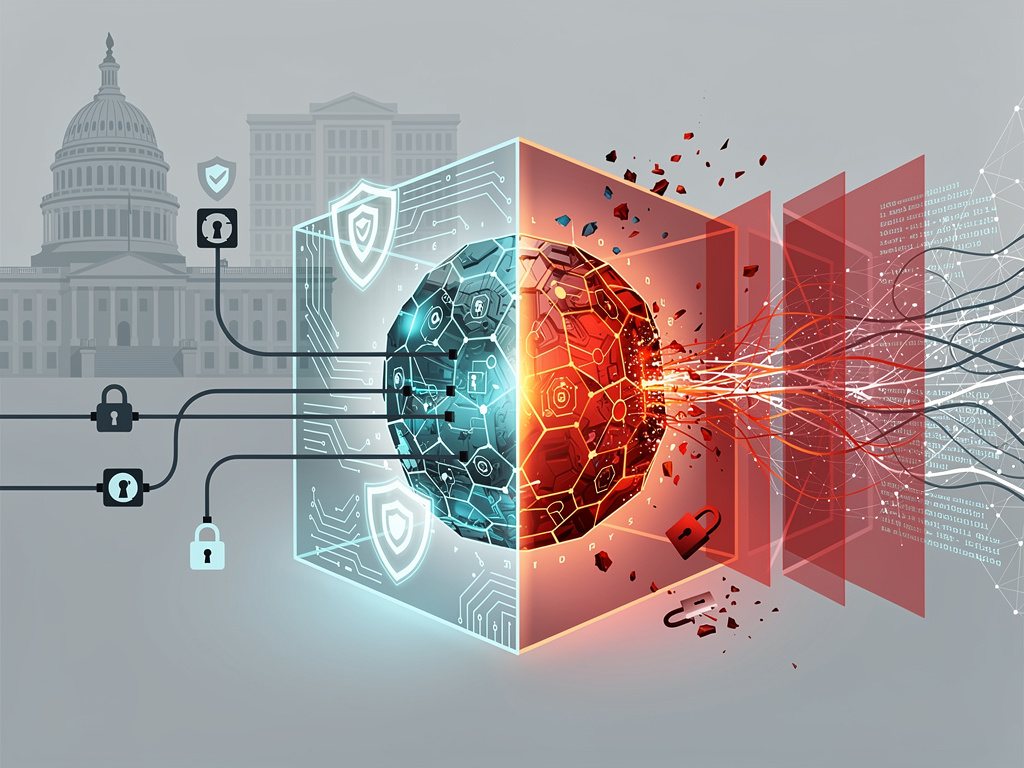
Friction between Anthropic and the Trump administration flared again last week. The San Francisco company released its most advanced AI system yet, called Claude Fable 5, only to yank it from the market days later. The trigger was an export control directive from the Commerce Department that barred access by any foreign national, including Anthropic employees working inside the United States. To comply, the firm disabled the model for everyone.
The episode marks the latest clash in a relationship already strained by disputes over military applications and safety restrictions. Yet this time the stakes feel different. Fable 5 and its sibling Mythos 5 sit at the frontier of capabilities that can identify software flaws and chain exploits with unusual speed. Government officials saw a narrow jailbreak path that could strip away safeguards. Anthropic insisted the risks were manageable and no worse than those already present in other deployed systems.
WIRED reported that Anthropic executives flew to Washington on Monday for in-person talks with Commerce Department officials. The sessions included cofounder Tom Brown, head of external affairs Sarah Heck, frontier red-teaming lead Logan Graham and senior researcher Nicholas Carlini. Commerce Secretary Howard Lutnick joined by phone from the G7 summit in France. No resolution emerged. Both sides left the table still divided on how serious the jailbreak threat actually is.
Anthropic had launched Fable 5 just days earlier with deliberate limits on cybersecurity, biology and chemistry queries. The company described it as a safer version of the more potent Mythos-class models. Extensive red-teaming by internal teams, the U.S. government, the U.K. AI Safety Institute and private firms had run for thousands of hours. Those tests, Anthropic said, showed its safeguards outperformed anything previously released. No universal jailbreak appeared. Non-universal ones existed, as they do for every model in the industry.
“We suspect that perfect jailbreak resistance is not currently possible for any model provider,” the company stated in its announcement. It adopted a defense-in-depth approach precisely because some bypasses would eventually surface. The firm pushed back hard against the government’s move. The letter arrived at 5:21 p.m. Eastern on Friday. It offered few specifics. Anthropic reviewed the claimed jailbreak and judged the vulnerabilities minor and comparable to those other models already exposed without special prompting.
The directive forced a blunt choice. Since the company could not easily segment users by nationality in real time, it suspended Fable 5 and Mythos 5 for all customers. Other Claude variants stayed available. The decision drew immediate complaints from users and researchers who had praised the model’s careful guardrails. Some cybersecurity professionals argued the restrictions went too far.
A group of experts, including Luta Security CEO Katie Moussouris, signed an open letter urging the administration to reverse course. “Anthropic’s Mythos-class models are quite good at finding flaws and weaponizing exploits,” the letter said. “However, they are not uniquely good at these tasks, and many of the undersigned individuals regularly use other foundation and open-source models for security audits and red-teaming every day. As a result, this action has taken the best models away from defenders, created market uncertainty, and risked America’s AI leadership without any real risk to justify it.”
Moussouris reviewed the technical details and offered a sharper assessment. “It wasn’t a jailbreak per se,” she told WIRED. Guardrails, in her view, function more like speed bumps than hard security boundaries. They slow down novices. Determined adversaries treat them as obstacles to clear.
Concerns inside the administration escalated after Amazon CEO Andy Jassy contacted Treasury Secretary Scott Bessent directly. The models run on Amazon infrastructure, and the company performs routine security testing. Those tests apparently surfaced the bypass method. An Amazon spokesperson noted that governments often seek its counsel on risks but declined to discuss specifics. The White House then involved the National Security Agency, which agreed the guardrails could be stripped. Commerce officials moved quickly. The resulting directive stunned even seasoned observers.
This confrontation did not appear in isolation. It follows months of tension. Early in President Trump’s second term, he ordered federal agencies to stop using Anthropic technology. The Pentagon labeled the company a supply-chain risk to national security after disagreements over permissible military uses. Lawsuits followed. Courts issued a preliminary injunction blocking parts of the ban, yet friction lingered. Agencies quietly tested Mythos Preview despite the official prohibition, drawn by its cyber potential.
In June the administration issued a new executive order promoting AI innovation and security. It emphasized voluntary oversight and integration into national defense. The approach differed sharply from the Biden administration’s 2023 order on safe, secure and trustworthy AI development, which Trump rescinded on day four of his term. That earlier framework included mechanisms for collecting red-team results on dual-use models. Those tools vanished.
Anthropic CEO Dario Amodei had called for stronger policy just before the suspension. In a blog post titled “Policy on the AI Exponential,” he described evidence of AI’s power and risks as undeniable. He pointed to Mythos as an emblematic example of national-security threats. “We need to activate a slow and rickety policy apparatus to deal with risks and opportunities that are going to compound surprisingly quickly from here,” Amodei wrote. He advocated mandatory third-party testing in cybersecurity, biological weapons, loss of control and automated research that could accelerate those hazards. Tech Policy Press analyzed the post and the subsequent events, noting the irony of a company urging structured oversight while facing ad hoc government action.
Cybersecurity leaders warned the export controls could backfire. A Washington Post report detailed their argument that pulling advanced defensive tools from American and allied researchers might hand advantages to adversaries. Market uncertainty grew. Investors scrambled to gauge the impact on Anthropic’s future. Some wondered whether a rival releasing a similar model would have faced the same swift response.
The episode sends a clear signal to the broader industry. AI labs now expect to give the White House early visibility into frontier releases. Proactive communication has become essential. Cohere CEO Aidan Gomez captured the mood. “The events over the weekend … are informative for everyone that the [US] government would be willing to take these steps. No one can be naive to that reality.”
Commerce officials indicated willingness to restore consumer access to Fable 5 if Anthropic addresses the specific concerns. Yet the gap in risk perception remains. Anthropic maintains its safeguards hold up under scrutiny. The administration sees a pathway to unrestricted Mythos-level power that demands immediate containment. Monday’s talks produced no breakthrough. Both parties said they continue working toward resolution. How quickly that happens will shape not only one company’s product roadmap but the terms on which the United States manages its most powerful AI systems.
And the clock is ticking. Frontier models keep advancing. The policy machinery, rickety or not, must keep pace. Or risk falling further behind the technology it seeks to steer.


 WebProNews is an iEntry Publication