
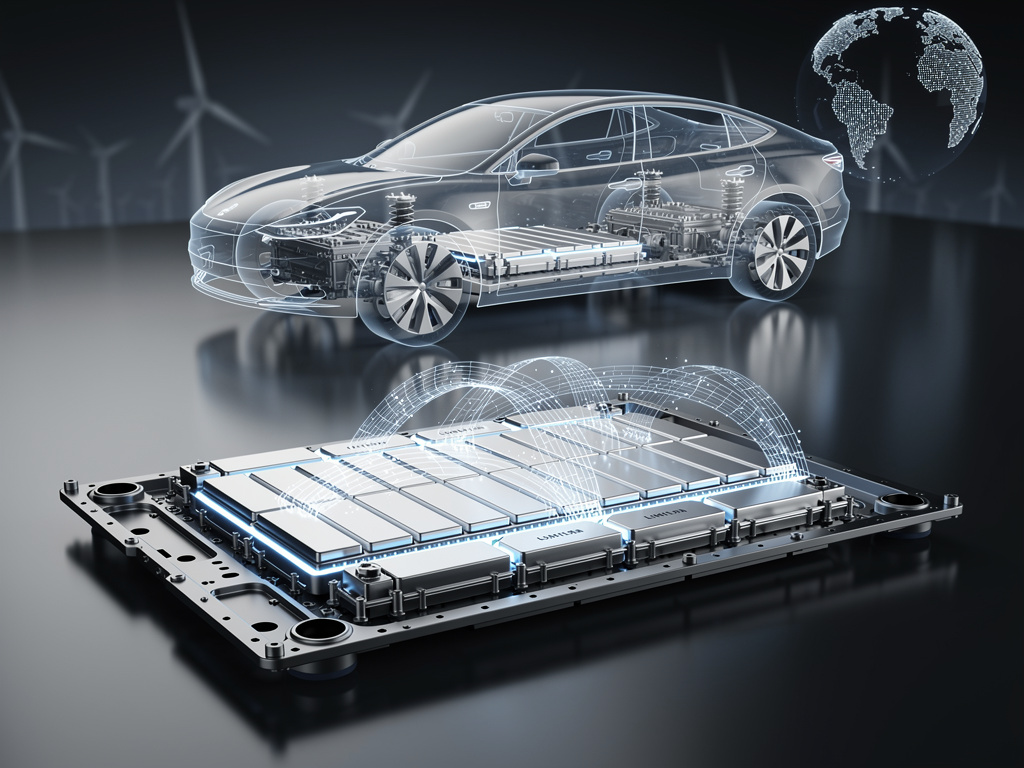
Revolutionizing EV Range: The Anode-Free Battery Breakthrough Set to Electrify the Future
In the rapidly evolving world of electric vehicles, where range anxiety remains a persistent hurdle for widespread adoption, a groundbreaking advancement in battery technology is capturing the attention of engineers, automakers, and investors alike. Researchers have unveiled an innovative anode-free battery design that promises to dramatically enhance energy density, potentially doubling the driving range of EVs without increasing battery size or weight. This development, detailed in a recent report from Digital Trends, leverages stabilized lithium metal to achieve unprecedented performance metrics, offering not just longer ranges but also lighter battery packs and superior operation in cold weather conditions.
At the heart of this innovation is the elimination of the traditional anode, a component that has long been a limiting factor in lithium-ion batteries. Conventional batteries rely on graphite anodes, which store lithium ions but add significant weight and volume while restricting energy capacity. By removing the anode entirely and using stabilized lithium metal directly, the new design allows for a more efficient packing of energy-storing materials. According to the Digital Trends article, this approach has resulted in record-breaking energy density, which could translate to EVs traveling hundreds of miles farther on a single charge. Industry insiders are buzzing about the implications, as this could address one of the primary barriers to EV market penetration: the fear of running out of power midway through a journey.
Beyond range extension, the anode-free design brings additional benefits that could reshape vehicle engineering. Lighter battery packs mean improved overall vehicle efficiency, potentially leading to better handling, reduced energy consumption, and lower manufacturing costs. Moreover, the technology’s enhanced cold-weather performance is a game-changer for regions with harsh winters, where current batteries often suffer from reduced capacity and slower charging times. As EV adoption accelerates globally, these attributes position the anode-free battery as a pivotal step toward making electric mobility more practical and appealing to a broader audience.
Unlocking the Science Behind Stabilized Lithium Metal
Delving deeper into the technical underpinnings, the stabilization of lithium metal is key to this battery’s success. Lithium metal has long been prized for its high energy potential but plagued by instability issues, such as dendrite formation that can cause short circuits and safety hazards. The new design incorporates advanced electrolytes and protective coatings to mitigate these risks, ensuring reliable performance over numerous charge cycles. Insights from GreenCars highlight how such innovations align with broader trends in solid-state and sodium-ion chemistries, which are also aimed at boosting range and charging speeds while emphasizing sustainability.
This breakthrough isn’t occurring in isolation; it’s part of a wave of battery advancements documented in various industry analyses. For instance, BloombergNEF’s Electric Vehicle Outlook forecasts that electrification trends, combined with shared mobility and autonomous driving, will drive demand for higher-performance batteries. The anode-free approach could accelerate these projections by enabling EVs to compete more directly with internal combustion engines in terms of convenience and cost. Engineers familiar with the field note that achieving record energy density without an anode requires precise control over lithium deposition, a feat that has eluded researchers for years until recent material science breakthroughs.
Comparisons with existing technologies underscore the potential impact. Traditional lithium-ion batteries typically offer energy densities around 250-300 Wh/kg, but the anode-free design pushes this toward 400 Wh/kg or higher, according to preliminary data. This leap could mean an EV with a current 300-mile range extending to 600 miles or more, fundamentally altering trip planning for drivers. As reported in the GreenCars piece, the integration of advanced recycling methods with such batteries could further reduce environmental footprints, making them not just more efficient but also greener.
Industry Reactions and Market Implications
The announcement has sparked enthusiastic discussions across social platforms and industry forums. Posts on X, formerly Twitter, from technology enthusiasts and experts reflect a mix of optimism and cautious excitement about similar range-boosting innovations. Users have shared anecdotes of batteries achieving over 745 miles in real-world tests, echoing sentiments that these developments could end range anxiety once and for all. While such posts aren’t definitive evidence, they illustrate growing public interest in EV battery evolution, with many pointing to rapid progress in electrode designs and electrolytes.
Automakers are already taking note, with potential partnerships and investments on the horizon. A report from IEA’s Global EV Outlook 2025 analyzes market trends, noting that electric car sales are surging despite supply chain challenges for battery materials. The anode-free battery could alleviate some of these pressures by requiring fewer rare earth elements, thus stabilizing prices and supply. Industry insiders speculate that companies like Tesla or Ford might integrate similar technologies into their next-generation models, potentially disrupting the competitive dynamics in the automotive sector.
Economic ramifications extend beyond vehicles to the broader energy ecosystem. As batteries become more efficient, their applications in grid storage and renewable integration could expand, supporting a transition to cleaner power sources. The IEA report emphasizes how innovations like this contribute to global electrification goals, projecting that by 2030, EVs could account for a significant portion of new car sales if range and charging barriers are overcome.
Challenges in Scaling and Commercialization
Despite the promise, hurdles remain in bringing anode-free batteries to market. Manufacturing at scale presents technical challenges, including ensuring uniform lithium stabilization across large production runs. Experts from H.B. Fuller’s blog on battery trends discuss how adhesives and sealants play a crucial role in maintaining structural integrity, a factor that could determine the longevity of these new designs. Early prototypes have shown impressive cycle life, but real-world durability under varying conditions will be critical.
Regulatory and safety considerations also loom large. Batteries must undergo rigorous testing to meet standards set by bodies like the U.S. Department of Energy, ensuring they don’t pose fire risks or degrade prematurely. The H.B. Fuller analysis points out that while EVs have transitioned from niche to mainstream, innovations must balance performance with safety to gain consumer trust.
Furthermore, the raw material supply chain for lithium remains a bottleneck. A Reuters article on EV revolution and battery metals notes that prices for lithium, nickel, and cobalt have fluctuated amid oversupply, but demand from advanced batteries could reignite market volatility. Strategists advise that diversifying sources and investing in recycling will be essential to sustain growth.
Real-World Testing and Future Prototypes
Encouragingly, preliminary tests are yielding positive results. A solid-state battery variant, as covered in Electrek, demonstrated over 745 miles of range in a real-world scenario, hinting at the feasibility of anode-free designs in practical applications. Such milestones are building momentum, with companies preparing for public offerings to fund further development.
Looking ahead, collaborations between academia and industry are accelerating progress. The KAIST and LG Energy joint research, mentioned in X discussions, has produced electrolytes that enable 500-mile ranges, showcasing how interdisciplinary efforts can yield tangible results. These prototypes are being refined for faster charging, aiming for full recharges in under 20 minutes, which would rival gasoline refueling times.
Integration into vehicles will require redesigns of powertrains and thermal management systems. Automakers must adapt to lighter, more compact batteries, potentially leading to sleeker vehicle designs and improved aerodynamics. The Electrek report suggests that by 2027, solid-state batteries offering 1,200 km ranges could become commercially viable, setting a new benchmark for the industry.
Broader Ecosystem Impacts and Innovation Synergies
The ripple effects extend to related technologies. Advances in AI-driven range prediction, as explored in various online forums, could complement anode-free batteries by optimizing energy use based on traffic and weather data. This synergy might eliminate the need for oversized batteries, further reducing costs and environmental impact.
Investment opportunities are burgeoning, with stock recommendations from The Motley Fool highlighting EV battery companies poised for growth in 2025. Firms innovating in anode-free and solid-state tech are attracting venture capital, signaling strong market confidence.
Globally, policy support is aligning with these technological strides. Governments are incentivizing EV production through subsidies and infrastructure investments, creating a fertile ground for adoption. The Motley Fool analysis underscores how breakthroughs like this could propel certain stocks, benefiting from the intersection of innovation and policy.
Pushing Boundaries in Energy Density and Sustainability
As research intensifies, the focus is shifting toward even higher energy densities. Innovations in fullerene anodes and ultra-fast charging, detailed in Interesting Engineering, address stability issues, promising batteries that last longer and charge quicker. These complementary developments could amplify the advantages of anode-free designs.
Sustainability remains a core driver. By minimizing material use and enhancing recyclability, these batteries align with circular economy principles. The Interesting Engineering piece notes that solving anode degradation could lead to lifespans exceeding 500,000 miles, reducing waste and resource extraction.
In the broader context, this technology could influence heavy-duty applications, such as trucks and buses. Volvo Trucks’ insights on battery innovations emphasize trends like improved chemistry for commercial vehicles, where range and payload are critical.
Envisioning a Transformed Mobility Future
The anode-free battery represents a confluence of scientific ingenuity and market needs, potentially ushering in an era where EVs dominate roadways. With ongoing refinements, it could make long-distance electric travel as seamless as traditional fueling.
Challenges notwithstanding, the trajectory is clear: batteries are evolving faster than ever, driven by competitive pressures and environmental imperatives. As more prototypes hit testing grounds, the industry watches closely for the first commercial deployments.
Ultimately, this innovation underscores the relentless pursuit of better energy solutions, promising a future where electric vehicles are not just viable but superior in every metric. For industry insiders, the message is evident—adapt now or risk being left behind in the race toward electrification.


 WebProNews is an iEntry Publication