
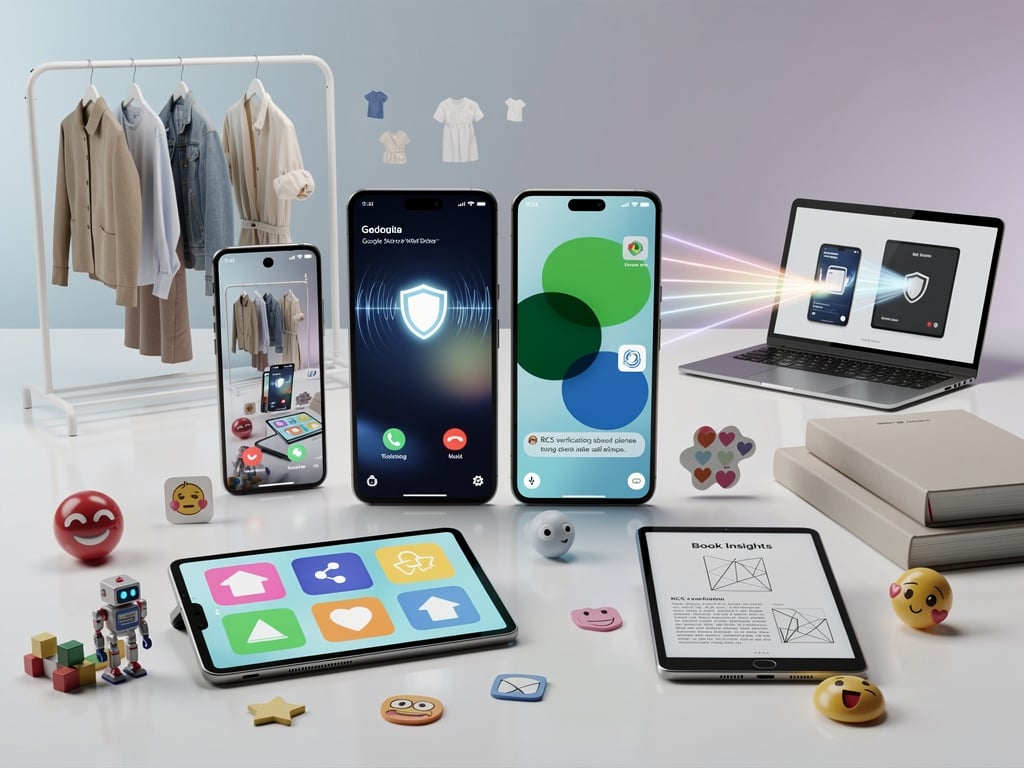
Scammers have grown bolder. They clone voices with AI. They spoof numbers. They pretend to be your mother asking for money. Google now counters with a direct response in its latest Android rollout.
The June 2026 Android Feature Drop brings fake call detection to millions of devices. It verifies in real time whether a call truly comes from a contact’s phone. No more guessing. The system sends a silent, end-to-end encrypted confirmation signal over RCS when the real device calls. A scammer’s spoofed attempt lacks that handshake. Your phone notices. It warns you. And it ends the call.
Eric Lynch, product manager at Google, put it plainly. “Fake call detection on Android helps protect you from scammers using AI deepfakes to impersonate your contacts.” The feature rolls out globally this month in the Phone by Google app on devices running Android 12 and higher. It starts with Pixels. Both caller and recipient must use the Google Phone app, with RCS enabled in Google Messages. Google’s security blog details the mechanics.
But the update stretches far beyond security. Google Photos gains a wardrobe tool that scans your photo library. It catalogs clothes you have worn. Users browse by type, mix items into new combinations, and see virtual try-ons powered by AI. The feature launches next week for Android 10 and later devices, beginning in the US, India and Brazil. TechRadar first outlined the seven features.
Circle to Search takes the fashion theme further. Its “Find the Look” capability now identifies entire outfits in images or on screen. Shop the pieces. See how they might fit you. The expansion reaches all Android 14 devices that support Circle to Search. Practical for shoppers. Useful for trend followers.
Quick Share gains broader reach. It now works with Apple’s AirDrop on more phones, including recent Xiaomi, OnePlus, Honor and upcoming Motorola and Oppo models. Cross-platform sharing grows less painful. One tap. Files move. No accounts or apps required in many cases.
Parents see gains too. The Personal Safety app adds tools for children 13 and under. Medical information and emergency contacts appear on the lock screen. Car crash detection activates automatically. Safety Check prompts users to confirm well-being after travel. These features head to global rollout soon. TechCrunch reported the full package Tuesday.
Google Play Books receives AI-driven Book Insights. Tap “Catch me up” for a recap of your last reading session. Highlight a passage and ask questions about characters, themes or plot points. The tool works on select English titles. Readers who set books aside for weeks gain a quick reentry point.
Gboard’s Emoji Kitchen expands with fresh combinations. A bee wearing a ring becomes a “blingy bee.” A mouse paired with a heart creates new stickers. Small touches. They add personality to messages.
The timing matters. AI voice cloning has accelerated scam attempts. Reports show fraudsters impersonating relatives with increasing success. Google’s system doesn’t analyze the voice itself in every case. It focuses on device verification. That back-channel RCS signal proves the call originates from the actual phone listed in contacts. Simple. Effective. Limited to users within the Google app environment for now.
CNET noted the practical focus of these updates. They arrive after last month’s larger Android 17 preview that pushed Gemini Intelligence deeper into the operating system. This month’s bundle feels more grounded. Safety first. Then personalization. CNET covered the rollout extensively.
Device makers can adopt the fake call technology. Google left the door open. RCS forms the foundation. Other dialer apps could integrate similar verification. Broader protection would follow.
Wardrobe in Google Photos builds on earlier experiments. The app already analyzes faces and objects. Now it treats clothing as catalog items. Snap enough photos of yourself. The system learns your closet. Mix a shirt from one picture with pants from another. Virtual mirror appears. Share the look with friends before you dress.
Critics might call these incremental. Yet together they address daily pain points. Scam calls erode trust. Outfit decisions consume time. Book memory fades. Emoji grow stale. Google attacks each with targeted code.
Rollout happens in phases. Pixels receive updates first. Other manufacturers follow as they certify the Google apps. Users should check for Phone, Messages and Photos updates in coming days. Turn on RCS if not already active.
Limitations exist. Fake call detection requires both parties on compatible Google software. It won’t catch every sophisticated attack. Voice deepfakes paired with number spoofing still pose risks when the caller isn’t in your contacts. The feature acts as one layer in a larger defense that includes existing spam filters and on-device machine learning.
Even so, the signal verification raises the bar. Scammers must now compromise both the number and the device authentication. Harder work. Fewer successes.
Android users have waited for tighter cross-platform sharing. Quick Share’s AirDrop expansion delivers for more handsets. Families with mixed iPhone and Android devices gain convenience. Photos, videos, documents fly between ecosystems without friction.
The kids’ safety additions reflect growing awareness. Smartphones travel with children everywhere. Emergency data on the lock screen can speed help. Crash detection has saved lives in prior implementations. Extending these to younger users closes a gap.
Book Insights targets a narrower audience. Dedicated readers. Those who juggle multiple titles. The recap and query features borrow from Kindle’s “Story So Far” but add conversational depth through AI. Expect the catalog of supported books to grow.
Google ships these changes through its Feature Drop program. Quarterly bundles. Predictable cadence. Manufacturers and carriers push them to devices over weeks. Not every phone receives every item on day one. Pixel owners usually lead.
Industry watchers see a pattern. Google prioritizes security and utility over flashy demonstrations. Fake call detection directly answers a rising threat documented across law enforcement reports. Wardrobe and outfit search tap into visual search momentum already proven in shopping apps.
Competition looms. Apple refines its own anti-spam tools. Samsung layers Galaxy AI features. Yet Android’s open nature lets Google deploy changes across brands at once. Billions of devices. One coordinated update cycle.
Early reactions on X praised the scam protection most. Users shared stories of family members targeted by voice clones. The verification signal offers peace of mind. Others welcomed the wardrobe feature as a genuine time-saver for daily dressing decisions.
Implementation details will matter. False positives could annoy. Privacy safeguards around RCS signals must hold. Google insists the confirmation stays encrypted and device-bound. No cloud storage of call metadata beyond normal logs.
The June drop avoids hype. No single killer feature dominates headlines. Instead it delivers a collection of fixes and enhancements that improve the everyday experience. Protection from fraud. Help choosing clothes. Easier file transfers. Smarter reading aids. Fresh ways to express tone.
Android phones receive these improvements starting now. Check settings. Update apps. The changes arrive quietly. Their impact builds over time. One less scam. One better outfit. One faster message. Small wins accumulate.


 WebProNews is an iEntry Publication