
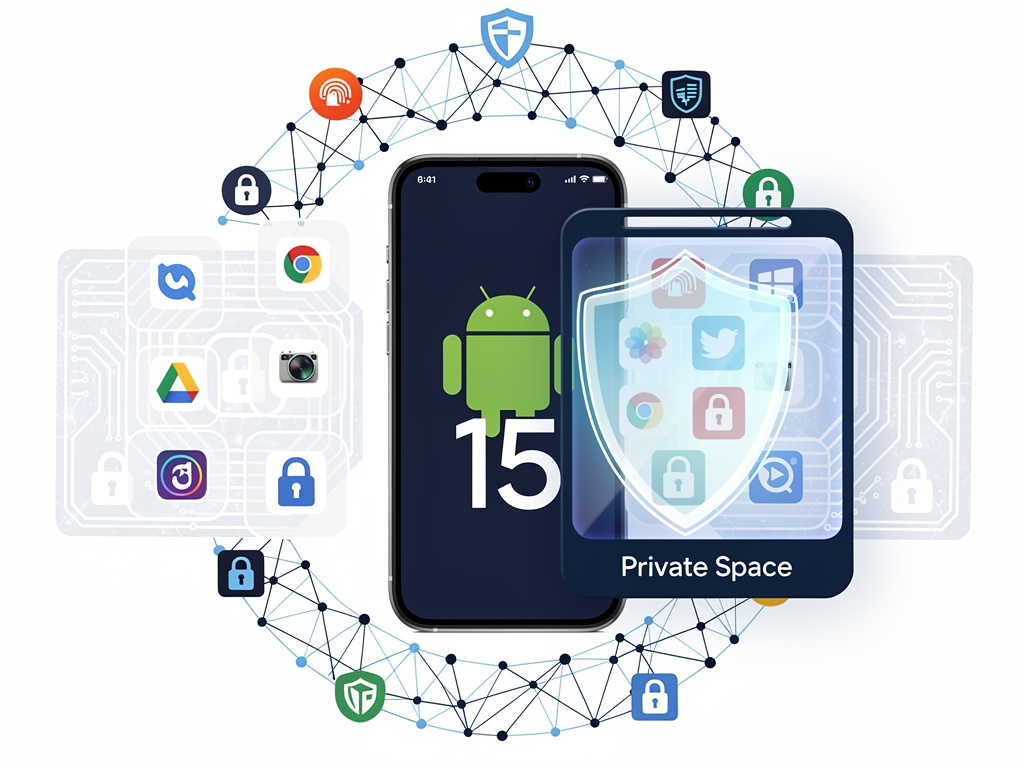
In the modern mobile economy, the smartphone has evolved from a communication tool into a singular repository of identity, finance, and biometric data. This centralization of sensitive information has forced operating system architects to rethink security paradigms, moving away from perimeter-based defenses toward granular, compartmentalized protection. Google’s latest maneuvers with Android 15 underscore this shift, specifically through the introduction and refinement of “Private Space,” a feature that creates a digital air gap between daily activities and critical data. As reported by MakeUseOf, this feature has recently matured from a basic folder into a fully obfuscated environment, allowing users to completely hide sensitive applications from the app drawer unless a specific search query is triggered.
The strategic implication here is a recognition that the threat vector is no longer just remote malware or phishing, but physical access. Whether it is a thief snatching a device or an intrusive acquaintance, the unlocked phone has historically been a user’s greatest liability. By allowing the Private Space to vanish entirely from the interface, Google is effectively implementing a form of security through obscurity layered atop robust encryption. This development mirrors the industry’s broader move toward “zero trust” architectures on consumer hardware, where access is verified continuously rather than granted implicitly once the device is unlocked.
The Mechanics of Digital Compartmentalization
Technically, Private Space operates by leveraging Android’s multi-user framework, creating a separate user profile that runs simultaneously with the main system. This is distinct from mere app lockers that simply add a password overlay; Private Space isolates the application data, notifications, and browsing history. According to technical breakdowns by Android Authority, when the space is locked, the profile is stopped, meaning the apps are not just hidden but suspended from running in the background, conserving resources and preventing data leakage. This architectural decision brings Android into closer parity with Samsung’s Knox-backed Secure Folder, which has long been the gold standard for enterprise-grade isolation on consumer devices.
The refinement of this feature addresses a critical user experience friction point: the visibility of security tools. Previous iterations of privacy folders often acted as a beacon, signaling to anyone holding the phone that there was something to hide. The new capability to hide the Private Space container itself suggests that Google is listening to user feedback regarding social engineering and coercion. If an adversary does not know a secure container exists, they cannot demand it be opened. This psychological component of security design is becoming as vital as the cryptographic primitives that underlie the software.
AI-Driven Theft Detection and Response
While Private Space secures data against snooping, Google is simultaneously deploying aggressive countermeasures against physical theft. The company has rolled out “Theft Detection Lock,” a feature that utilizes on-device machine learning to interpret inputs from the gyroscope and accelerometer. As detailed in a report by The Verge, the AI model is trained to recognize the specific, jerky motion associated with a “snatch and run”—such as a thief grabbing a phone from a user’s hand and fleeing on a bicycle or moped. Upon detecting this kinematic signature, the screen immediately locks, cutting off access before the thief can disable tracking or access banking apps.
This application of artificial intelligence represents a significant leap from passive to active defense. Traditional security measures rely on the user to realize the device is gone and initiate a remote wipe—a process often delayed by panic or lack of internet access. By automating the lockdown process at the moment of the crime, Android is closing the critical window of opportunity that thieves exploit. This feature is being retrofitted to older devices running Android 10 and up, indicating Google’s intent to secure the wider ecosystem, not just the flagship Pixel tier.
Solving the Connectivity Gap in Asset Recovery
A persistent vulnerability in mobile security has been the ability of thieves to simply power down a device or remove the SIM card to sever its connection to the internet, rendering “Find My” services useless. To combat this, Google has engineered an “Offline Finding” capability for the Pixel 8 and 9 series. As explained by Wired, this system utilizes specialized hardware reserves to keep the Bluetooth radio beacon active for hours after the phone has been turned off or the battery has depleted. This allows the device to ping nearby Android phones, piggybacking on the massive mesh network of billions of devices to report its location.
This hardware-software synergy creates a formidable deterrent. The knowledge that a device can broadcast its location even when “dead” complicates the resale market for stolen goods. It forces criminal operations to utilize Faraday bags or immediately strip devices for parts, reducing the profitability of smartphone theft. This move aligns Google with Apple’s Find My network capabilities, closing a feature gap that has historically kept some security-conscious users within the iOS walled garden.
The Authentication Arms Race
The efficacy of these isolation and recovery tools relies heavily on robust authentication. Android 15 is tightening the screws on biometric security, forcing a fallback to biometrics for critical actions even if the phone is already unlocked. If a thief attempts to change the PIN, disable theft protection, or access passkeys, the system will demand a fingerprint or face scan. Google’s official blog notes that this “Trusted Places” logic can be inverted; the phone can be set to require stricter authentication when it detects it is away from home or work locations. This geofenced security policy allows for convenience in safe zones while hardening the device in public spaces.
Furthermore, the integration of Passkeys continues to replace the vulnerability of static passwords. By storing cryptographic keys in the secure enclave of the processor, Google is mitigating the risk of phishing and credential harvesting. The interplay between Private Space and Passkeys is particularly potent; users can store credentials for sensitive financial institutions within the isolated profile, ensuring that even if the main OS layer is compromised by malware, the cryptographic keys remain sandboxed and inaccessible.
Competitive Pressures and Market Positioning
Google’s aggressive security updates are not happening in a vacuum. The company is engaged in a high-stakes battle for market share in the premium segment, where data privacy is a top purchase driver. Apple has recently introduced the ability to lock and hide apps in iOS 18, creating a feature parity that forces Android to innovate rather than just catch up. However, Android’s approach differs in its flexibility. While iOS offers a streamlined, uniform experience, Android’s Private Space offers a distinct, second-OS experience that appeals to power users who need to separate work and personal personas completely.
This divergence highlights the different philosophies of the two giants. Apple emphasizes simplicity and seamless integration, while Google focuses on granular control and AI-powered adaptability. By offering features like the AI theft lock to older Android versions via Google Play Services updates, Google is leveraging its modular OS structure to deliver security patches faster than traditional firmware updates allow, a critical advantage in a fragmented hardware market.
The Future of Mobile Trust
The evolution of Android security features suggests a future where the operating system acts as an active bodyguard rather than a passive vault. The trajectory points toward more on-device AI processing to detect anomalies—not just in motion, but in usage patterns. If a phone is unlocked at a strange time in a strange location and immediately attempts a large Zelle transfer, future iterations of these protocols may preemptively intervene. The foundation laid by Private Space and Theft Detection Lock creates the infrastructure for this kind of behavioral heuristical security.
Ultimately, these updates serve to rebuild trust in the digital ecosystem. As consumers load their phones with mobile, digital IDs, and health records, the assurance that a snatched phone does not equal a stolen life is paramount. Google’s latest push demonstrates that they view security not merely as a compliance checklist, but as a core product differentiator that defines the user experience in an increasingly hostile digital environment.


 WebProNews is an iEntry Publication