
Jose Flores drove with his family toward a screening of “Toy Story 5” in Caracas when his wife’s Android phone erupted with an unfamiliar alert. Six seconds later the car began to shake. Streetlights danced. The family realized this was no ordinary bumpy Venezuelan road.
“It’s very helpful to get the alert, as it seems like it almost predicted the earthquake,” Flores told The New York Times. He had never seen the warning before. Now he says the family feels better prepared.
Venezuela possesses no national earthquake early warning infrastructure. Yet on June 24, 2026, two powerful quakes struck in quick succession—a magnitude 7.2 followed 40 seconds later by a 7.5. Google’s Android Earthquake Alerts system reached 11.4 million people there, according to figures shared with reporters. Nearly 1.4 million received the highest-level “Take Action” notification. The first alerts went out just seconds after initial seismic waves registered on stationary phones.
The system has operated quietly since 2021. It now runs on 2.5 billion Android devices across nearly 100 countries. That scale dwarfs traditional seismic networks. And the Venezuela events delivered the clearest public demonstration yet of its reach.
How the alerts actually work
Every modern Android phone contains an accelerometer. The same tiny sensor that rotates the screen when you tilt the device also registers vibrations. When a stationary phone detects what looks like the fast-moving P-wave of an earthquake—the initial compressional pulse that travels at roughly four miles per second—it quietly transmits anonymized data and a coarse location to Google’s servers.
Servers aggregate reports from multiple devices. Confirmation arrives quickly. Magnitude, location and expected shaking intensity get estimated. Alerts then push to every Android phone in the projected impact zone. The slower, more destructive S-waves travel at about half the speed. That gap creates the warning window. Seconds near the epicenter. Up to two minutes farther away.
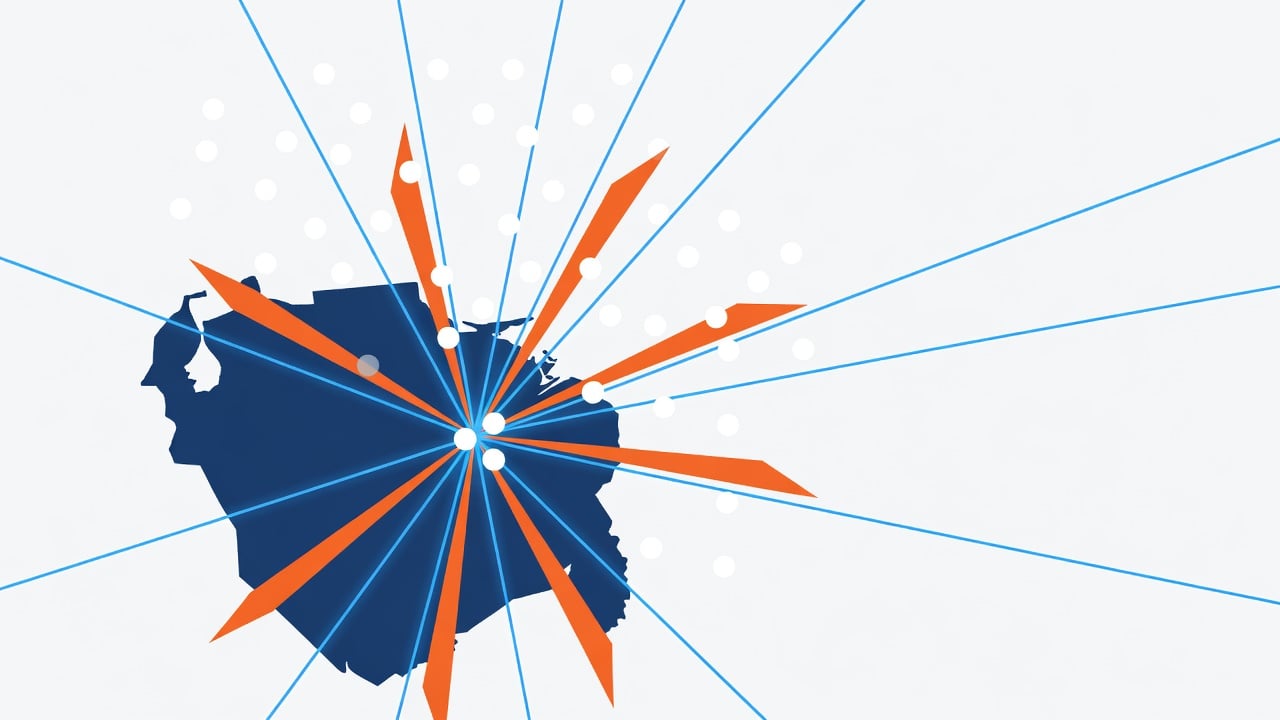
In Venezuela the timeline unfolded in bursts. Phones sensed the first P-waves three seconds after the underground rupture began. The system confirmed an event six seconds later and began dispatching alerts. Nine seconds after origin, warnings reached a wider circle. By 15 seconds the capital was included. Within 21 seconds millions had been notified. As the second, stronger quake overlapped seismic waves, the system treated the pair as one growing event and expanded the alert area accordingly.
Marc Stogaitis, a principal engineer at Google, explained the dynamic process to The New York Times. “The system is continuously receiving and processing data. As an earthquake develops, the system often tweaks the magnitude, time, location and alert area. Google’s system sensed the increasing magnitude of the Venezuela earthquakes, and the alert region grew as the earthquake grew.”
Alerts come in tiers. The most serious version overrides Do Not Disturb, fills the screen and sounds a loud alarm. It instructs users to drop, cover and hold on. Milder versions appear as standard notifications. After shaking stops, the phone offers safety tips.
The feature sits enabled by default in supported countries. Users can verify or adjust it under Settings > Safety and emergency > Earthquake alerts. Location services must remain active. The system requires either Wi-Fi or cellular data. It supplements—not replaces—official government warnings where they exist. In California, Washington and Oregon, Android forwards alerts generated by the ShakeAlert network of 1,675 dedicated sensors run by the U.S. Geological Survey. Everywhere else the phone-based crowdsourcing stands alone.
Google’s own research blog notes the system has detected more than 18,000 earthquakes worldwide and issued alerts for events ranging from magnitude 1.9 to 7.8. A peer-reviewed paper in Science last year reported that user feedback from 1.5 million responses showed 85 percent of recipients felt shaking. Roughly one-third received the alert before the motion reached them. The median magnitude estimation error has improved from 0.50 to 0.25 through continuous learning from post-event data.
Yet the Venezuela quakes also exposed limits. Phones must sit still to register as reliable detectors. A device in a pocket while walking gets ignored. Areas closest to the rupture often receive alerts only as shaking begins. And while 11.4 million sounds impressive, it remains unclear how many people acted on the information or whether injuries and deaths were prevented. Rescue operations continue. The death toll has climbed past 200.
Security camera footage circulating on X and Reddit captured the moment phones across a public space lit up simultaneously. Pedestrians glanced at their screens in confusion before the ground rolled. In a country where Android dominates the low-cost smartphone market, the alerts created a shared signal amid otherwise limited infrastructure.
Recent coverage reinforces the pattern. A Heise Online report published hours ago cited the same Google data and noted the three-second initial detection followed by staggered warnings that reached Caracas within seconds. Softonic highlighted that 1.4 million of the alerts carried the urgent “Take Action” instruction.
The technology does not predict earthquakes. No one can. It simply detects them faster than many people feel them and broadcasts the news to millions of pockets at once. That distinction matters. Traditional seismic networks require expensive instruments spaced across terrain. Android turns the existing global fleet of phones into the largest earthquake detection array ever assembled.
Critics point out gaps. iPhone users receive no equivalent native system, though they can get official government alerts if enabled. Privacy questions linger around constant background sensor reporting, even if data stays coarse and anonymized. False alarms remain a risk in noisy urban environments. Google has refined algorithms over years to reduce them.
Still, the Venezuela episode stands out. A nation without its own warning network suddenly possessed one through devices already in citizens’ hands. Flores and his family received those extra seconds. They did not fully understand the alert at first. Next time they will.
Engineers continue to study the event. Post-quake analysis will likely sharpen future magnitude estimates and alert timing. The system already tweaks parameters in real time. Each major earthquake feeds the learning loop.
For now the takeaway feels concrete. Millions heard a loud warning before the earth moved. The phones in their pockets had become instruments of detection. The network worked. The question left hanging is how many more countries will come to rely on it as official systems lag or fail to materialize.


 WebProNews is an iEntry Publication