
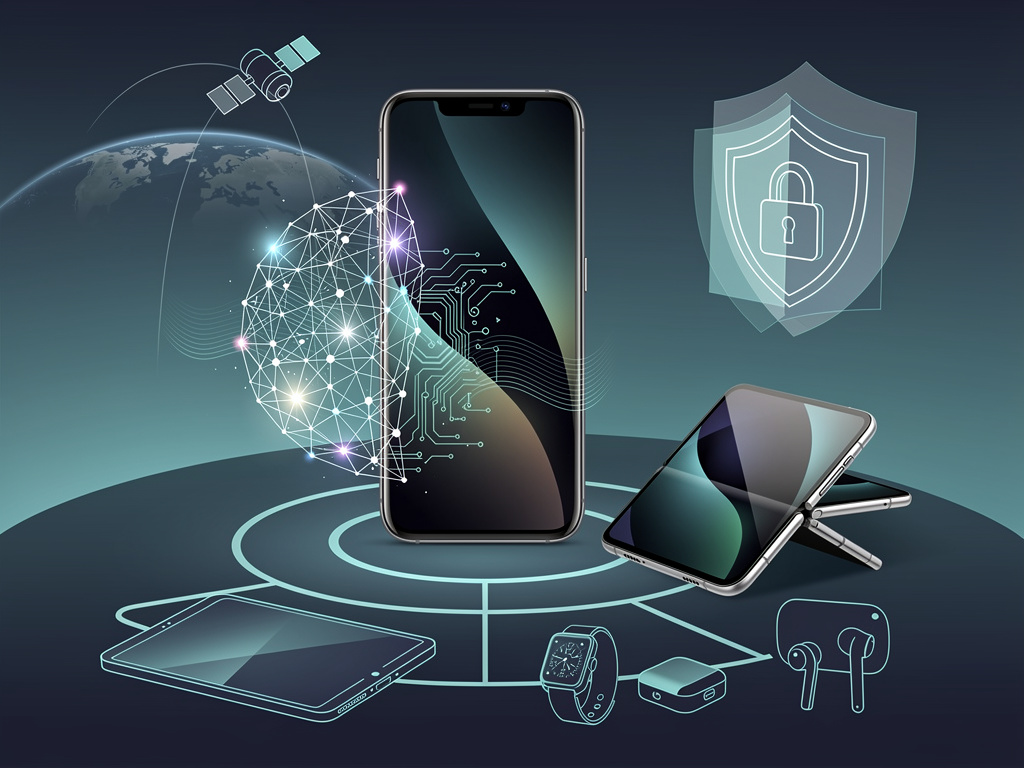
Android’s next chapter isn’t about incremental spec bumps. It’s about a fundamental reshaping of what a smartphone does, how it thinks, and where it fits in your life. According to a recent breakdown from TechRepublic, five major trends are converging to define Android smartphones heading into 2026 — and each one carries real implications for developers, enterprise IT teams, and device manufacturers alike.
AI is the throughline. Not as a buzzword, but as an embedded layer running directly on-device. Google has been pushing its Gemini models deeper into Android, and by 2026, on-device AI processing will handle everything from real-time language translation to intelligent photo editing without pinging a cloud server. This matters for privacy-conscious enterprises and for users in regions with spotty connectivity. Samsung, Google, and Qualcomm have all made significant investments in on-device inference capabilities, with Qualcomm’s Snapdragon 8 Elite chipset designed specifically to run large language models locally. The performance gap between cloud-based and on-device AI is shrinking fast.
Then there’s the matter of foldables going mainstream. What was once a niche curiosity is becoming a viable form factor for everyday use. Samsung’s Galaxy Z Fold and Flip lines have matured considerably, and Google’s Pixel Fold successor is expected to push the category further. But it’s not just about hardware novelty. Android 15 and its successors are being built with flexible displays in mind — multitasking layouts, adaptive UI elements, and app continuity across screen states are now first-class priorities in the OS. For developers, this means designing for variable aspect ratios isn’t optional anymore. It’s table stakes.
Satellite connectivity is the third trend TechRepublic highlights, and it’s one that moves Android from communication device to potential lifeline. Apple forced the industry’s hand with its Emergency SOS via satellite feature, and Android OEMs are catching up. Qualcomm’s Snapdragon Satellite platform, built on Iridium’s network, enables two-way messaging from virtually anywhere on the planet. Google has been working to integrate satellite capabilities natively into Android, and by 2026, expect this to extend beyond emergency use into basic messaging and location sharing. For industries like logistics, mining, and remote field work, this could reshape how teams stay connected.
Security and privacy are getting a structural upgrade. Not just new toggles in settings menus — actual architectural changes. Google’s Private Compute Core, which isolates sensitive AI processing from network access, is expanding in scope. Android’s permission model continues to tighten, with more granular controls over what apps can access and when. Enterprise mobility management platforms are already adapting. And with the EU’s Digital Markets Act and similar regulations putting pressure on data practices globally, Android’s privacy posture isn’t just a feature. It’s a compliance requirement.
The fifth trend is the most expansive: Android as a multi-device operating system. Google has been steadily building out cross-device functionality — phone to tablet to Chromebook to wearable to car. The company’s work on seamless handoff, shared clipboard, and unified notifications across devices signals a clear ambition to make Android the connective tissue between every screen you touch. This mirrors Apple’s long-standing strategy with Continuity and Handoff, but Google’s approach leans on openness. Third-party OEMs can participate. So can developers building for Wear OS, Android Auto, and Android TV simultaneously.
What ties all five trends together is a shift in how Google thinks about Android’s role. It’s no longer just a phone OS. It’s an AI-powered platform spanning form factors, connectivity modes, and security paradigms — all while trying to stay open enough to keep its massive OEM and developer base engaged.
For enterprise IT professionals, the takeaway is concrete: plan for on-device AI workloads, test across foldable form factors, evaluate satellite connectivity for remote operations, audit your app permissions against tightening privacy frameworks, and start thinking about multi-device deployment strategies now. Not next year. Now.
And for developers? The fragmentation challenges that once defined Android development haven’t disappeared. They’ve evolved. Building for a phone with a 6.1-inch flat display and a foldable with a 7.6-inch flexible panel and a car dashboard and a watch — that’s the reality. Google’s Material You design language and Jetpack Compose are meant to ease that burden, but the complexity is real.
The competitive pressure matters too. Apple’s tight vertical integration still gives iPhones an edge in consistency and update speed. But Android’s openness — its willingness to let Samsung, OnePlus, and others innovate on hardware while Google evolves the software — remains its differentiator. Whether that openness becomes a strength or a liability in the AI era depends on execution.
2026 won’t be a single breakthrough moment for Android. It’ll be the year these five threads tighten into something coherent. Or don’t.


 WebProNews is an iEntry Publication