
In the ever-evolving realm of mobile operating systems, Google’s Android team has once again pushed the boundaries with its latest experimental release. The Android Canary build 2512, rolling out to select Pixel devices, marks a pivotal moment as what could be the final update of its kind in 2025. This build isn’t just another incremental tweak; it represents a culmination of developer-focused innovations, including groundbreaking cross-platform collaborations that could reshape user mobility between ecosystems. For developers and tech enthusiasts, this release offers a glimpse into Android’s future, blending stability with cutting-edge features that address long-standing pain points in device switching and interface customization.
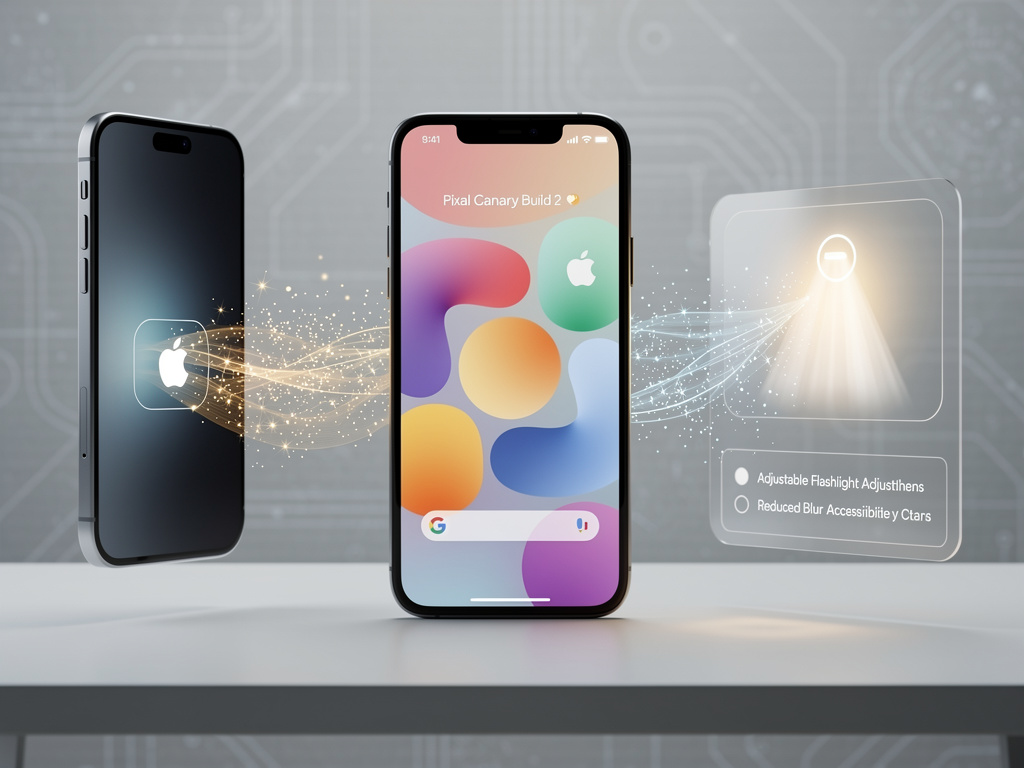
At the heart of build 2512 is a significant partnership between Google and Apple, aimed at simplifying the process of migrating data between Android and iOS devices. This initiative, spotted in the build’s setup process, promises to integrate seamless data transfer tools directly into the initial device configuration. Users switching from an Android phone to an iPhone—or vice versa—will encounter prompts to transfer contacts, messages, photos, and more without relying on third-party apps. This move comes amid increasing regulatory scrutiny on tech giants to foster interoperability, potentially easing the lock-in effects that have long defined the Android-iOS divide.
The collaboration builds on existing tools like Google’s Switch to Android app, but elevates it to a native level. According to details unearthed in the build, the system will leverage secure, encrypted channels for data migration, ensuring privacy while minimizing data loss. Industry observers note this as a response to user feedback and antitrust pressures, particularly in regions like the European Union where digital gatekeeping is under the microscope. For developers, this means new APIs that could enable apps to handle cross-platform data more efficiently, opening doors to hybrid app experiences.
Bridging Ecosystems: Google’s Strategic Move
Beyond the headline-grabbing Apple partnership, Android Canary 2512 introduces enhancements to core user interface elements. One notable addition is improved support for icon shapes, allowing developers to experiment with customizable app icons that adapt to various themes and user preferences. This feature, first hinted at in earlier Canary builds, now includes options for rounded, squircle, and other geometric forms, giving apps a more personalized feel on the home screen. It’s a subtle yet powerful tool for UI/UX designers, enabling better integration with Android’s Material You design language.
Flashlight functionality also gets a boost in this build, with adjustable strength levels that let users control brightness intensity. This isn’t merely a gimmick; it’s tied to hardware optimizations on Pixel devices, potentially extending battery life during low-light usage. Developers can tap into new APIs to integrate similar controls in their apps, such as augmented reality tools that require precise lighting adjustments. Combined with these, the build refines external display preferences, remembering user settings for connected monitors or TVs—mirroring or extending the screen based on prior choices, much like desktop operating systems.
These updates draw from a lineage of Canary releases that began in July 2025, as detailed in the Android Developers Blog. The channel was introduced to provide early access to in-development features, starting with build ZP11.250606.010.A1 on Pixel 6 and later models. Since then, it has served as a testing ground for innovations like lock screen widget blur effects, which in build 2512 now apply a softened wallpaper overlay for better readability without overwhelming the visuals.
Enhancing User Experience Through Subtle Refinements
Diving deeper, build 2512 addresses accessibility with a new setting to reduce background blur effects across the system. This is particularly beneficial for users who find heavy blurring distracting or hard on the eyes, as it tones down transparency in menus and notifications. Posts on X from tech analysts like Mishaal Rahman highlight how this feature, live in recent Canary versions, improves text legibility in high-contrast scenarios. It’s a nod to inclusive design, ensuring Android remains accessible to a broader audience, including those with visual impairments.
The build also experiments with desktop-like behaviors, such as prompting users to enable Desktop Mode when connecting to external displays. This evolution, building on Android’s multi-window capabilities, could transform tablets and foldables into productivity powerhouses. For insiders, this signals Google’s push toward converging mobile and desktop computing, with implications for app development in areas like window management and input handling.
Moreover, Android Canary 2512 refines adaptive vibration and network security settings, allowing finer control over haptic feedback based on environmental noise and enhanced protections for cellular connections. These aren’t flashy changes, but they underscore Google’s focus on reliability in an era of increasing cyber threats. Referencing earlier builds, such as those discussed in Reddit’s r/android_beta community, shows a pattern of iterative improvements that prioritize security without sacrificing usability.
Historical Context and Developer Implications
To appreciate build 2512 fully, one must trace the Canary channel’s origins. Launched in mid-2025, as covered by Android Authority in their coverage of build 2511, it targeted developers seeking bleeding-edge access. Unlike stable betas, Canary builds are raw and unstable, often requiring device wipes to revert— a trade-off for early API testing. This release cadence has accelerated feature rollouts, with monthly drops introducing elements like app archiving and color contrast adjustments.
For app creators, the real value lies in emulator support. As outlined on the Android Developers site, setting up Android Studio with the latest emulator allows safe experimentation without risking physical hardware. Build 2512 extends this by incorporating previews of Android 16 updates, including performance tweaks for media and camera APIs that make apps more efficient on diverse hardware.
Industry insiders point to this as Google’s strategy to stay ahead in a competitive field dominated by rapid innovation. With rivals like Apple’s iOS advancing in areas like privacy and ecosystem integration, Android’s Canary approach fosters a vibrant developer community. Posts on X from users like AssembleDebug emphasize how features like icon shape support in build 2512 enhance customization, potentially influencing third-party launchers and themes.
Cross-Platform Synergies and Future Horizons
The Google-Apple switching tools in build 2512 aren’t isolated; they’re part of a broader effort to reduce friction in device transitions. News from 9to5Google details how this will appear in iOS 26 betas, creating a unified migration experience. This could lower barriers for users, encouraging more frequent switches and boosting competition. For businesses, it means easier fleet management across platforms, with less downtime during upgrades.
On the security front, build 2512 bolsters defenses against emerging threats, integrating updates to Bluetooth and network protocols. This aligns with Android’s ongoing emphasis on privacy, as seen in prior releases that introduced default wallet apps and adaptive features. Developers can leverage these to build more secure fintech or IoT applications, capitalizing on Canary’s early access.
Looking ahead, while build 2512 may cap 2025’s releases, it sets the stage for 2026. Speculation from forums like HardwareZone suggests upcoming focuses on AI-driven personalization and hardware-software synergies. Google’s pattern of using Canary to test bold ideas— from edge-to-edge displays to taskbar pinning— indicates a commitment to evolution.
Industry Ramifications and User Impact
For Pixel super-fans, as termed by Android Authority, this build is a playground of possibilities. Available on Pixel 6 and newer, it requires enrollment in the Canary channel, with warnings about instability. Users report smoother integrations, like refined volume panels and app pairs, enhancing multitasking.
The broader implications extend to market dynamics. By easing switches to iPhone, Google acknowledges user choice, potentially retaining loyalty through superior features elsewhere. Apple, in turn, gains from reciprocal tools, as noted in AppleInsider, fostering a more open environment.
Critics argue this could commoditize ecosystems, but proponents see it as progress. In enterprise settings, simplified migrations mean faster adoption of new devices, reducing IT overhead.
Technical Deep Dive: Under the Hood
Technically, build 2512 optimizes for efficiency, with updates to Android’s core like improved media processing for better battery life. Developers can explore these via the SDK, testing apps against future behaviors. The build’s flashlight API, for instance, exposes hardware controls that were previously buried, enabling creative uses in photography apps.
Accessibility features, such as the blur reduction toggle, tie into system-wide themes, allowing granular control. This is complemented by vibration adaptations that sense ambient noise, a feature first prototyped in earlier Canaries and refined here.
Finally, the external display enhancements promise a desktop renaissance for Android, with remembered preferences streamlining workflows. As Google iterates, these elements could redefine mobile computing, blending phone flexibility with PC power.
In essence, Android Canary 2512 encapsulates a year of bold experimentation, bridging gaps and pushing frontiers. For those immersed in tech’s inner workings, it’s a testament to iterative innovation, hinting at even more transformative updates on the horizon.


 WebProNews is an iEntry Publication