
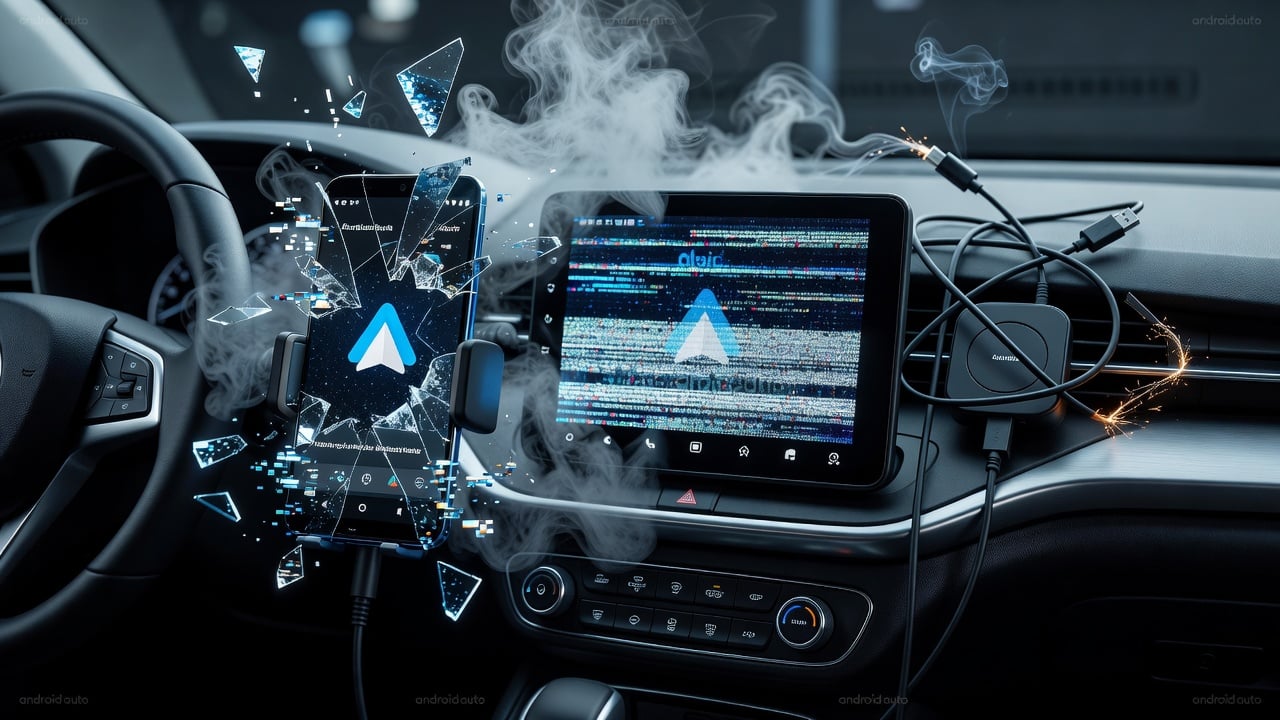
Google’s in-car software has a stubborn habit of breaking at the worst moments. Drivers who rely on Android Auto for navigation, music and calls found themselves staring at frozen screens or sudden app exits once more this week. The culprit? A fresh version of the app that rolled out to millions of phones.
Reports poured in across forums and social platforms almost immediately. Users described the software quitting without warning a few minutes into any drive. Restart the session? Same result. The pattern held on wired USB links and wireless Bluetooth connections alike. Phones from Google, Samsung, OnePlus and Motorola all showed the same symptoms. Android 16 and the newer Android 17 builds offered no shelter.
Android Police first highlighted the wave of complaints tied directly to build 17.2.662404. One Reddit thread after another detailed identical failures. No single action triggered the exits. The app simply stopped. And then it stopped again. Short sentences capture the frustration best. No warning. No error code. Just silence from the dashboard.
But this isn’t an isolated stumble. Android Auto has spent years cycling through connection drops, interface freezes and compatibility headaches. Earlier in 2026 alone, owners of Pixel and Galaxy devices battled repeated wireless disconnects that began after the March software drop. Some vehicles required minutes of waiting before navigation would accept an address. Voice commands failed when seatbelt chimes sounded. Audio cut out mid-song.
Google responded in stages. A June update to Google Play Services carried the terse note “Bug fixes for Device Connections related services.” BGR reported that many users saw steadier behavior after installing version 26.22 or later. SlashGear confirmed the same quiet fix helped Samsung Galaxy S26 Ultra owners keep a link for longer stretches. Yet the relief proved temporary for some. Crashes replaced disconnects. Progress felt circular.
Recent days brought fresh evidence that the problem lingers. 9to5Google noted that beta testers on versions 17.2 and 17.1 suffered most. Downgrading to the stable channel restored function for many. A separate Android Authority article from today captured the collective groan. “Android Auto is crashing (again), and nobody knows why (again).” The piece cited ongoing Reddit threads where owners shared logs showing abrupt terminations with no obvious pattern in memory or permissions.
And here’s where the pattern sharpens. Google rarely comments publicly on these incidents. The company has not issued a statement on the newest crashes. Support threads on its own forums show users swapping rollback instructions while waiting for an official patch. One long-running community post on Google’s support site dating back to late 2025 still collects stories of connection failures after Android 16 arrived. Participants there report clearing cache, uninstalling updates, even factory resets. Results stay inconsistent.
Vehicle-specific complaints add another layer. GMC Sierra owners posting in Facebook groups described music playback interfering with text replies, voice commands freezing during alerts, and general lag after engine start. Similar gripes surfaced for 2026 Subaru Outback and Audi models. The software’s dependence on phone-side Google Play Services, Bluetooth stack and head unit firmware creates too many variables. When one piece shifts, everything can tumble.
Developers inside Google face a tough balance. They push frequent updates to add features such as better notification handling or eventual alarm dismissal from the dashboard. Yet each release risks exposing edge cases across thousands of car models and phone variants. Testing at scale remains difficult. Beta programs catch some flaws. Real-world miles expose the rest.
Workarounds exist for now. Rolling back to Android Auto version 17 sidesteps the newest code for many drivers. Forcing a full restart of phone and vehicle sometimes buys a few stable trips. Avoiding the beta channel prevents the worst builds from reaching devices. These steps feel like temporary tape on a persistent leak.
Longer term, the pressure grows for structural change. Deeper integration between Android core updates, Play Services and the Auto app could reduce regression risks. Clearer communication when bugs surface would ease driver anxiety. Until then, the cycle continues. An update lands. Problems surface. Forums light up. A fix follows weeks or months later.
Today’s reports on X echo the same fatigue. Multiple accounts posted screenshots of crash dialogs and links to the Android Police coverage within hours of each other. One tech news aggregator summarized the situation in stark terms: beta users hit hardest, stable users not immune, downgrade recommended. The conversation feels familiar because it is.
Drivers expect reliable tools. A mapping app that quits mid-route or an audio stream that vanishes creates distraction at exactly the moment focus matters most. Carmakers who embed Android Auto in their dashboards face customer complaints that point back to Google. The stakes rise with every new model year that treats the software as standard equipment.
So the latest chapter fits an established story. Android Auto crashes returned. The update that caused them carries a high version number but low stability for some. Affected owners have temporary paths forward. A permanent resolution still waits in a future build that, with luck, arrives before the next round of reports. The pattern holds. The frustration builds. And the road ahead remains dotted with warning signs.


 WebProNews is an iEntry Publication